



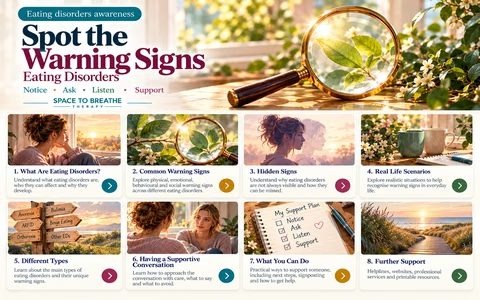
Spot the Warning Signs

Download

Spot the Warning Signs: Eating Disorders

I created this resource because eating disorders are not always easy to see. We often imagine there will be one obvious sign, usually weight loss, but eating disorders are mental illnesses and changes in behaviour, mood and everyday routines may appear before any visible physical change.

The guide looks at behavioural warning signs such as increasing food rules, secrecy, avoiding meals, bingeing, purging or driven exercise. It also covers emotional signs including anxiety around eating, shame, guilt, body-image distress, irritability and social withdrawal, as well as physical signs such as dizziness, weakness, fainting, digestive problems, dental or throat problems and dehydration.

I have also included sections explaining how warning signs can look different in ARFID, binge eating disorder, bulimia, anorexia and restrictive presentations, pica, rumination-regurgitation disorder, OSFED and UFED. One of the most important messages is that somebody can be seriously struggling at any body size and you cannot decide whether an eating disorder is serious simply by looking at a person.

If you are worried about somebody, the guide explains how to start a conversation without accusing or diagnosing them. Choose a calm moment, talk about the changes you have noticed, listen, avoid comments about weight and encourage them to speak to their GP or an eating-disorder professional.

At the end of the PDF I have included a Spot the Signs quick-check page. It is not a diagnostic test. It is simply a way of bringing together the changes you may have noticed so you can decide whether it is time to check in with somebody or seek professional advice.

My message to you is not to wait until you have proof. If somebody you care about seems increasingly anxious, secretive, rigid or distressed around food, gently opening the conversation may be an important first step. You do not have to have all the answers to show somebody that you have noticed and that you care.

Warmly, Maggie

This resource is educational and does not replace medical, dietetic or specialist eating-disorder assessment or treatment.