





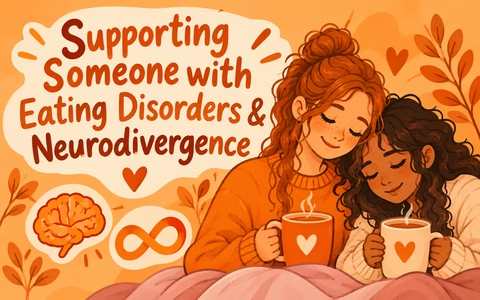
Supporting Someone with Eating Disorders & Neurodivergence
A compassionate guide for families, friends, partners and carers
Supporting someone who is experiencing an eating disorder alongside autism, ADHD or other neurodivergent needs can bring challenges that are not always easy to recognise or understand.
Food difficulties are not always about body image, weight or appearance. They may also involve sensory sensitivities, difficulties recognising hunger and fullness, anxiety, emotional regulation, executive functioning, a need for predictability or overwhelming experiences around eating.
For some people, these difficulties have been present since childhood. For others, they develop or become more complicated alongside an eating disorder. Understanding how neurodivergence and eating disorders can interact is an important part of offering meaningful support.
This guide explores how to support someone with compassion, patience and understanding, without adding pressure, judgement or blame.
Inside this guide, you'll explore:
- How autism, ADHD and other neurodivergent differences can influence someone's relationship with food.
- Understanding sensory sensitivities, ARFID and other eating disorders.
- Recognising that eating difficulties are not always visible.
- Communicating without criticism, pressure or judgement.
- Supporting someone through difficult mealtimes and overwhelming situations.
- Respecting individual needs while maintaining healthy, compassionate boundaries.
- Recognising when additional professional support may be needed.
- Looking after your own emotional wellbeing as a family member, partner or carer.
The guide also encourages you to reflect on your own relationship with food, expectations around eating and the language you use, helping you recognise how everyday interactions can affect someone who is struggling.
Supporting someone does not mean having all the answers. Sometimes the most valuable thing you can offer is a willingness to listen, understand and remain alongside them while they find their own way forward.
Whether you are supporting a child, young person or adult, this resource aims to help you create an environment where someone feels heard, respected and supported, while recognising that eating-disorder recovery may also require specialist professional care.
Space to Breathe Therapy
At Space to Breathe Therapy, we recognise that eating disorders and neurodivergence can overlap in complex and deeply individual ways. Support should never rely on a one-size-fits-all approach.
Our aim is to encourage understanding, reduce judgement and help individuals and those around them feel more confident in navigating these challenges together.
For further support, resources or information about working with us, visit www.spacetobreathetherapy.co.uk.




