





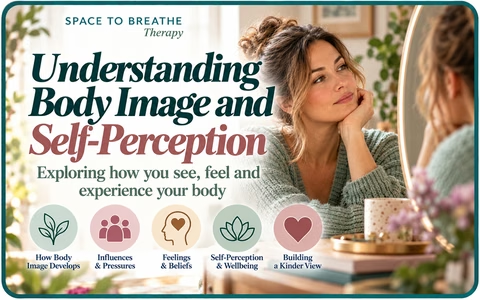
Understanding Body Image and Self-Perception
Welcome to the Interactive Body Image Studio
Body image is not simply what we see in a mirror. It is shaped by how we think about our body, how we feel in it, what we remember, and the messages we have received throughout life.
This studio gives you space to explore those experiences without weighing, measuring, rating or changing your body.
You can move between rooms in any order. There are no scores and no right answers.
Room One — The Perception Mirror
This mirror does not show your physical appearance. Instead, it explores the different layers that influence how you experience your body.
The visual information I notice about my body is only one part of my body image.
Choose a layer below to change what the mirror reveals.
Two people can look at the same image and interpret it differently. Even the same person may experience their body differently depending on stress, mood, attention, memories or circumstances.
Body image is an experience, not a perfectly objective measurement.
Understanding the four layers
Perception
What you notice and how you interpret the size, shape or appearance of your body.
Thoughts
The beliefs, assumptions and judgements attached to your appearance.
Feelings
The emotional responses associated with your body, including comfort, distress, pride, shame or uncertainty.
Behaviours
How body image influences actions such as checking, avoidance, comparison, clothing choices or participation in everyday life.
You do not need to feel positive about your body every day. You can experience difficult feelings and still offer your body care, nourishment, rest and respect.
Room Two — The Mind Behind the Image
Our brains do not process appearance in isolation. They interpret information using attention, memory, emotion and previous learning.
Selective attention
When someone is distressed about appearance, they may repeatedly focus on particular features while overlooking the wider picture.
Emotional reasoning
Feeling uncomfortable in your body may be interpreted as proof that something is wrong with your appearance, even though feelings are not measurements.
Memory and experience
Past comments, teasing, criticism, compliments or experiences of stigma can influence how someone interprets their body today.
Comparison
Comparing yourself with others can turn ordinary differences into judgements about worth, belonging or success.
Explore a thought pattern
Select an example to explore how an experience can be interpreted and how a more balanced response might sound.
Body image and eating disorders
In some eating disorders, body shape and weight become disproportionately important in self-evaluation. Body checking, comparison, restriction or compulsive exercise may temporarily reduce distress while reinforcing the underlying concerns.
Not everyone with an eating disorder experiences body-image disturbance. For example, ARFID is not defined by a desire to change weight or shape.
Body image and neurodivergence
Autistic and ADHD people may experience body image alongside sensory differences, interoception, social experiences or difficulties interpreting bodily signals.
Some people may find certain clothes physically uncomfortable, struggle to identify internal sensations or feel distressed by unpredictable changes in their body. These experiences should not automatically be treated as appearance concerns.
When a thought feels convincing, it may help to ask: “Am I noticing something about my body, or am I interpreting a feeling as a fact?”
Room Three — My Body Image Influence Map
Body image develops through a combination of personal, social, emotional and cultural experiences.
Choose the influences that feel relevant to you. They will appear around the centre of your map.
Understanding different influences
Social media: Repeated exposure to carefully selected, edited or appearance-focused images may increase comparison.
Family and relationships: Comments about weight, food, attractiveness or ageing can shape beliefs, even when no harm was intended.
Culture and discrimination: Beauty standards, weight stigma, racism, ableism and gender expectations can influence body image and access to support.
Life changes: Puberty, pregnancy, disability, illness, medication, ageing and menopause may change how someone experiences their body.
Sensory and physical experiences: Pain, fatigue, discomfort, interoception and clothing sensations may affect body awareness.
Understanding an influence does not mean blaming yourself or someone else. It helps make sense of why body image may feel different in different situations.
Room Four — My Body Image Journal
This journal offers space to reflect without measuring your body or rating your appearance.
Page One — Noticing My Experience
Body image can change throughout the day. Try noticing what was happening around you rather than judging whether your body looked different.
Page Two — Changing My Relationship With Checking
Checking mirrors, photographs, clothing fit or measurements can sometimes become a way of seeking certainty.
Rather than creating strict rules about checking, consider whether a particular behaviour helps you live your life or keeps you feeling trapped.
Page Three — Beyond Appearance
Your body is part of your life, but it does not need to be the centre of your identity.
Page Four — Body Neutrality
Body neutrality means making space for body-related feelings without requiring constant evaluation or positivity.
Room Five — My Body Image Support Plan
Bring together what you have learned into a personal plan. You can leave any question blank.
My Body Image & Self-Perception Support Plan
Influences I recognise
My experiences
Reducing pressure
My body-image triggers
Signs of distress
My body-neutral response
Practical strategies
Beyond appearance
My support network
My reminder
Personal reflection only. Not a diagnosis or treatment plan.
Space to Breathe Therapy — spacetobreathetherapy.co.uk
Support and Recovery
Body-image difficulties can occur with or without an eating disorder. If distress around appearance is affecting eating, movement, relationships, mood or daily functioning, professional support may help.
Some people benefit from eating-disorder-focused psychological therapy, body-image interventions, practical sensory adjustments or support addressing experiences of stigma and discrimination.
Not all body-image distress is the same. Treatment should reflect individual needs rather than assuming everyone experiences the same thoughts or motivations.
Try to listen without dismissing someone's feelings or making appearance the focus of reassurance. Instead of saying “you look fine,” consider acknowledging the distress and reminding them that they deserve support regardless of appearance.
Useful UK support
NHS: Information about eating disorders, body dysmorphic disorder and mental health support.
Beat Eating Disorders: Information and support for people affected by eating disorders.
GP: A starting point for assessment, physical-health concerns and referrals to appropriate services.
Your body image is an experience that can change. You do not have to wait until you feel confident about your appearance to deserve care, connection or a meaningful life.
Your reflections are stored locally in this browser where available. They are not submitted to Space to Breathe Therapy. Download a copy if you wish to keep them. Avoid entering sensitive information on shared devices.




