





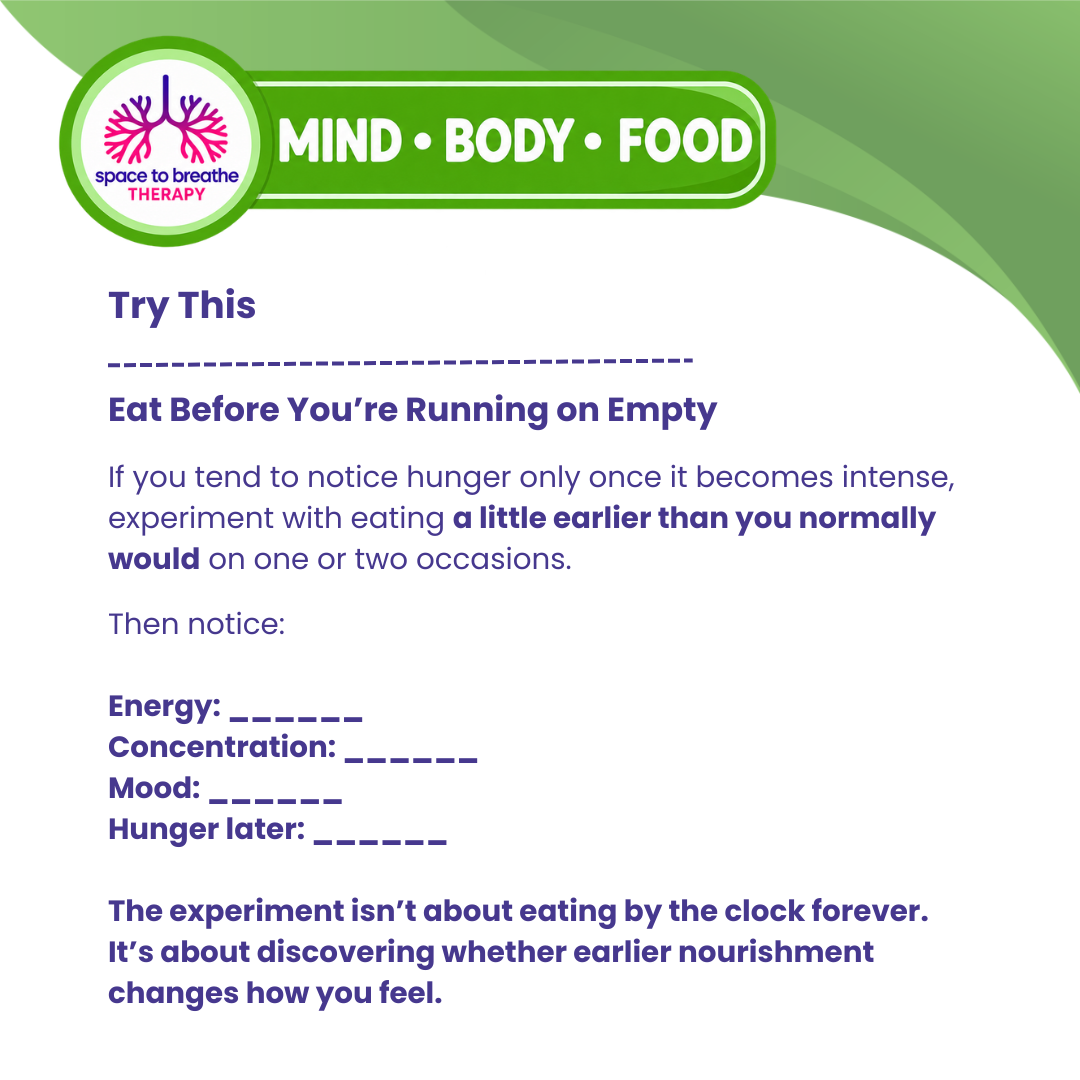
EAT BEFORE YOU’RE RUNNING ON EMPTY
This practical resource explores why some people only recognise hunger when it has already become intense. It explains how busy routines, stress, low mood, trauma, medication, neurodivergence, sensory differences, interoceptive differences and experiences of dieting or restriction can make early hunger signals harder to notice.
Readers are invited to try a gentle experiment by eating a familiar, manageable food or drink slightly earlier than usual on one or two occasions. The included worksheet provides space to notice energy, concentration, mood and later hunger before and after eating. It is designed to support curiosity rather than encourage rigid eating by the clock.
The guide also offers ideas for using reminders, choosing accessible foods, responding flexibly to day-to-day changes and avoiding judgement. A supportive note encourages readers to seek personalised professional help if eating is regularly difficult or physical symptoms are concerning.
This resource is for reflection and practical support. It does not replace individual medical, dietetic or therapeutic advice.
Gemma Learoyd MNCPS




