





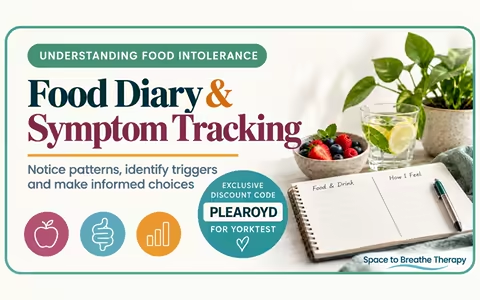
FOOD DIARY & SYMPTOM TRACKING — A SIMPLE GUIDE FOR REAL LIFE
When symptoms feel unpredictable, it can be difficult to remember exactly what you ate, when discomfort started or whether the same thing has happened before. A simple food-and-symptom diary can turn that uncertainty into information you can actually use.
This guide shows you what to record without making tracking overwhelming: meals and ingredients, approximate portions, symptom timing and intensity, bowel changes, sleep, stress, medication and other factors that may affect how you feel. There is a ready-to-use diary template, questions to help you spot genuine patterns and guidance on preparing your notes for a GP or dietitian appointment.
It also explains elimination and reintroduction, warning signs that need medical assessment, how to protect your relationship with food while tracking, book recommendations and a warm composite personal perspective.
The guide includes balanced information about commercial testing. If you independently choose to explore YorkTest, my code is PLEAROYD. YorkTest states that its IgG tests do not diagnose lactose intolerance, food allergy or coeliac disease, so symptom tracking and appropriate professional assessment remain important.
This is not about monitoring every mouthful. It is about noticing enough to understand your body more clearly — with curiosity rather than fear.
Space to Breathe Therapy
NHS — Food intolerance. Page last reviewed 18 June 2026.
Used for: keeping a food-and-symptom diary; targeted elimination followed by reintroduction; breath testing for suspected lactose intolerance; advice not to remove foods without GP/dietitian guidance; warning that some home intolerance tests are not recommended because evidence for accurate diagnosis is limited and they may encourage harmful multiple-food restriction.
British Dietetic Association — Food Allergy and Food Intolerance Testing, August 2026.
Used for: evidence-based distinction between allergy and intolerance and the limitations of food-specific IgG testing as a diagnostic method.
YorkTest — FAQ, Food&DrinkScan and IgG information, accessed September 2026.
YorkTest states its food-specific IgG programmes do not test for food allergy, coeliac disease, enzyme deficiencies such as lactose intolerance, histamine sensitivity or other chemical sensitivities. YorkTest also states food-specific IgG results cannot diagnose, treat or cure a specific food intolerance and that its services are not a substitute for professional medical advice.
CLINICAL SAFETY NOTE
A food-and-symptom diary is an observational tool, not a diagnostic test. Persistent symptoms, unexplained weight loss, blood in stool, persistent vomiting, severe pain, dehydration, difficulty swallowing or significant bowel changes need medical assessment. Sudden swelling, breathing difficulty or collapse may indicate anaphylaxis and requires emergency care. Restrictive elimination diets need particular caution in children, pregnancy, low weight, eating disorders, ARFID and other nutritional vulnerability.