





Food, Emotions & Comfort - Understanding your relationship with food, emotions and sensory comfort
Our experiences with food are influenced by much more than hunger. Emotions, sensory preferences, familiar routines and everyday circumstances can all affect what we feel comfortable eating and how manageable nourishment feels.
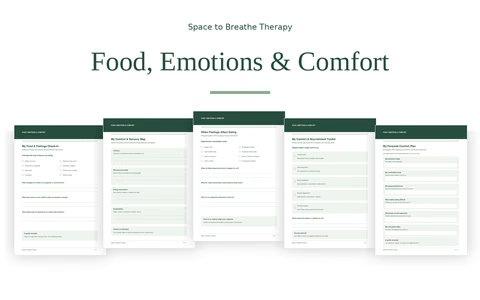
Food, Emotions & Comfort is a five-page PDF workbook designed to help you better understand the relationship between your emotions and eating experiences, recognise your individual needs and identify practical ways to support yourself.
Rather than focusing on changing eating habits or following particular food rules, this workbook encourages self-awareness, compassion and flexibility.
What you’ll find inside
1. My Food & Feelings Check-In
Reflect on how different emotions, including stress, anxiety, sadness, excitement and overwhelm, may influence your appetite, food preferences and eating experiences.
2. My Comfort & Sensory Map
Identify the textures, flavours, smells, environments and familiar routines that help food feel comfortable and manageable. Consider which sensory experiences support your individual needs.
3. When Feelings Affect Eating
Recognise how emotional experiences may influence eating, including changes in appetite, forgetting to eat, seeking familiar foods or finding food preparation difficult. Reflect on patterns and consider what might help during challenging moments.
4. My Comfort & Nourishment Toolkit
Review practical strategies that may support everyday nourishment, including familiar foods, gentle reminders, easier preparation, sensory adjustments and emotional support.
5. My Personal Comfort Plan
Bring together your emotional needs, comfortable foods, sensory preferences, potential challenges and helpful adjustments into a flexible personal plan you can revisit whenever your circumstances change.
Who might find this workbook helpful?
This workbook may be useful for anyone who wants to better understand how emotions and sensory experiences influence their relationship with food.
It may be particularly helpful for neurodivergent individuals, people with sensory sensitivities, those experiencing stress or emotional overwhelm, and anyone who finds eating or food preparation more difficult during periods of emotional change.
A gentle reminder
Eating for comfort is not automatically something that needs to be changed. Familiar foods, predictable routines and sensory preferences can all play an important role in supporting emotional wellbeing.
Your needs may vary depending on your energy, emotions and circumstances, and there is no expectation to respond to food in the same way every day.
This workbook encourages you to recognise what helps, respect your individual experiences and develop supportive approaches that make nourishment feel more comfortable, accessible and manageable.
Maggie,
Space to Breathe Therapy




