





Food & Mood Check-In - Understanding the connections between food, emotions and physical wellbeing
Our relationship with food involves much more than what we eat. Emotions, energy levels, sensory experiences, physical sensations, routines and everyday circumstances can all influence how we feel about food and eating.
Sometimes these connections are easy to recognise, while at other times they may be less obvious. You might notice changes in your appetite when you’re stressed, feel more comfortable eating in certain environments or experience differences in your energy and mood throughout the day.
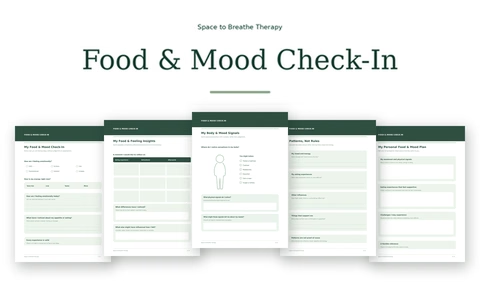
Food & Mood Check-In is a gentle six-page PDF workbook designed to help you become more aware of these experiences without introducing strict food rules, calorie tracking or expectations around how you should eat.
Rather than focusing on changing your eating habits, this workbook encourages curiosity, reflection and a better understanding of your individual needs.
What can you expect from this workbook?
The workbook includes six thoughtfully structured pages, combining visual activities, simple check-ins and guided reflection.
1. My Food & Mood Check-In
Begin by noticing how you’re feeling emotionally and physically. This section provides space to recognise your current mood, energy levels, appetite and eating experiences.
You can use the suggested emotions or describe your feelings in your own words, helping you build awareness without needing to explain or justify how you feel.
2. My Food & Feeling Insights
Consider how you feel before and after eating, alongside any experiences that might be relevant.
This section provides a simple visual activity to help you record observations and reflect on possible differences. It also encourages you to consider other influences, such as sleep, stress, medication, activity or your surroundings.
The intention isn’t to create a strict food diary but to notice experiences that may be meaningful to you.
3. My Body & Mood Signals
Our bodies can communicate needs through sensations such as tiredness, tension, restlessness, hunger, fullness or discomfort.
Using a simple body outline and guided questions, this section encourages you to notice where you experience physical sensations and reflect on what they might mean for your wellbeing.
You don’t need to identify or interpret every sensation. The activity is simply an opportunity to become more familiar with your own experiences.
4. Patterns, Not Rules
Food, mood and energy can be influenced by many different factors, and recognising a pattern doesn’t necessarily mean one experience is causing another.
This section helps you reflect on changes in your mood, energy and eating experiences while considering the wider circumstances that may influence them.
You can also identify routines, environments or approaches that help you feel more comfortable and supported.
5. My Personal Food & Mood Plan: Part One
Bring together some of the observations you’ve made throughout the workbook.
This section provides generous writing spaces to record emotional and physical signals, eating experiences that feel supportive and any challenges you may encounter.
The aim is to create a personal reference that reflects your experiences rather than a list of expectations.
6. My Personal Food & Mood Plan: Part Two
The final section focuses on identifying practical adjustments, helpful resources and gentle next steps.
You might consider changes to your environment, routines, preparation methods or the support available to you.
Your plan can be as simple or detailed as you need, and there is no expectation to make changes immediately.
A flexible approach to food and wellbeing
Everyone experiences food, emotions and physical sensations differently. What feels comfortable or manageable for one person may not work for another.
This workbook recognises that individual needs can be influenced by sensory preferences, neurodivergence, physical health, emotional wellbeing, energy levels and access to support.
There are no right or wrong answers, and you don’t need to complete every activity.
You can work through the pages in order, return to individual sections when something changes or use the personal planning pages as an ongoing reference.
Supporting awareness without pressure
The purpose of this workbook is not to judge your food choices or suggest that every emotional or physical experience is connected to eating.
Instead, it offers a compassionate way to notice what is happening, consider what might be influencing your experiences and recognise opportunities for additional comfort or support.
You may discover patterns that feel useful, or you may find that your experiences vary considerably from one day to another. Both are valid.
Your relationship with food does not need to follow a particular set of rules to deserve understanding and support.
The Food & Mood Check-In workbook provides a gentle starting point for developing greater awareness, recognising your individual needs and creating a flexible approach to nourishment and wellbeing that works for you.
Maggie,
Space to Breathe Therapy




