





Gut-Brain Wellbeing - Understanding the connection between digestion, emotions and everyday experiences
Our digestive system and brain communicate in both directions, meaning our physical and emotional experiences can influence one another. Stress and emotions may affect digestion, while digestive discomfort can influence mood, concentration and overall wellbeing.
However, everyone’s experiences are different, and digestive symptoms should not automatically be attributed to stress or emotional difficulties.
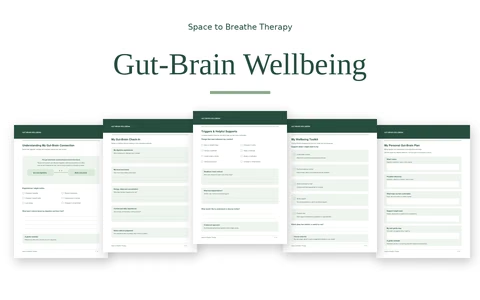
Gut-Brain Wellbeing is a five-page PDF workbook designed to help you recognise personal patterns, understand possible influences on your comfort and consider supportive adjustments that fit your individual circumstances.
Through gentle reflection, practical activities and a personalised wellbeing plan, the workbook encourages greater awareness without restrictive food rules or pressure to make changes.
What you’ll find inside
1. Understanding My Gut-Brain Connection
Learn about the two-way communication between the gut and brain through a simple visual diagram. Consider experiences involving digestion, appetite, energy, concentration and emotions, with space to reflect on what you have noticed.
2. My Gut-Brain Check-In
Reflect on your digestive experiences, mood, stress and everyday circumstances. Use the writing spaces to recognise patterns without feeling that you need to monitor every symptom or track everything perfectly.
3. Triggers & Helpful Supports
Consider factors that may influence your comfort, including changes in routine, sensory experiences, tiredness, illness and eating environments. Identify situations you have noticed and reflect on strategies or support that may have helped previously.
4. My Wellbeing Toolkit
Review practical approaches that may support your individual needs, including comfortable routines, familiar foods, sensory adjustments, gentle movement, rest and emotional support.
Choose ideas that feel realistic and useful rather than following a fixed set of expectations.
5. My Personal Gut-Brain Plan
Bring together your observations, personal preferences, helpful strategies and manageable next steps into a flexible plan that you can revisit as your circumstances change.
Who might find this workbook helpful?
This workbook may be useful for anyone interested in understanding how digestive experiences, emotions and everyday circumstances can interact.
It may be particularly relevant for people who experience digestive discomfort, fluctuating energy, sensory sensitivities or changes in their eating patterns during stressful periods.
The activities also offer a flexible approach for neurodivergent individuals who may experience differences in recognising internal body signals or managing sensory environments.
A gentle reminder
The gut-brain connection is complex, and recognising a possible pattern does not mean you have identified the cause of a symptom.
You do not need to change your diet, remove familiar foods or introduce restrictive routines to benefit from these activities.
The aim is to develop a clearer understanding of your experiences and identify adjustments that may support your comfort and wellbeing.
Persistent, worsening or concerning digestive symptoms should be discussed with an appropriate healthcare professional.
Gut-Brain Wellbeing encourages curiosity, flexibility and self-understanding, helping you consider practical ways to support both your physical and emotional wellbeing without judgement or pressure.
Maggie,
Space to Breathe Therapy




