





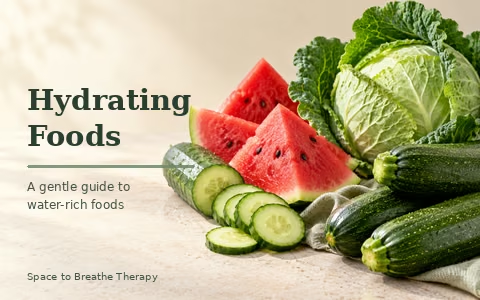
Hydrating Foods
Everyday foods that contain plenty of water Cucumber
 Watermelon
 Cabbage
 Courgette
A simple food fact
Food can contribute to the fluids we take in
Cucumber, watermelon, cabbage and courgette all contain a lot of water. They can be one small part of staying hydrated, alongside drinks and other foods. There is no single food that your body needs in order to “detox”.
More about each food
Cucumber
Cucumber is mostly water and has a fresh, gentle taste. It can be eaten with the peel or peeled, sliced into rounds, cut into sticks, or added to a sandwich or salad.
- For a cooler snack, chill it in the fridge first.
- If the seeds or texture are difficult, try a peeled slice or leave it out altogether.
- It is also fine to enjoy cucumber simply because you like it; it does not need to do a job.
Watermelon
Watermelon has a high water content and a sweet, juicy texture. Some people prefer it cold; others prefer small pieces or a different fruit entirely.
- Serve a small piece, a larger slice, or none at all—your choice.
- Remove seeds if that makes it more comfortable to eat.
- Melon can be messy or strongly textured for some people, so a different familiar food is just as valid.
Cabbage
Cabbage contains water and can have quite different textures depending on how it is prepared. Raw cabbage is crunchy; cooking it makes it softer and changes its flavour.
- It can be shredded finely, cooked until soft, or served in a familiar recipe.
- There is no need to eat it raw if the crunch is uncomfortable.
- Use a familiar alternative if cabbage is not a safe or enjoyable food for you.
Courgette (zucchini)
Courgette is mild and contains plenty of water. Its texture changes with cooking: it can become soft, while lightly cooked pieces may keep more firmness.
- Try it in a familiar dish only if that feels manageable.
- Peeling, slicing, grating or cooking it for longer can change the texture.
- There is no “right” way to prepare it and no expectation to taste it.




