





Listening to My Individual Needs - Understanding your relationship with food in a way that works for you
Our relationship with food is shaped by many different factors, including sensory experiences, emotions, routines, energy levels and individual preferences. Recognising these needs can help make everyday eating experiences feel more comfortable, manageable and supportive.
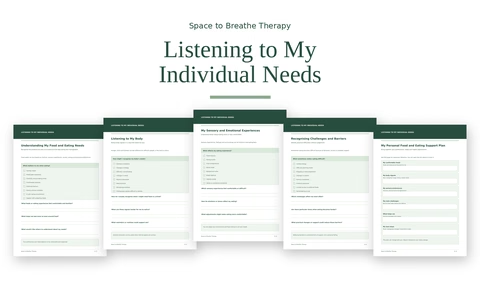
Listening to My Individual Needs is a six-page PDF workbook designed to help you better understand your food and eating needs, recognise potential challenges and identify practical strategies that suit your individual circumstances.
What you’ll find inside
1. Understanding My Food and Eating Needs
Identify your preferences, routines and the things that help you feel comfortable around food.
2. Listening to My Body
Reflect on hunger, fullness, energy levels and other body signals, recognising that these experiences can vary between individuals.
3. My Sensory and Emotional Experiences
Consider how textures, smells, environments and emotions may influence your eating experiences.
4. Recognising Challenges and Barriers
Identify practical, emotional or sensory difficulties that can make eating and food preparation more challenging.
5. Finding Supportive Food Strategies
Consider gentle adjustments that could make everyday eating experiences more manageable.
6. My Personal Food and Eating Support Plan
Bring together what you’ve learned to create a personalised plan based on your individual needs.
Who might find this workbook helpful?
This workbook may be particularly helpful for neurodivergent individuals, people experiencing sensory sensitivities, those navigating changes in appetite or eating routines, or anyone wanting to develop a better understanding of their relationship with food.
A gentle reminder
There are no right or wrong answers, and you don’t need to complete everything at once. Your needs may change depending on your energy, environment or circumstances.
The aim is not to follow rigid food rules, but to recognise what helps you feel comfortable, supported and better able to meet your individual needs.
Maggie,
Space to Breathe Therapy




