





Sensory Needs & Nutrition - Understanding your sensory needs and creating more comfortable eating experiences
Eating involves much more than taste. Food textures, smells, temperatures, appearance and even the sounds associated with eating can influence how comfortable or challenging mealtimes feel.
For people with sensory sensitivities, including many autistic and neurodivergent individuals, these experiences can affect food preferences, eating environments and everyday nourishment.
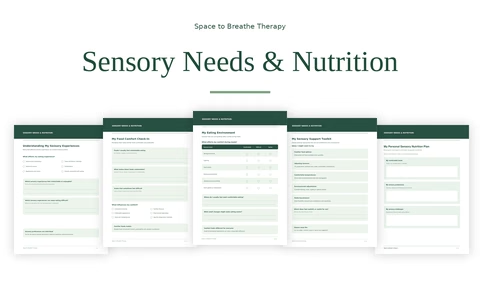
This gentle, six-page PDF workbook provides practical activities and reflection spaces to help you better understand your sensory experiences and identify adjustments that support your individual needs.
What you’ll find inside
1. Understanding My Sensory Experiences
Recognise how different sensory factors influence eating, including textures, flavours, smells, temperatures and appearance. Reflect on experiences that feel comfortable and those that may create difficulties.
2. My Food Comfort Check-In
Identify familiar or preferred foods and consider what makes them comfortable. Recognise particular food characteristics that may influence your preferences or create sensory challenges.
3. My Eating Environment
Consider how lighting, noise, food smells, seating arrangements and social surroundings affect your comfort during meals. Identify environmental adjustments that could make eating more manageable.
4. My Sensory Support Toolkit
Discover practical approaches to supporting sensory comfort, including adjusting food textures, choosing familiar options, managing environmental factors and reducing pressure around eating.
5. My Personal Sensory Nutrition Plan
Bring together your comfortable foods, sensory preferences and challenges into a personalised reference.
6. My Personal Sensory Nutrition Plan (continued)
Identify supportive environments, practical adjustments and manageable next steps. Larger writing spaces allow you to develop a plan that reflects your individual experiences.
Supporting nourishment without pressure
Sensory preferences are personal, and there is no expectation to tolerate uncomfortable experiences, change familiar foods or follow a particular eating routine.
This workbook encourages understanding rather than judgement, helping you recognise what works for you and consider adjustments that feel realistic.
You can complete the activities at your own pace, revisit sections whenever helpful and adapt your personal plan as your needs change.
The aim is to support comfortable, manageable nourishment while recognising that both sensory wellbeing and nutritional needs deserve consideration.
Maggie,
Space to Breathe Therapy




