





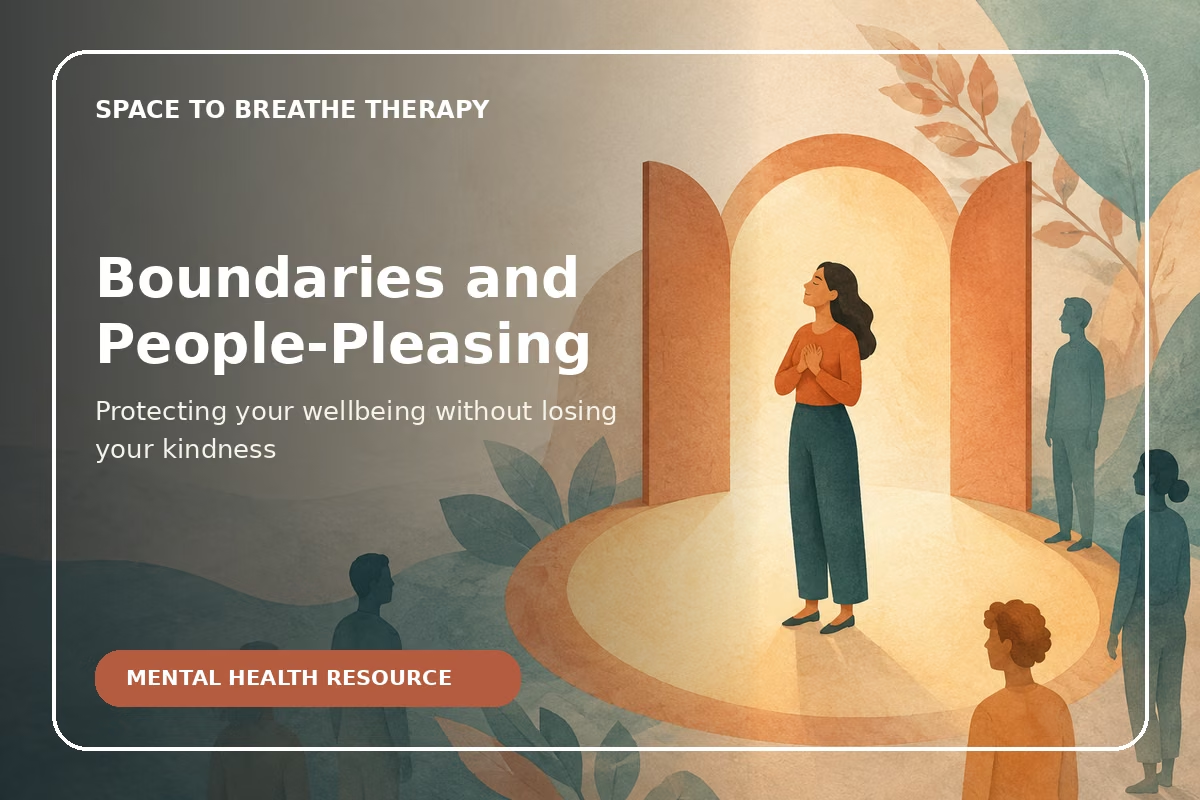

Boundaries and People-Pleasing
Protecting your wellbeing without losing your kindness
A warm, practical guide to boundaries and people-pleasing. It explores why saying no can feel unsafe, how resentment and exhaustion develop, and how to communicate limits clearly without believing that self-respect is selfish.
People-pleasing is often a protective strategy rather than a personality flaw. Agreeing, anticipating needs, avoiding conflict or hiding discomfort may once have helped preserve connection or safety. The cost can be exhaustion, resentment, loss of identity and relationships built around what you provide rather than who you are. Boundaries allow kindness to include you.
What a boundary really is
A boundary describes what you will do, accept or participate in. It is not a method of controlling another person. 'If shouting begins, I will end the call' is a boundary; 'You are not allowed to feel angry' is not. Boundaries become clearer when they are specific, realistic and connected to an action you can take.
Why saying no can feel dangerous
If disagreement previously led to criticism, rejection, anger or withdrawal, the nervous system may treat a simple limit as a threat. Anxiety after saying no does not prove the boundary was wrong. Begin in lower-risk situations and prepare a short phrase. You are learning that another person's disappointment can exist without you immediately abandoning yourself.
Recognising signs that a limit is needed
Notice resentment, dread, over-explaining, agreeing before thinking, cancelling your own needs or feeling responsible for everyone's mood. The body may recognise the limit before the mind does. Create a pause phrase: 'Let me check and come back to you.' Time reduces automatic agreement and allows you to consider capacity honestly.
Communicating clearly
Use fewer words than anxiety wants. State the decision, offer a genuine alternative only if you want to, and avoid turning the limit into a court case. 'I cannot do Friday; I am available next Tuesday' is enough. Repeated justification can invite negotiation. A respectful person may be disappointed and still accept your answer.
Boundaries at work and in caring roles
Workload, availability, communication and emotional labour all need limits. Clarify priorities when everything is labelled urgent, protect breaks and document agreements. Carers also require rest and support. Love does not create endless capacity. Sustainable care includes sharing tasks, accessing services and acknowledging what one person cannot safely provide.
When others react badly
Some people benefited from your lack of boundaries and may resist change. Stay consistent, reduce debate and consider what level of contact is safe. You are not responsible for regulating another adult's reaction. If setting limits risks violence, coercion, housing or financial safety, seek specialist support and plan carefully rather than confronting the situation alone.
Receiving boundaries from other people
Healthy boundaries work both ways. Another person's no may activate rejection or shame, but it is not automatically a judgement of your worth. Ask for clarity once, respect the answer and care for the feeling elsewhere. Relationships become safer when both people can have needs, limits and separate identities.
Building self-trust
Keep small promises to yourself, notice capacity before committing and review what happens after a boundary. Did the feared outcome occur? What did you learn? Self-trust grows through repeated evidence that your needs are worth consulting. Therapy or coaching can help when people-pleasing is linked with trauma, attachment wounds or unsafe relationships.
A boundary does not make you unkind. It allows your kindness to come from choice rather than fear.
Important note
This article provides general information and compassionate guidance. It does not replace personalised medical advice, diagnosis or mental health care. If you or someone else is in immediate danger or unable to stay safe, contact emergency services or an urgent crisis service where you live.