





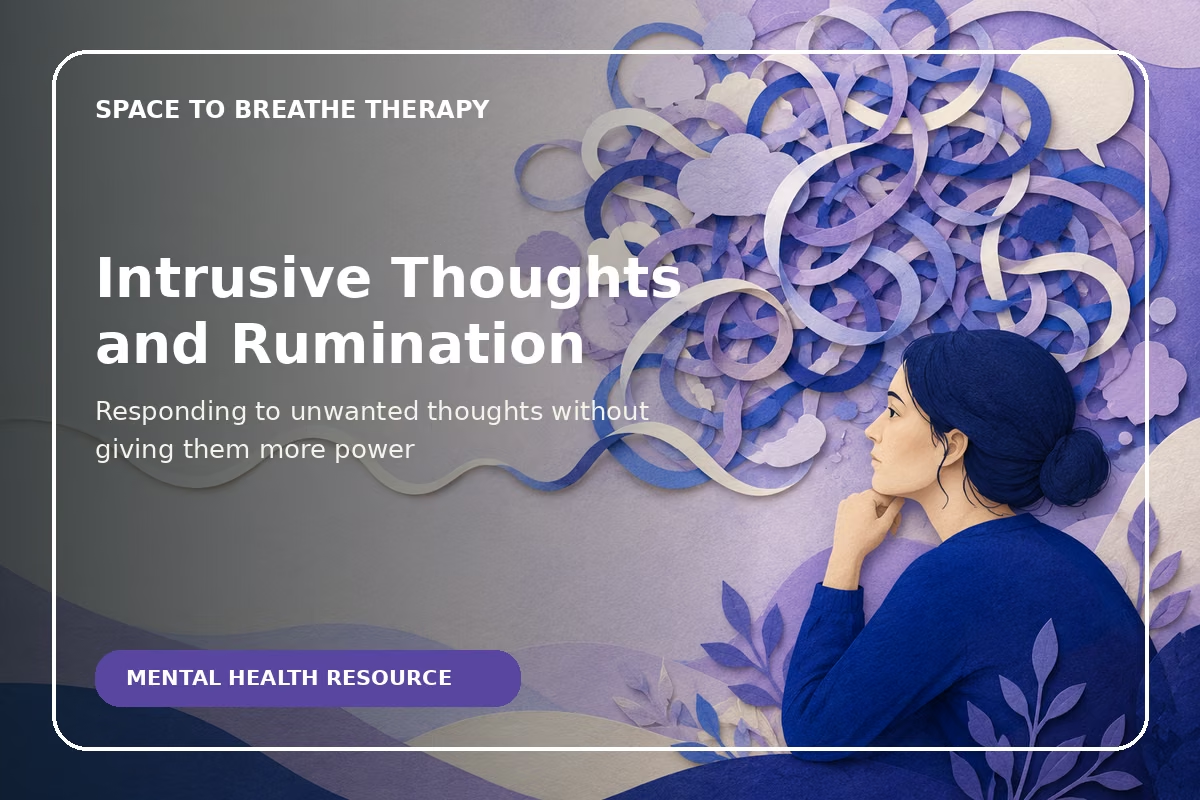

Intrusive Thoughts and Rumination
Responding to unwanted thoughts without giving them more power
A compassionate guide to intrusive thoughts and rumination, explaining why unwanted thoughts do not define character or intention. It offers practical ways to reduce checking, mental debate and shame while knowing when professional support may help.
Intrusive thoughts are unwanted ideas, images, urges or doubts that enter the mind without invitation. Rumination is the repeated mental review of a concern, event or question in an attempt to reach certainty or relief. Both can feel frightening or exhausting, especially when the thought conflicts with a person's values. Having a thought is not the same as wanting it, believing it or acting on it.
Why unwanted thoughts feel so important
The mind naturally produces a constant stream of material. A thought becomes sticky when it is interpreted as dangerous or meaningful: 'Why did I think that?' Anxiety then increases attention, making the thought return more often. The recurrence can be mistaken for proof that it matters. In reality, attempts to force a thought away commonly make it more noticeable.
Thoughts are not intentions
Intrusive thoughts often target what a person cares about most: safety, morality, relationships, identity or responsibility. Distress about the thought may actually reflect those values. Avoid asking someone to prove they would never act on every thought; absolute reassurance offers short relief but can strengthen the cycle. Focus on behaviour, values and the choices being made in real life.
How rumination keeps the question open
Rumination may involve replaying conversations, reviewing memories, researching, comparing feelings or testing whether you are certain. It promises a final answer but usually produces new questions. Ask whether the thinking is leading to a practical decision or circling the same uncertainty. If it is circling, label it gently and return to a chosen activity rather than winning the argument in your head.
Reducing checking and reassurance
Checking your body, memory, messages or another person's reaction can temporarily reduce anxiety. Repeated checking teaches the brain that the doubt required an emergency response. Delay one check, shorten a search or write the question down without answering it immediately. Progress is the ability to carry some uncertainty, not the complete disappearance of discomfort.
A different response to the thought
Try: 'I am noticing the thought that...' This creates a little space without denying the experience. Do not replace it with forced positivity or analyse whether it is true in that moment. Allow the thought to be present while choosing an ordinary action that reflects your values. Attention can move even when the thought has not left.
When the past is being replayed
Rumination after a mistake or painful interaction may be an attempt to prevent future harm. Identify any real repair or learning that is needed, take that action once and recognise when further review has become self-punishment. Hindsight contains information that was not available at the time. Accountability can be specific and time-limited; shame does not improve it.
Supporting someone without feeding the cycle
Listen to the distress without repeatedly confirming certainty. Say, 'I can see how upsetting this feels,' and ask what response they are practising. Avoid reacting with shock to the content of an intrusive thought. Encourage routine, nourishment, rest and professional support when needed. The person needs dignity, not interrogation.
When to seek specialist support
Intrusive thoughts and repetitive mental rituals can occur with anxiety, trauma, depression and obsessive-compulsive difficulties. Seek assessment when thoughts consume significant time, cause avoidance or lead to repeated checking and reassurance. Evidence-based therapy can help. Urgent support is needed if there is genuine intent or an immediate risk of harm; unwanted thoughts without intent should still be discussed safely and without shame.
A thought can be loud, unwanted and completely inconsistent with who you are. You are defined by your values and actions, not every event in your mind.
Important note
This article provides general information and compassionate guidance. It does not replace personalised medical advice, diagnosis or mental health care. If you or someone else is in immediate danger or unable to stay safe, contact emergency services or an urgent crisis service where you live.




