





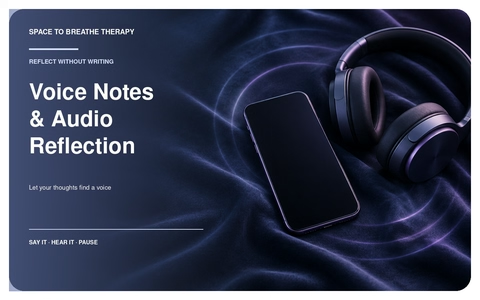

Voice Notes and Audio Reflection
Sometimes we have so much going on inside our minds, yet finding the words to explain it can feel impossible.
You might be carrying the weight of a difficult day, replaying a conversation, feeling overwhelmed or simply struggling to understand why something has affected you so deeply.
Writing about those feelings is not always easy. For some people, putting thoughts onto paper feels natural. For others, particularly those experiencing ADHD, autism, dyslexia, emotional exhaustion, anxiety or difficulties organising thoughts, writing can become another source of pressure.
Voice Notes and Audio Reflection is a warm, compassionate three-page guide from the Reflecting Without Writing series, created by Maggie Learoyd at Space to Breathe Therapy.
This resource introduces a different way of reflecting: allowing yourself to speak, pause, think aloud and explore your experiences without worrying about spelling, handwriting, sentence structure or finding the perfect words.
You do not need to know what you want to say before you begin. Sometimes understanding comes through the process of speaking.
Inside this guide, you will explore:
- Why speaking can sometimes feel easier than writing.
- How voice notes can provide a private space for emotional reflection.
- Gentle opening phrases to help when you do not know where to begin.
- A simple, manageable approach to recording your thoughts.
- Using speech-to-text as an alternative to traditional journalling.
- Recognising emotions, patterns and experiences through spoken reflection.
- Deciding whether to listen back, save, share or delete your recordings.
- Alternatives for people who find hearing or recording their own voice uncomfortable.
- Giving yourself permission to pause, stop or leave thoughts unfinished.
Reflection Without Expectations
This guide is not about analysing every feeling or finding an immediate solution to everything that troubles you.
It is about creating a little space for yourself.
Some days, your reflection might be a few sentences. Other days, it might be a long conversation with yourself. You may cry, laugh, lose your train of thought or discover that what you thought was bothering you was only part of something much bigger.
All of these experiences are valid.
There is no expectation to listen to your recording afterwards, and nothing needs to be kept as evidence of your progress. Your recordings belong to you, and you remain in control of what happens to them.
For anyone who finds traditional journalling overwhelming, this resource offers another way to connect with their thoughts, emotions and personal experiences.
Because reflection is not about producing something perfect. It is about giving yourself the opportunity to be heard — even when the only person listening is you.
Written by Maggie Learoyd Space to Breathe Therapy Reflecting Without Writing Series




