





Asexual – Understanding Attraction, Intimacy and Relationships
Sexual attraction is often spoken about as though everyone experiences it in roughly the same way. We are surrounded by messages about sex, dating and attraction, which can make it difficult for people whose experiences are different to recognise or understand themselves.
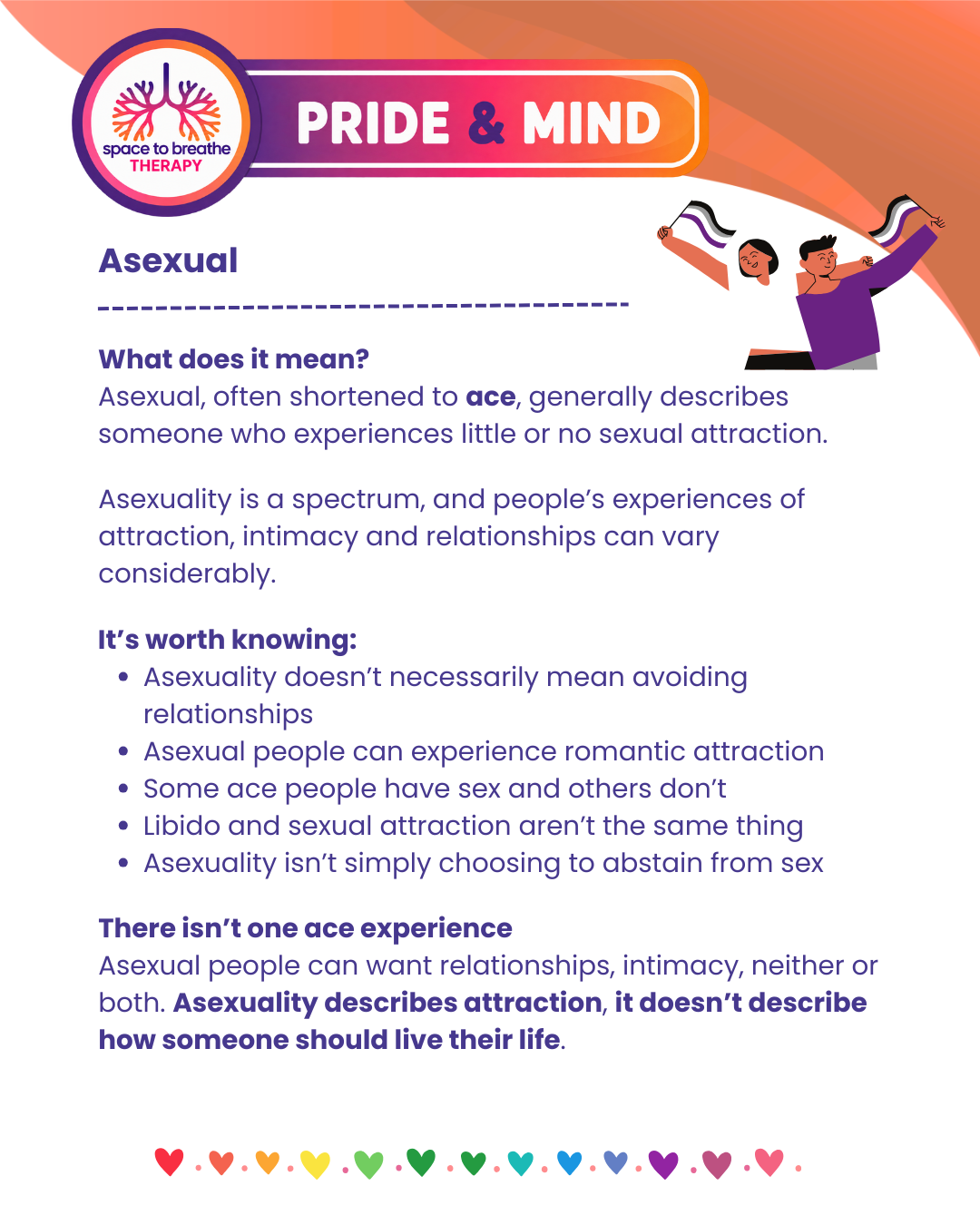
Asexual, often shortened to ace, generally describes someone who experiences little or no sexual attraction.
Asexuality is a spectrum, and there is no single way to be asexual.
What does asexuality actually mean?
Asexuality describes sexual attraction. It doesn't automatically tell us whether someone wants a relationship, enjoys physical affection, has sex, experiences romantic attraction or has a libido.
These are different experiences that are often mistakenly grouped together.
One asexual person might enjoy cuddling, kissing and physical closeness.
Another might have little interest in physical intimacy.
Some ace people have sex, while others don't.
Some want romantic relationships, while others may be aromantic and experience little or no romantic attraction.
None of these experiences makes someone more or less asexual.
Sexual attraction and libido aren't the same
This distinction can be particularly helpful.
Sexual attraction is generally about experiencing sexual interest or attraction towards another person.
Libido refers to sexual drive or desire, which can exist without being directed towards a particular person.
An asexual person may therefore experience libido without experiencing sexual attraction.
Likewise, someone's libido can change because of many factors without changing how they understand their sexual orientation.
Asexuality isn't abstinence
Choosing not to have sex and being asexual aren't the same thing.
Celibacy or abstinence describes a person's behaviour or choice.
Asexuality describes their experience of attraction.
An asexual person may choose to have sex, just as someone who experiences sexual attraction may choose not to.
Behaviour alone doesn't necessarily tell us somebody's sexuality.
Asexuality is a spectrum
The ace spectrum includes people with a wide variety of experiences.
Some people may experience sexual attraction very rarely or only under particular circumstances. Others may experience none.
People might use terms such as grey-asexual or demisexual to describe their experience more specifically, while others simply prefer asexual or ace.
Labels can help people understand themselves, but nobody has to find an increasingly specific label unless it is useful to them.
Relationships can still be deeply meaningful
Asexual people can form loving, committed and intimate relationships.
For some, romantic partnership is important.
For others, friendship, chosen family, queerplatonic relationships, community or other connections may sit at the centre of their lives.
And some people are happiest without a partner.
There isn't one relationship structure that represents a successful or fulfilling life.
If you're wondering whether you might be asexual
Perhaps you've spent years wondering why other people seem to talk about sexual attraction in a way you don't recognise.
You may have wondered:
“Am I supposed to feel something I'm not feeling?”
You might even have tried relationships or sex because you believed that was what you were expected to want.
Learning about asexuality can sometimes provide language for experiences that previously felt difficult to explain.
You don't need to prove anything.
You don't need a particular relationship or sexual history.
And you don't need to make a permanent decision about a label today.
A message from me
One of the things I would want somebody reading this to understand is that there isn't a correct amount of attraction you are supposed to experience.
We can put so much pressure on ourselves when our lives don't resemble the messages we see around us.
You may want romance but not sex.
You may want intimacy in ways that don't involve either.
You may want both.
You may want neither.
What matters is being able to understand your own needs, communicate your boundaries and build relationships that feel safe, respectful and right for you.
If asexual is a word that finally helps something make sense, you are allowed to explore it without having to defend or prove it.
Asexuality describes something about how you experience attraction. It doesn't decide how much you can love, connect, care or belong.
Until next time, give yourself space to breathe.
With love,
Maggie