





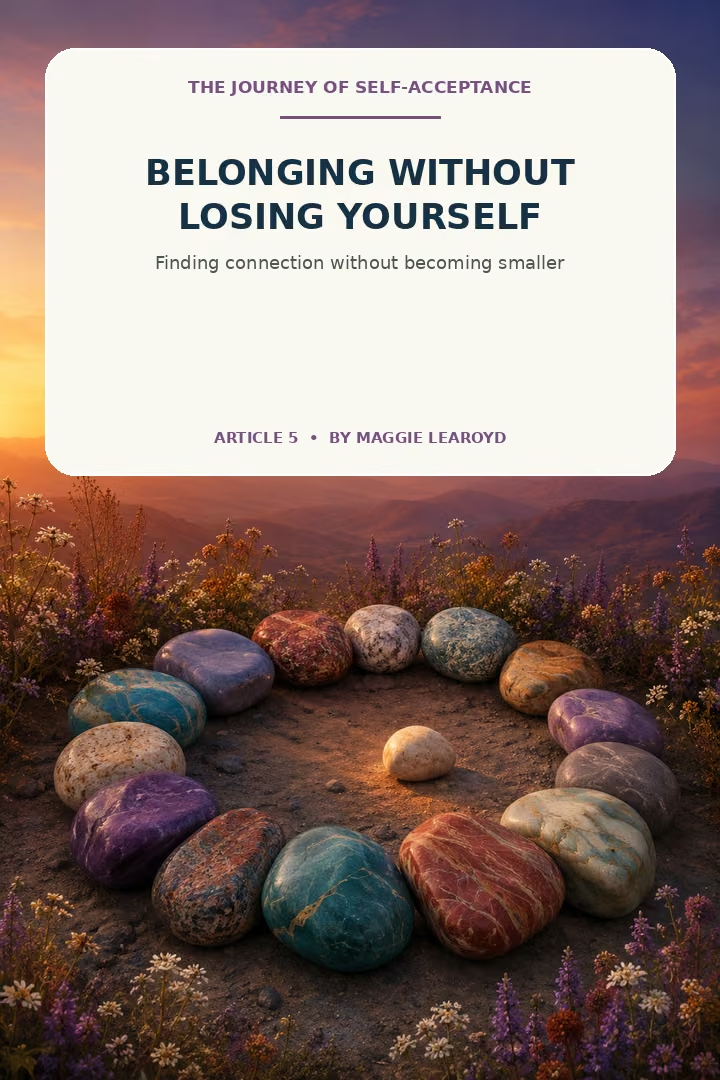
Belonging Without Losing Yourself
The Journey of Self-Acceptance – Article 5
The need to belong is deeply human. We want relationships and communities in which we feel accepted, understood and valued. Yet belonging can become painful when it appears to require changing, hiding or reducing important parts of ourselves.
In this article, I explore the difference between fitting in and belonging. Fitting in often asks us to study expectations and become what a group will accept. Belonging allows us to remain recognisably ourselves while participating in connection.
The resource considers the ways LGBTQ+ people may become skilled at fitting in: avoiding conversations, changing pronouns, laughing at uncomfortable jokes or hiding photographs and relationships. These adaptations can preserve safety while also creating loneliness and disconnection.
I have written this for people searching for community, and for anyone who has found a place to belong but feels they must leave part of themselves outside. It is also for groups and organisations that want inclusion to be experienced rather than simply announced.
The article encourages reflection on how connection feels. Can you express a different view, set a boundary, acknowledge your identity and continue to be treated with respect? Healthy belonging does not demand sameness, and it does not make acceptance conditional on silence.
My hope is that this resource helps people recognise that not every group will be the right fit. Leaving an environment that repeatedly requires self-erasure is not failure. It may create space for relationships built on greater honesty and mutual care.
You deserve belonging that does not cost you yourself. The right connections will not require perfection, but they will make room for your identity, your boundaries and the person you are continuing to become.
By Maggie Learoyd
Psychotherapist | ADHD, Autism & ARFID Specialist
Founder of Space to Breathe Therapy