





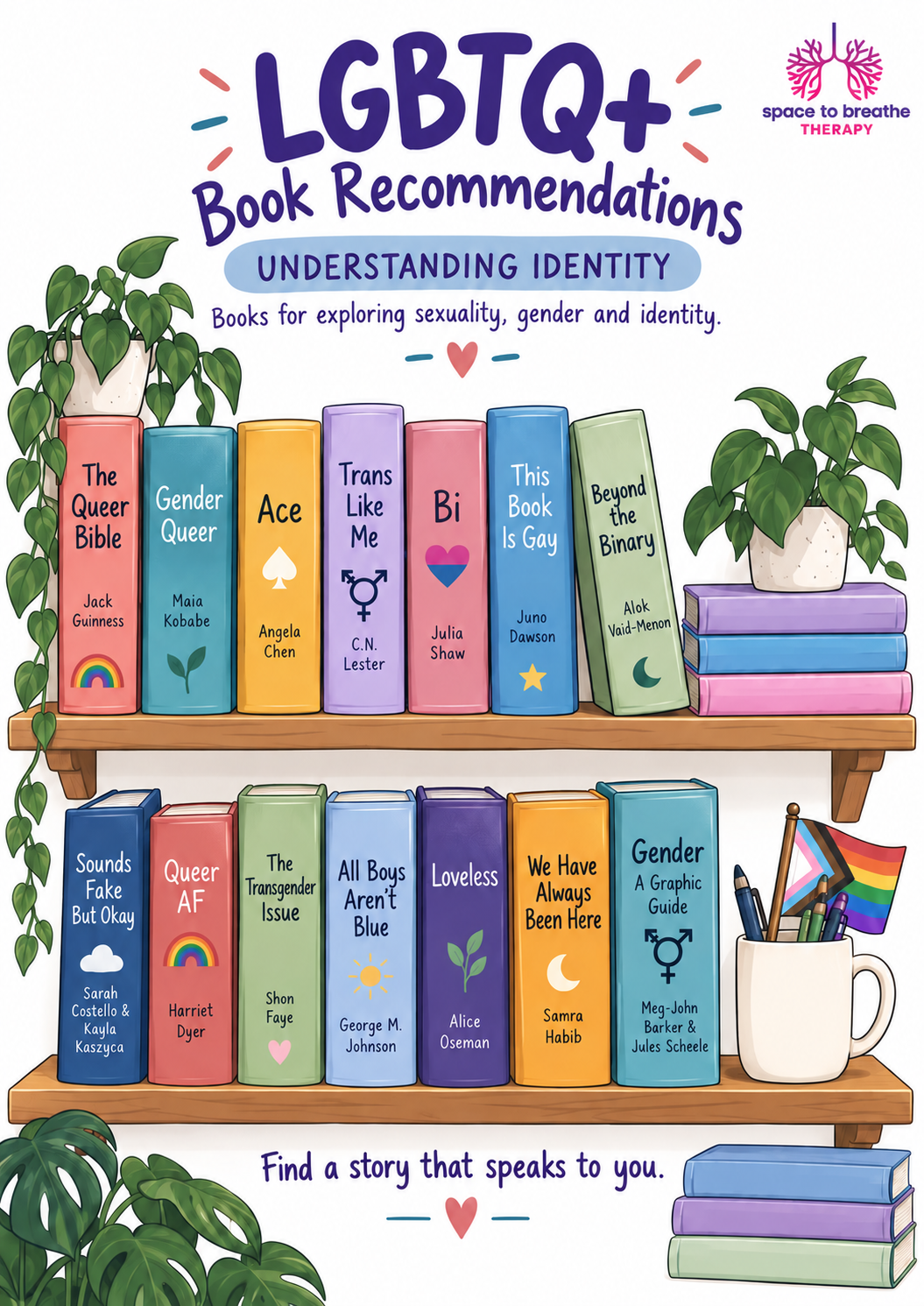
LGBTQ+ Book Recommendations: Understanding Identity
Exploring LGBTQ+ identity can look different for everyone. These books offer a mixture of accessible education, personal experience, history and storytelling, helping readers explore sexuality, gender, relationships and belonging from a range of perspectives.
The Queer Bible — Jack Guinness
A collection of essays celebrating influential LGBTQ+ figures and the people who helped writers understand and embrace their identities. A warm introduction to queer culture, community and representation.
Gender Queer — Maia Kobabe
An illustrated memoir following Maia Kobabe’s exploration of gender identity, sexuality and what it means to identify outside conventional ideas of gender. Personal, visual and reflective.
Ace — Angela Chen
An accessible exploration of asexuality that looks at attraction, relationships, desire and the expectations society places around sex. It combines research with personal stories and experiences.
Trans Like Me — C.N. Lester
Explores trans identities through history, culture and lived experience while challenging some common assumptions about gender. Particularly useful for readers wanting a broader understanding of what being trans can mean.
Bi — Julia Shaw
An exploration of bisexuality through science, history, culture and personal experience. It examines bisexual identity and challenges misconceptions and stereotypes surrounding attraction to more than one gender.
This Book Is Gay — Juno Dawson
A conversational introduction to LGBTQ+ identities, coming out, relationships, sex and community. Written particularly with younger readers in mind, although it can also be useful for anyone beginning to learn about LGBTQ+ experiences.
Beyond the Gender Binary — Alok Vaid-Menon
A short, accessible book challenging the idea that everyone must fit neatly into the categories of man or woman. It encourages readers to think differently about gender and make space for identities beyond the binary.
Sounds Fake But Okay — Sarah Costello & Kayla Kaszyca
Based on the creators’ podcast, this explores asexuality and aromanticism through the perspectives of two friends with different experiences of attraction. Conversational, humorous and approachable.
Queer AF — Harriet Dyer
An accessible guide to LGBTQ+ identities, terminology, history and community. A useful starting point for readers who want to understand the breadth of experiences represented under the LGBTQ+ umbrella.
The Transgender Issue — Shon Faye
Looks beyond individual identity to examine the social and political circumstances affecting trans people, including healthcare, employment and discrimination. More detailed and political than some of the introductory books in this collection.
All Boys Aren’t Blue — George M. Johnson
A memoir-manifesto exploring growing up Black and queer, including identity, family, masculinity, relationships and self-acceptance. Written especially with young adults in mind.
Loveless — Alice Oseman
A fictional coming-of-age story following Georgia as she begins university and tries to understand why her experiences of romance and attraction seem different from those around her. It provides particularly meaningful representation of aromantic and asexual identity.
We Have Always Been Here — Samra Habib
A memoir exploring the author’s experiences of growing up Muslim, immigrating to Canada and discovering and embracing a queer identity. It considers the intersections between sexuality, faith, culture, family and belonging.
Gender: A Graphic Guide — Meg-John Barker & Jules Scheele
An illustrated introduction to the many ways gender can be understood. It explores gender identity, expression, social expectations and the history of ideas about gender in an approachable graphic format.
A little note for readers
There is no single book that can represent every LGBTQ+ experience. Identities are personal, language evolves, and different authors bring different perspectives. These recommendations are places to explore, learn and reflect, rather than instructions for how anyone should experience their identity.
Find a story that speaks to you.
By Gemma Learoyd MNCPS
Therapist & Coach | Space to Breathe Therapy