





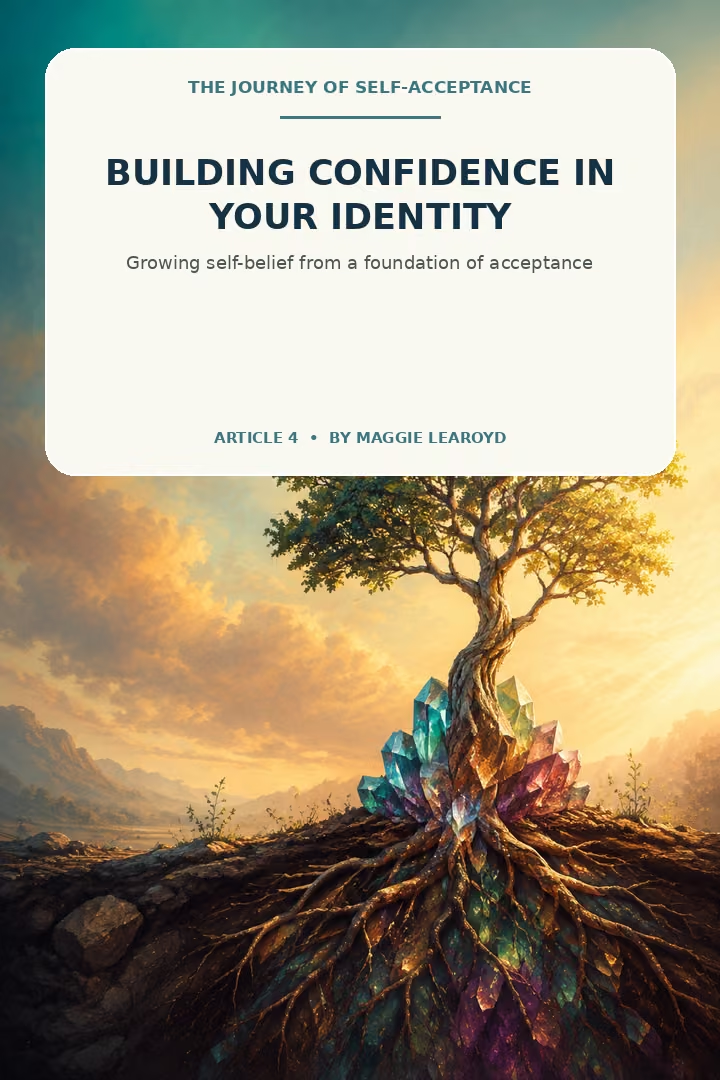
Building Confidence in Your Identity
The Journey of Self-Acceptance – Article 4
Self-acceptance and confidence are closely connected, but they are not the same. Acceptance recognises worth even on an uncertain day. Confidence is the growing belief that we can manage situations, make decisions and meet challenges without abandoning ourselves.
In this article, I explore how confidence can develop for LGBTQ+ people whose self-belief may have been shaped by messages to stay quiet, hide or seek approval. Confidence is not something people either possess or lack. It grows through experience, repetition and supportive relationships.
The resource considers the limits of external validation. Praise, achievement, relationships and acceptance can feel important, but confidence becomes fragile when worth depends entirely on them. A steadier foundation begins with the belief that identity does not need to be proved or justified.
I have written this for people who want to feel more secure in their identity, and for those supporting somebody whose confidence changes across different environments. Feeling strong in one place and cautious in another is not inconsistency; it often reflects differences in safety and belonging.
The article encourages achievable acts of confidence: expressing an opinion, setting a boundary, recognising a strength, trying something new or recovering compassionately after a mistake. Confidence develops through doing, not through waiting until every doubt disappears.
My hope is that this resource helps redefine confidence as grounded self-trust rather than loudness or certainty. It can be quiet, thoughtful and still include anxiety. Courage and nervousness frequently exist together.
You do not need to prove that your identity deserves respect. Confidence grows when you begin treating yourself as somebody whose voice, needs and future are already worth protecting.
By Maggie Learoyd
Psychotherapist | ADHD, Autism & ARFID Specialist
Founder of Space to Breathe Therapy