





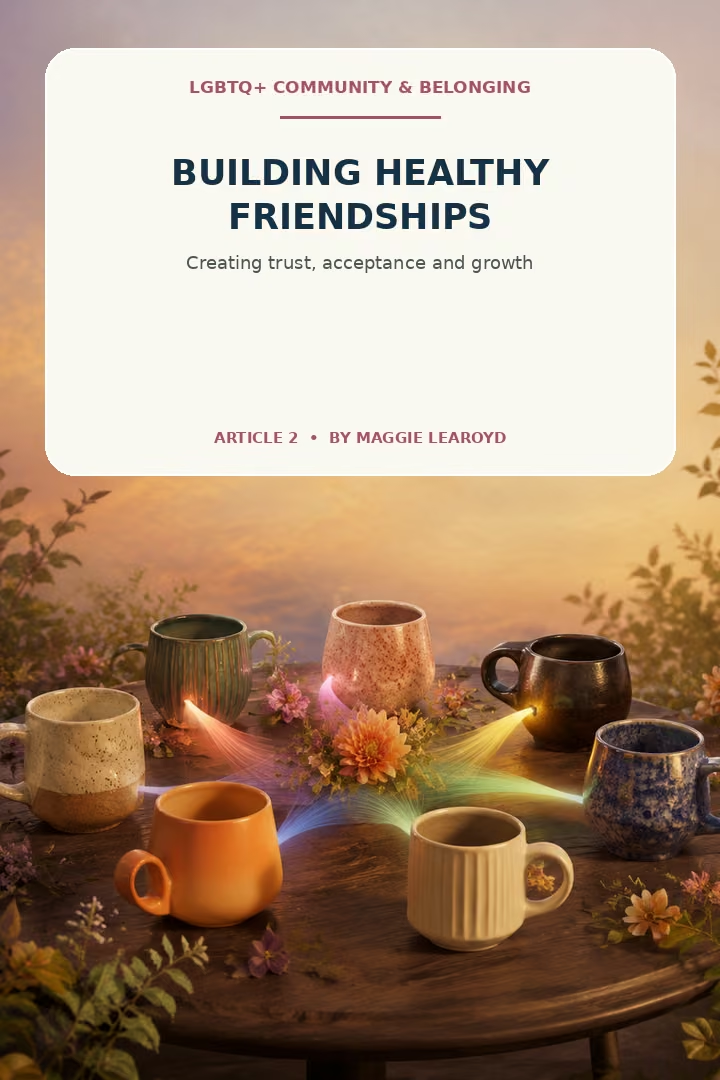
Building Healthy Friendships
LGBTQ+ Community and Belonging – Article 2
Friendship can be one of the strongest foundations for emotional wellbeing. Good friends offer encouragement during difficult times, celebrate our successes and remind us that we do not have to navigate life alone. For many LGBTQ+ people, friendship can also provide a powerful experience of acceptance.
In this article, I explore healthy friendships within the LGBTQ+ community. Friends may become chosen family when relatives are unavailable, distant or unable to offer understanding. These relationships can create stability, confidence and a place where identity does not have to be defended or explained.
The resource considers the qualities that allow friendship to grow: mutual respect, trust, communication, reciprocity, honesty and the freedom for both people to maintain their own boundaries. A healthy friendship does not require constant agreement or availability, but it should allow differences to be discussed without control, punishment or humiliation.
I have written this for anyone building new friendships, reflecting on established relationships or wondering why a connection leaves them feeling depleted rather than supported. It is also for people who may feel pressure to remain in an unhealthy friendship because community and belonging have previously been difficult to find.
The article encourages us to notice how friendship feels over time. Can you say no? Is care shared? Are achievements celebrated without competition? Can misunderstandings be repaired? These questions help distinguish ordinary relationship difficulties from patterns that repeatedly undermine wellbeing.
My hope is that this resource supports friendships in which people can grow without losing themselves. Clear boundaries, honest conversations and respect for changing needs can strengthen a relationship rather than threaten it.
You deserve friendships that make room for your whole self. Healthy connection is not measured by how much you tolerate or give away. It grows when care, respect and responsibility move in both directions.
By Maggie Learoyd
Psychotherapist | ADHD, Autism & ARFID Specialist
Founder of Space to Breathe Therapy




