





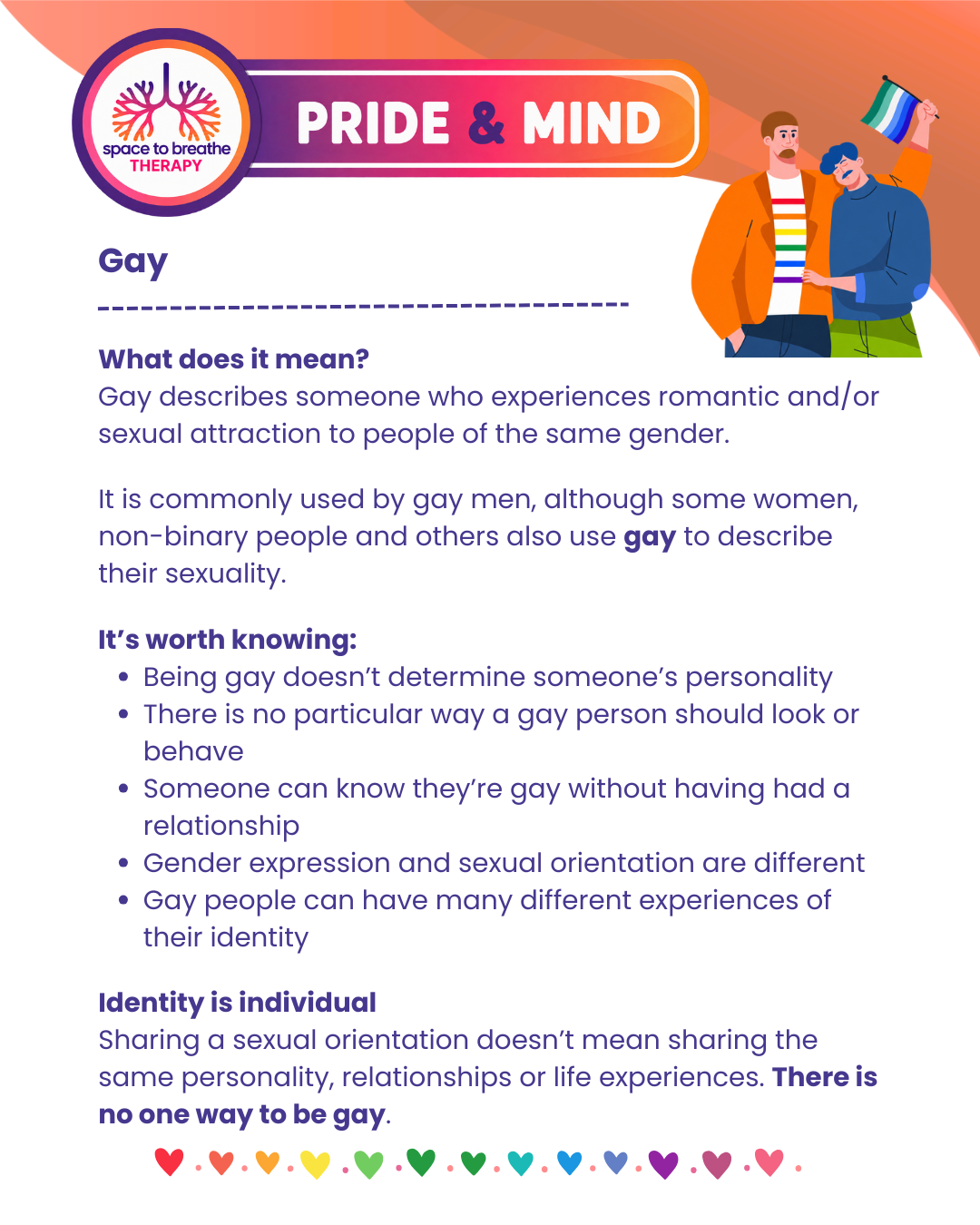
Gay – Understanding Sexual Orientation, Identity and Individual Experience
Being gay describes someone who experiences romantic and/or sexual attraction to people of the same gender. The word is commonly associated with gay men, although some women, non-binary people and others also choose to use the term to describe their sexuality.
But knowing the definition of gay tells us only one small part of someone's story.
There is no one way to be gay
Sexual orientation doesn't determine someone's personality, appearance, interests, career, relationships or the way they express themselves.
A gay person might be outgoing or quiet, masculine, feminine or neither. They may love Pride celebrations or have absolutely no interest in them. They may be deeply involved in LGBTQ+ communities or rarely think about their sexuality in everyday life.
There isn't a checklist someone has to complete to be “gay enough.”
You don't need experience to know
One misconception is that somebody can't know they're gay until they've had a same-gender relationship or sexual experience.
We don't generally expect heterosexual people to prove their sexuality through experience, and gay people shouldn't have to either.
Attraction, feelings and someone's understanding of themselves can exist long before a relationship does.
For some people that understanding arrives very young. For others, it develops gradually or becomes clearer much later in life.
There is no deadline for understanding your sexuality.
Coming out is personal
Being gay doesn't mean someone has to tell everyone about their sexuality.
Coming out may feel liberating for one person and frightening or unsafe for another. Someone may be open with friends but not family, open at home but not at work, or choose not to disclose their sexuality at all.
Coming out isn't a single event either. LGBTQ+ people can find themselves deciding whether to disclose their identity repeatedly throughout their lives.
Nobody owes another person information about their sexuality.
Relationships are relationships
Gay relationships contain the same variety found in any other relationships.
Some people want marriage and children. Others don't. Some have long-term partners, some date casually, some are single, and some aren't interested in relationships at all.
Rather than assuming what somebody's relationship should look like, it is better to allow people to define it for themselves.
Beyond tolerance
There's an important difference between somebody feeling tolerated and feeling genuinely accepted.
Acceptance means being able to mention a partner without checking whether it's safe first. It means family members treating a same-gender relationship with the same importance as any other relationship. It means not having to laugh at uncomfortable jokes or edit ordinary details of your life to make other people comfortable.
Sometimes the smallest everyday behaviours communicate the greatest acceptance.
A message from me
When we talk about LGBTQ+ identities, I think it's important that we don't accidentally reduce people to a label.
Being gay may be an incredibly important part of someone's identity — or it may simply be one part of a much bigger person.
See the person first.
Listen to how they describe themselves, don't make assumptions about what their life looks like, and allow them to decide how important their sexuality is within their own story.
And if you're reading this because you're beginning to understand your own sexuality, you don't need to prove anything to anyone.
You are allowed to understand yourself in your own time.
Until next time, give yourself space to breathe.
With love,
Maggie