





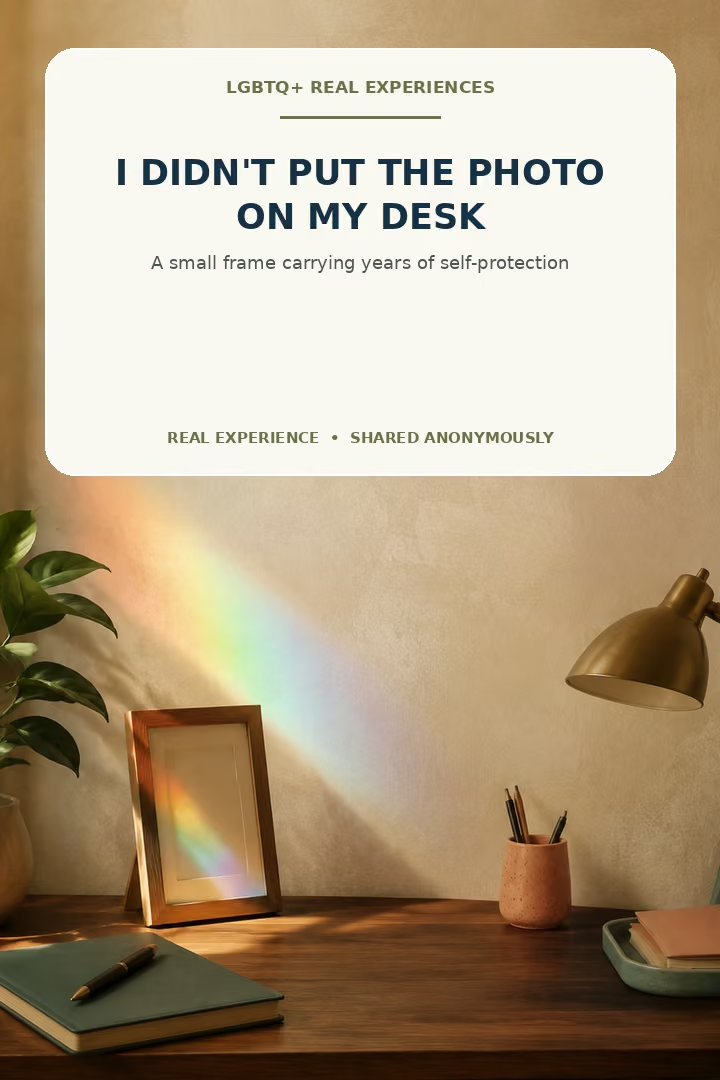
I Didn't Put the Photo on My Desk
LGBTQ+ Real Experience – Shared Anonymously
An empty desk can look like a matter of personal taste. Sometimes it holds a much bigger story: photographs kept at home, questions carefully avoided and a relationship loved privately because visibility still feels uncertain.
This shared real experience follows someone who did not display a photograph of their partner while colleagues openly shared pictures of their families. Nobody had said the photograph was unwelcome, yet years of keeping that part of life private made the small frame feel enormous.
The resource explores anticipatory rejection - the nervous system preparing for a response before it happens. Avoidance can reduce anxiety temporarily, but it can also reinforce the belief that being seen is dangerous even when the surrounding environment may be accepting.
This was created as a collaborative share. The contributor spoke openly about their experience, and I wrote it in their own words so their thoughts and feelings could be heard while they remain anonymous. They wanted this experience to reach people who keep meaningful parts of life out of view, and for workplaces that want inclusion to be more than an assumption. A person’s silence does not prove they feel safe, and visible symbols alone do not replace consistent respectful culture.
The shared experience does not suggest that everybody should display photographs or disclose relationships. The important issue is choice. When privacy reflects preference, it can feel comfortable. When it is driven by fear, the emotional cost may be much greater.
My hope is that this story helps people notice the ordinary places where self-protection lives. Placing one small photograph on a desk became an opportunity for the present to offer a gentler response than the past had predicted.
You are entitled to privacy, and you are also entitled to visibility. The goal is not to prove bravery. It is to reach a place where the presence or absence of a photograph belongs to you rather than to fear.
A Note About This Real Experience
This is a real person’s lived experience, shared anonymously. It was created collaboratively: the contributor spoke openly about their thoughts and feelings, and Maggie Learoyd wrote the experience in their own words. The contributor wanted their experience to be heard and understood, but has chosen not to be named.
Shared collaboratively with Maggie Learoyd
Psychotherapist | ADHD, Autism & ARFID Specialist
Founder of Space to Breathe Therapy
I Didn't Put the Photo on My Desk
LGBTQ+ Real Experience – Shared Anonymously
An empty desk can look like a matter of personal taste. Sometimes it holds a much bigger story: photographs kept at home, questions carefully avoided and a relationship loved privately because visibility still feels uncertain.
This shared real experience follows someone who did not display a photograph of their partner while colleagues openly shared pictures of their families. Nobody had said the photograph was unwelcome, yet years of keeping that part of life private made the small frame feel enormous.
The resource explores anticipatory rejection - the nervous system preparing for a response before it happens. Avoidance can reduce anxiety temporarily, but it can also reinforce the belief that being seen is dangerous even when the surrounding environment may be accepting.
This was created as a collaborative share. The contributor spoke openly about their experience, and I wrote it in their own words so their thoughts and feelings could be heard while they remain anonymous. They wanted this experience to reach people who keep meaningful parts of life out of view, and for workplaces that want inclusion to be more than an assumption. A person’s silence does not prove they feel safe, and visible symbols alone do not replace consistent respectful culture.
The shared experience does not suggest that everybody should display photographs or disclose relationships. The important issue is choice. When privacy reflects preference, it can feel comfortable. When it is driven by fear, the emotional cost may be much greater.
My hope is that this story helps people notice the ordinary places where self-protection lives. Placing one small photograph on a desk became an opportunity for the present to offer a gentler response than the past had predicted.
You are entitled to privacy, and you are also entitled to visibility. The goal is not to prove bravery. It is to reach a place where the presence or absence of a photograph belongs to you rather than to fear.
A Note About This Real Experience
This is a real person’s lived experience, shared anonymously. It was created collaboratively: the contributor spoke openly about their thoughts and feelings, and Maggie Learoyd wrote the experience in their own words. The contributor wanted their experience to be heard and understood, but has chosen not to be named.
Shared collaboratively with Maggie Learoyd
Psychotherapist | ADHD, Autism & ARFID Specialist
Founder of Space to Breathe Therapy




