





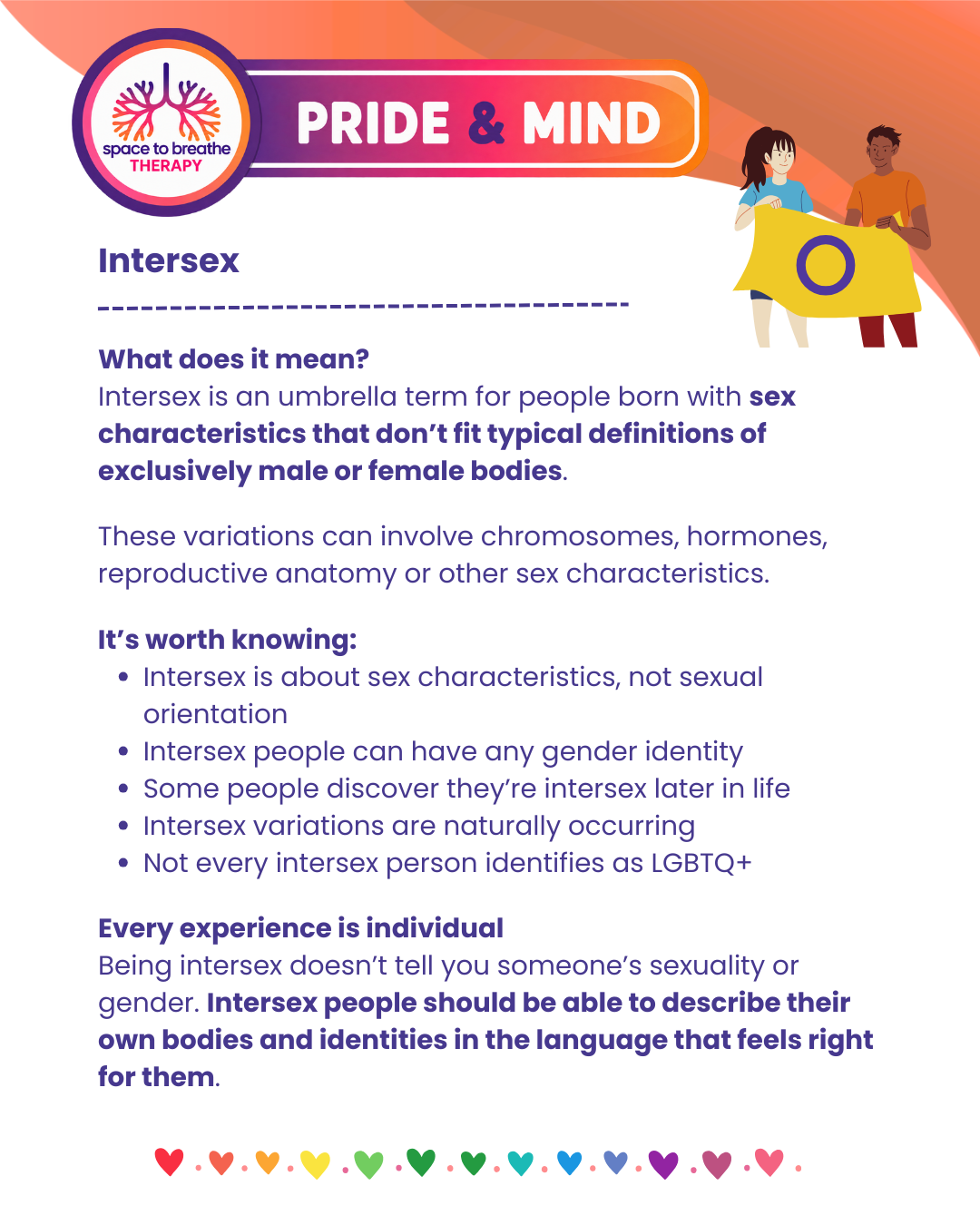
Intersex – Understanding Natural Variations in Sex Characteristics
The word intersex may be unfamiliar to some people, and because sex, gender and sexuality are often spoken about together, it can be easy to misunderstand what the term actually means.
Intersex is an umbrella term for people born with sex characteristics that do not fit typical definitions of exclusively male or female bodies. These differences may involve chromosomes, hormones, reproductive anatomy, genitalia or other sex characteristics.
Intersex variations are naturally occurring variations in human biology.
People may discover they are intersex at different times
There isn't one intersex experience.
For some people, an intersex variation is apparent at birth. For others, it may become noticeable during puberty, perhaps because development doesn't happen in the way expected.
Some people discover an intersex variation while having tests or treatment for something else, including fertility investigations.
Others may not know until adulthood — and some may never know.
This means someone's understanding of their body can sometimes change considerably during their lifetime.
Intersex isn't the same as gender identity
It is helpful to separate sex characteristics from gender identity.
Being intersex doesn't automatically mean somebody is non-binary or transgender.
An intersex person might identify as a woman, man, non-binary person or use another description entirely.
Similarly, being intersex doesn't tell us anything about somebody's sexual orientation. Intersex people can be lesbian, gay, bisexual, straight, asexual or have any other sexuality.
And importantly, not every intersex person considers themselves part of the LGBTQ+ community.
Language and privacy matter
Someone's intersex variation can involve very personal information about their body and medical history.
Nobody should feel entitled to ask intrusive questions simply because they know someone is intersex.
Questions about chromosomes, genitalia, fertility, medical procedures or someone's body may be extremely private.
A useful principle is:
Curiosity doesn't override somebody else's right to privacy.
If someone chooses to share their experience with you, allow them to decide what they want you to know.
The emotional experience can be complicated
Discovering that your body developed differently from what you had always understood can bring many different emotions.
There may be relief because something finally makes sense.
There may also be confusion, anger, grief, curiosity or questions about earlier medical experiences.
Someone may feel comfortable using the word intersex immediately, while another person may need considerably more time.
There is no required emotional response.
Every experience is individual
The term intersex covers many different variations, so one person's experience cannot represent everybody else's.
Two intersex people may have completely different bodies, medical histories, identities and feelings about being intersex.
What they share is not a particular identity or way of living, but an experience of sex characteristics that fall outside typical expectations of male and female bodies.
A message from me
I think one of the most important things we can do is resist the temptation to believe that we need to fully understand somebody's body before we can respect them.
We don't.
People deserve dignity, privacy and autonomy whether or not their experience is familiar to us.
If you're discovering that you're intersex yourself, you are allowed to take your time understanding what that means for you. You don't have to immediately choose particular language, explain yourself to other people or decide whether it forms an important part of your identity.
Your body is yours, your story is yours, and you get a say in who hears it.
Until next time, give yourself space to breathe.
With love,
Maggie




