




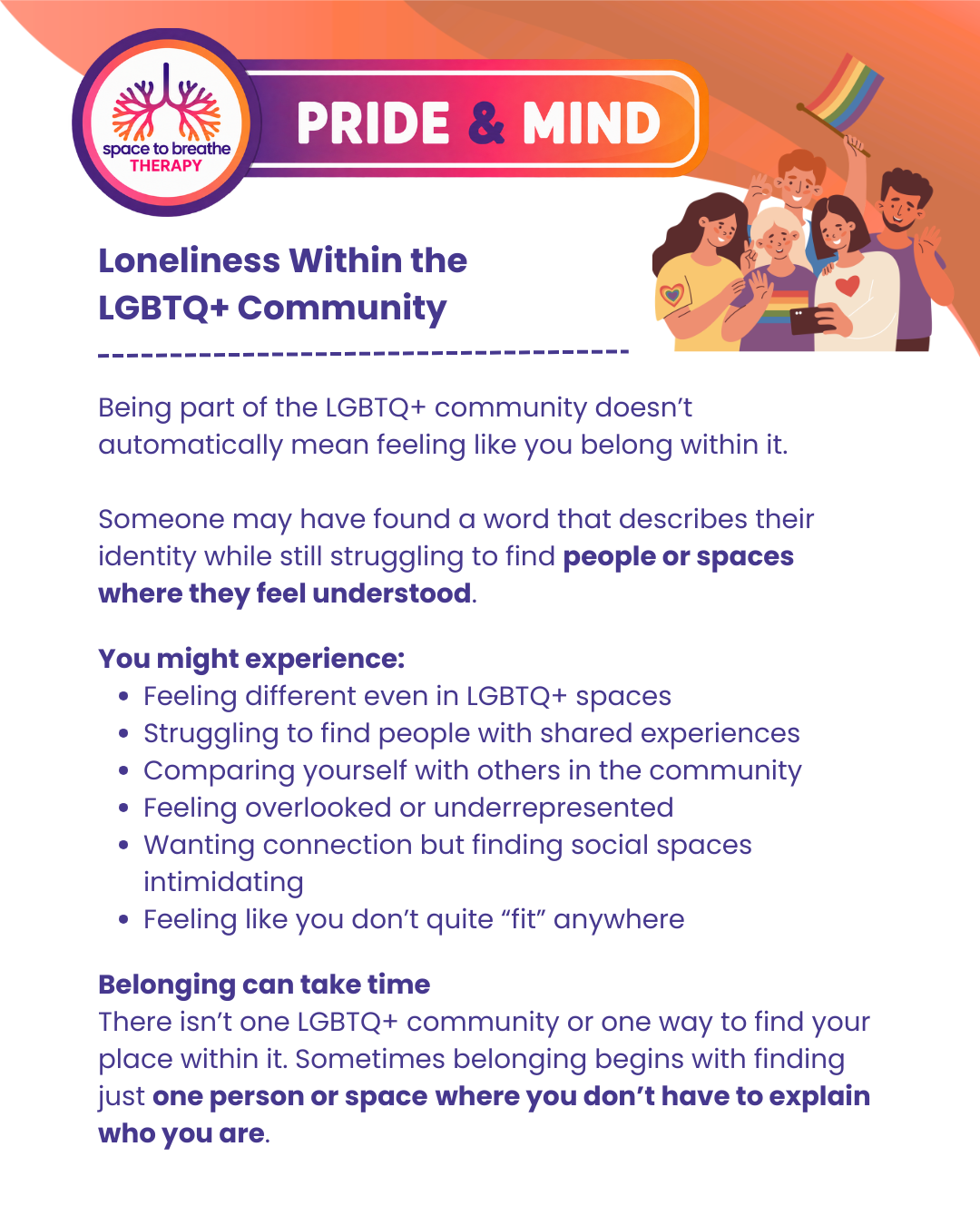
Loneliness Within the LGBTQ+ Community
Finding a word that describes your identity can bring relief and understanding, but it doesn't necessarily mean you immediately find a community where you feel at home.
It is possible to be surrounded by people who share aspects of your identity and still feel lonely.
For some LGBTQ+ people, this can be particularly confusing. You may think, “These are supposed to be my people, so why do I still feel like I don't belong?”
There isn't one LGBTQ+ experience
The LGBTQ+ community contains people of different ages, backgrounds, identities, personalities, cultures and life experiences.
You may not relate to the LGBTQ+ spaces you've encountered.
You might dislike busy social environments, not enjoy nightlife, have different interests, be neurodivergent, have a disability, have come out later in life, or simply want something different from your relationships.
None of this means you don't belong.
It may simply mean you haven't found the right people for you yet.
When loneliness exists inside a community
You might notice yourself:
- Comparing your life with other LGBTQ+ people
- Feeling like everyone else seems more confident
- Wondering whether you're “LGBTQ+ enough”
- Feeling invisible or underrepresented
- Wanting friendships but finding socialising difficult
- Feeling anxious about entering LGBTQ+ spaces alone
- Struggling to find people at a similar stage of life
- Feeling lonely even when you're surrounded by others
Loneliness isn't always about the number of people around us. Sometimes it's about not feeling genuinely known or understood.
Connection doesn't have to start with a crowd
There can be pressure to “get out there” and join groups, attend events or immediately become part of a community.
That isn't comfortable for everyone.
Connection can start much smaller.
One conversation.
One online community.
One person with a shared experience.
One group where you can quietly observe before joining in.
One friendship where you realise you don't have to explain yourself quite so much.
Belonging can grow slowly.
A little tip from me
Rather than asking:
“Where do I fit in?”
try asking:
“Where do I feel most able to be myself?”
There's an important difference.
You don't need to squeeze yourself into a space simply because you think you should belong there. Look for people and places where you feel respected, comfortable and able to show up as yourself.
A message from me
If you've found your identity but haven't yet found your people, please don't see that as a failure.
Finding genuine connection can take time.
You don't need an enormous friendship group or a packed social calendar to belong. Sometimes one safe, authentic relationship is the beginning of everything changing.
There is space within the LGBTQ+ community for quieter people, older people, people who are still questioning, people who don't enjoy Pride or nightlife, people who came out later and people whose lives don't look like the images they usually see represented.
There is space for your version of belonging too.
Until next time, give yourself space to breathe.
With love, Maggie
Space to Breathe Therapy