





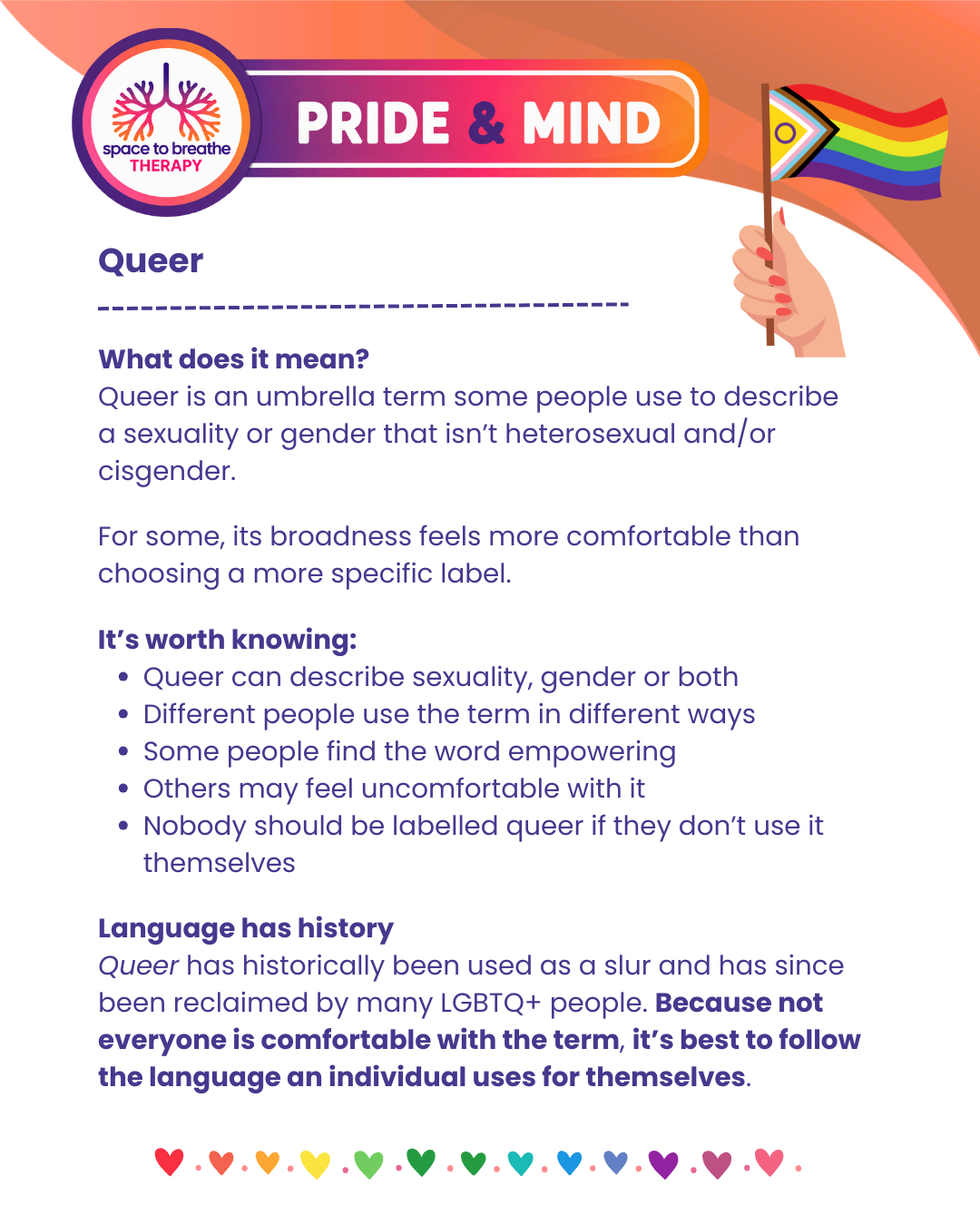
Queer – Understanding the Word, Its History and Its Meaning Today
The word queer can mean different things to different people. Today, many people use it positively to describe their sexuality, gender, or connection with the wider LGBTQ+ community.
For some, its broadness is exactly what makes the word useful. It can provide a sense of identity without needing to choose a more specific label.
What can queer mean?
Someone might use queer to describe their sexual orientation, their gender, both, or simply their experience of being outside traditional expectations around sexuality and gender.
A person might say:
“Queer is the word that feels most like me.”
They may also use it alongside another identity, such as queer and non-binary, queer and trans, or queer alongside another term that matters to them.
There isn't one experience that somebody has to have before they're allowed to use the word.
Why does the word feel empowering to some people?
For many LGBTQ+ people, reclaiming the word queer has transformed something historically used to hurt people into a source of identity, community, pride and belonging.
Some people particularly value the freedom the word gives them. Their identity may feel too complex, fluid or personal to describe using a narrower label.
For them, queer can simply mean:
“This is the language that feels right for me.”
But the history of the word matters
Queer has historically been used as a slur against LGBTQ+ people, and that history hasn't disappeared simply because the word has been reclaimed by many.
Older LGBTQ+ people in particular may remember hearing it used aggressively or abusively, although people of any age can have difficult associations with it.
This is why two people can hear exactly the same word and have completely different emotional reactions.
One may experience pride and belonging.
Another may experience hurt or discomfort.
Both reactions deserve respect.
Follow the individual's language
One of the simplest ways to approach the word is not to assume.
If someone describes themselves as queer, we can respect the language they've chosen.
But we shouldn't automatically describe another person as queer simply because we believe they fall somewhere within the LGBTQ+ community.
People have the right to choose the words used to describe their own identity.
A message from me
Language changes, communities reclaim words, and the meaning a word carries can be deeply personal.
We don't have to decide whether queer is a word everybody should or shouldn't use.
Instead, we can listen.
If somebody proudly tells you, “I'm queer,” respect that.
If somebody tells you, “Please don't use that word for me,” respect that too.
Sometimes inclusion isn't about learning the perfect terminology. It's about being willing to hear another person when they tell us who they are and what language feels right for them.
Until next time, give yourself space to breathe.
With love,
Maggie