





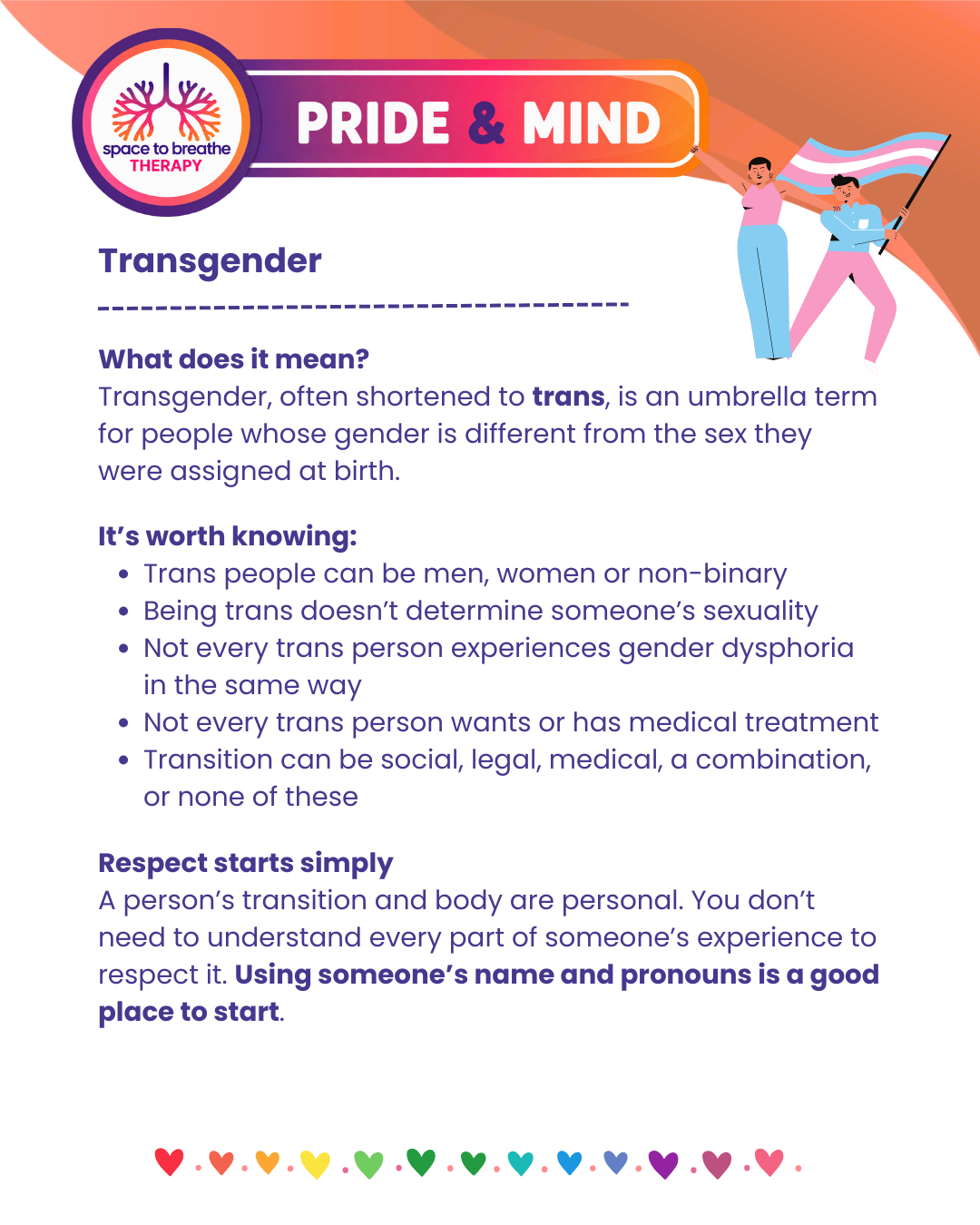
Transgender – Understanding Identity, Transition and Respect
Being transgender, often shortened to trans, means that someone's gender is different from the sex they were assigned at birth.
Trans people are not one single group with one shared experience. A trans person may be a man, a woman, non-binary, or use another term to describe their gender.
For some people, understanding that they are trans happens very early in life. For others, that understanding develops gradually — sometimes many years later.
Transition doesn't look the same for everyone
We often hear the word transition, but transition is personal and can mean many different things.
Someone may make social changes such as using a different name, changing pronouns, altering their clothing or presenting themselves differently.
There may also be legal changes to documents or medical care such as hormones or surgery.
But importantly, medical treatment isn't what makes someone transgender.
Some trans people want medical treatment, some don't, and for others it may not be accessible or appropriate.
There isn't a list of things somebody has to do before their identity becomes valid.
Gender dysphoria isn't everyone's experience
Some trans people experience gender dysphoria — distress or discomfort connected with aspects of their body, how they're perceived, or a mismatch between their gender and assigned sex.
But dysphoria can differ enormously between people.
It's also worth recognising gender euphoria — the comfort, happiness or sense of “this feels like me” that someone may experience when their gender is recognised or expressed in a way that feels right.
Understanding trans experiences shouldn't only focus on distress. There can also be discovery, freedom, confidence and joy.
Being trans doesn't determine sexuality
Gender identity and sexual orientation are different things.
A transgender person might be gay, lesbian, bisexual, straight, pansexual, asexual or use another description.
Knowing that someone is trans doesn't tell you who they are attracted to.
Privacy matters
Curiosity can sometimes lead people to ask trans people extremely personal questions about their bodies, surgery, hormones, fertility or sex lives.
Before asking something, it can help to consider:
“Would I ask a cisgender person this question?”
If the answer is no, it probably isn't necessary to ask a trans person either.
Someone can share as much or as little of their transition or medical history as they choose.
Everyday respect makes a difference
Supporting a trans person doesn't require you to understand every aspect of their experience.
Using the person's name and pronouns, listening rather than making assumptions, respecting confidentiality and allowing them to describe their own identity are meaningful places to begin.
If you accidentally use the wrong name or pronoun, a brief correction and moving on is usually more helpful than making the person manage a lengthy apology.
A message from me
Sometimes people become so worried about saying the wrong thing that they forget the person standing in front of them.
You don't need perfect knowledge to treat somebody with warmth and respect.
And if you're exploring your own gender, you don't have to work everything out at once.
You are allowed to explore. You are allowed to change the language you use. You are allowed to take your time. And you don't have to follow somebody else's version of what being trans is supposed to look like.
There isn't one way to be transgender.
There is simply space for you to understand what being you means.
Until next time, give yourself space to breathe.
With love,
Maggie




