





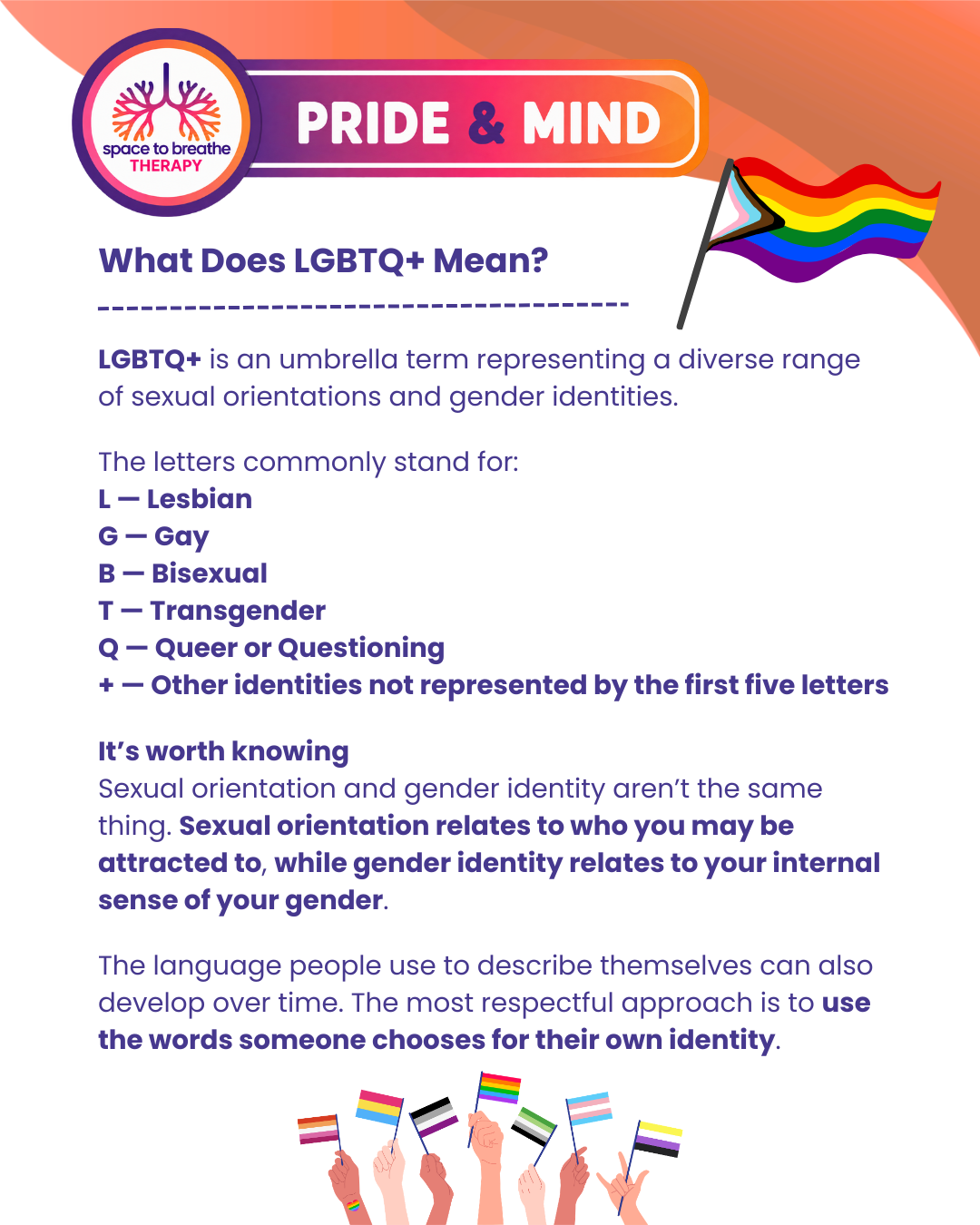
What Does LGBTQ+ Mean? – Understanding the Umbrella
LGBTQ+ is an umbrella term used to describe a wide and diverse range of sexual orientations, romantic orientations and gender identities.
The letters commonly represent:
L — Lesbian
G — Gay
B — Bisexual
T — Transgender
Q — Queer or Questioning
+ — The many other identities and experiences that aren't represented within those five letters
The “+” is important. Human identity is much broader than a handful of labels, and language continues to develop as people find words that better describe their experiences.
Sexual orientation and gender identity are different
These terms can sometimes become mixed together.
Sexual orientation describes who someone may experience sexual attraction towards.
Romantic orientation describes who someone may experience romantic attraction towards.
Gender identity describes someone's internal sense of their gender.
For example, being transgender tells you about someone's gender, not who they are attracted to. A transgender person can be straight, gay, lesbian, bisexual, asexual, pansexual or use another description entirely.
What does the “+” include?
You may come across identities including asexual, aromantic, pansexual, non-binary, genderfluid, agender, genderqueer and intersex, among many others.
Not everyone will use LGBTQ+ to describe themselves, even if one of these terms could technically apply to their experience. People get to choose the language they use for themselves.
Labels can help – but they aren't compulsory
For some people, discovering a word that describes how they've felt for years can bring enormous relief:
“There are other people like me.”
For somebody else, labels may feel restrictive or unnecessary.
Both are okay.
Someone may also use one label now and another later as their understanding of themselves develops. That doesn't mean their previous experience wasn't genuine.
You don't need to understand every identity to be respectful
Language around sexuality and gender can feel unfamiliar, particularly if you weren't exposed to it growing up.
You don't have to memorise every flag, term or definition to support someone.
Often, respect begins with something much simpler:
Listen to how someone describes themselves. Use their name and pronouns. Don't make assumptions about their relationships or identity. And be willing to learn when you don't know something.
A message from me
If you're reading this because you're trying to understand your own identity, there doesn't have to be a rush to find the right word.
And if you're reading because somebody you care about has shared something about themselves, you don't need to have all the answers either.
Sometimes the most meaningful response is simply:
“Thank you for trusting me enough to tell me.”
Understanding grows through listening, curiosity and kindness.
Until next time, give yourself space to breathe.
With love,
Maggie




