





Asking for Help
Recognising Your Needs, Finding Support and Building Confidence to Reach Out
Asking for help can sometimes feel much harder than offering it to someone else.
You may be the person who regularly supports others, manages responsibilities independently or tries to find solutions without involving anyone else.
Perhaps you worry about being a burden, appearing incapable, disappointing people or having your difficulties misunderstood.
You might recognise that you are struggling but find it difficult to explain what you need, who to approach or how to begin the conversation.
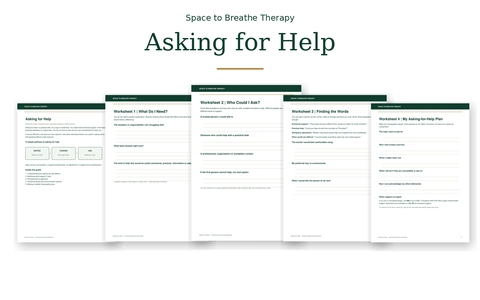
Asking for Help is a compassionate five-page guide and worksheet resource designed to help you recognise your needs, explore available support, practise communicating requests and develop a realistic plan for reaching out.
Rather than expecting you to become confident overnight, the resource encourages small, manageable steps towards receiving support in ways that feel comfortable and appropriate for you.
Why Asking for Help Can Feel Difficult
Many people grow up with messages about independence, responsibility and managing difficulties themselves.
Being capable, reliable or self-sufficient may become an important part of how you see yourself.
As a result, needing support can sometimes feel uncomfortable, even when you would willingly offer the same support to someone else.
You may experience thoughts such as:
- I should be able to manage this myself.
- Other people have enough problems.
- I do not want to inconvenience anyone.
- What if they say no?
- I should know how to do this already.
- I do not know how to explain what is wrong.
- Asking for help means I have failed.
These thoughts can make reaching out feel risky or overwhelming.
However, needing help is part of being human.
Asking for support does not mean that you are incapable. It means recognising that some situations are easier, safer or more manageable when support is available.
Recognising When You Need Support
Sometimes the first difficulty is recognising that help would be beneficial.
You may continue managing responsibilities long after they have become exhausting or notice that your emotional wellbeing is deteriorating without recognising how much pressure you are carrying.
The guide encourages you to explore the signs that additional support may be needed.
These might include:
- Feeling persistently overwhelmed.
- Struggling to manage everyday responsibilities.
- Becoming physically or emotionally exhausted.
- Avoiding tasks because they feel unmanageable.
- Experiencing increasing anxiety or distress.
- Finding decisions or communication difficult.
- Feeling isolated or unsupported.
- Needing practical assistance with a particular task.
Recognising these experiences can help you identify when support might make a meaningful difference.
Worksheet 1 – What Do I Need?
The first practical worksheet encourages you to explore what is happening and identify the type of help that might be useful.
Sometimes people know they are struggling but cannot immediately explain what would make the situation easier.
The worksheet provides space to consider:
- What feels difficult at the moment.
- Which responsibilities or situations are creating pressure.
- Whether you need emotional, practical or professional support.
- What might make the situation more manageable.
- What you would like someone else to understand.
Support can take many forms.
You may need someone to listen without trying to solve the problem.
You might need help organising a task, attending an appointment, understanding information or managing a responsibility.
You may also need professional guidance, workplace adjustments or additional support with your health and wellbeing.
Identifying the type of help you need can make the next step clearer.
Worksheet 2 – Who Could I Ask?
Once you have recognised what support might be helpful, the next step is considering who may be able to provide it.
The second worksheet, Who Could I Ask?, encourages you to explore your available support network.
This might include:
- A trusted friend or family member.
- A partner or someone you live with.
- A colleague or manager.
- A therapist, counsellor or coach.
- Your GP or another healthcare professional.
- A community organisation or support group.
- A specialist advice or disability support service.
Different people may be able to offer different kinds of support.
Someone who is good at listening may not be the best person to help with a practical problem, while a professional may be better placed to provide specialist guidance.
The worksheet encourages you to consider who feels approachable, trustworthy and appropriate for the support you need.
It also recognises that not everyone will be available or able to help, and that identifying an alternative source of support can be useful.
Worksheet 3 – Finding the Words
Knowing that you need help does not always make it easy to ask.
You may struggle to begin a conversation, explain your thoughts or find the right words under pressure.
The third worksheet, Finding the Words, provides an opportunity to practise expressing your needs clearly and respectfully.
Examples might include:
“I have been finding things difficult recently, and I wondered if we could talk.”
“I am feeling overwhelmed and could use some help working out what to do next.”
“I am struggling with this task. Would you be able to explain it or help me break it down?”
“I find it difficult to explain things verbally. Would it be okay if I wrote down what I need?”
“I do not need you to solve everything. I would really appreciate someone listening.”
The worksheet encourages you to develop your own wording based on your circumstances and communication preferences.
You do not have to provide a perfect explanation.
Sometimes a simple statement such as “I am struggling and could use some support” is enough to begin.
Understanding the Fear of Rejection
One reason asking for help can feel difficult is the possibility that someone may not respond as you hope.
They may be unavailable, unsure what to say or unable to offer the type of support you need.
This can feel particularly painful if reaching out has already required considerable courage.
However, another person's response does not determine whether your needs are valid.
If someone cannot help, it may be possible to approach another person, explore a different service or adjust the request.
The resource encourages you to recognise that asking for help is a process, not a test of your worth.
Worksheet 4 – My Asking-for-Help Plan
The final worksheet brings together your reflections and encourages you to develop a practical, personalised plan.
You can identify:
- One situation where support would be helpful.
- The type of help you would like to request.
- Someone you could approach.
- How you would prefer to communicate.
- The words you might use.
- A manageable first step.
- An alternative option if your first request does not lead to support.
The aim is to create a realistic action rather than placing pressure on yourself to resolve everything immediately.
You may decide to send a message, arrange a conversation, write down your needs or contact an appropriate service.
Small steps can help make future requests feel more familiar and manageable.
Asking for Help, Disability and Neurodivergence
For disabled and neurodivergent individuals, asking for help may involve additional barriers.
Autistic people, individuals with ADHD and people with communication or processing differences may find it difficult to identify, organise or verbally explain their needs.
Some individuals may experience shutdown, overwhelm or difficulty finding words when under pressure.
Others may have spent years masking their difficulties or trying to meet expectations without requesting adjustments.
Previous experiences of being misunderstood or dismissed can also affect confidence in seeking support.
The resource recognises that help-seeking should be accessible and responsive to individual needs.
It may be helpful to:
- Make requests in writing.
- Use short, clear explanations.
- Prepare questions before a conversation.
- Ask for additional processing time.
- Request information in an accessible format.
- Involve a trusted supporter when appropriate.
- Identify reasonable adjustments that could reduce unnecessary barriers.
Needing support with communication does not make your request less important.
What Is Included?
This downloadable five-page PDF contains:
Page 1 – Understanding Asking for Help
An introduction to why asking for help can feel difficult, including a visual pathway for recognising needs, identifying support and taking the first step towards reaching out.
Page 2 – What Do I Need?
A reflective worksheet for identifying current difficulties, recognising unmet needs and considering the type of support that may be helpful.
Page 3 – Who Could I Ask?
A practical worksheet for exploring trusted people, professional services and other sources of support.
Page 4 – Finding the Words
Guided exercises and communication examples to help you practise asking for assistance in ways that feel clear, respectful and manageable.
Page 5 – My Asking-for-Help Plan
A personalised action plan for choosing someone to approach, preparing your request, identifying a first step and considering alternative sources of support.
The worksheets provide space for personal reflection and can be completed independently or alongside therapy and coaching.
Who Is This Resource For?
Asking for Help may be particularly useful for adults who:
- Find it difficult to admit when they are struggling.
- Feel guilty about needing support.
- Worry about being a burden.
- Have experienced rejection or misunderstanding.
- Regularly prioritise other people's needs.
- Struggle to communicate their difficulties.
- Feel overwhelmed by responsibilities.
- Experience anxiety around requesting assistance.
- Have disability-related or neurodivergent support needs.
- Want to develop greater confidence in accessing appropriate help.
The resource may also support therapeutic conversations about independence, vulnerability, communication, self-worth and emotional wellbeing.
A Gentle Reminder
You do not have to reach a crisis before asking for help.
You do not need to prove that you have tried everything yourself.
You are allowed to recognise when something is difficult, when your energy is limited or when another person's support could make a difference.
Asking for help does not take away your independence, abilities or strengths.
Sometimes recognising what you need and communicating it is an important step towards looking after yourself.
You deserve to be listened to, taken seriously and supported when life becomes difficult. You do not have to manage everything alone.
Space to Breathe Therapy
This resource is intended for education, personal reflection and emotional wellbeing support. It does not replace individual psychological, medical or professional advice. If you are experiencing significant distress or feel unable to keep yourself safe, seek appropriate urgent support.




