





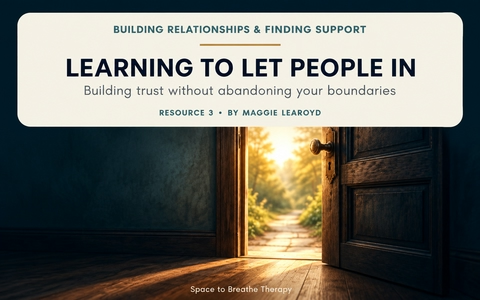
Learning to Let People In
Building Relationships & Finding Support – Resource 3
Trust is rarely created in one dramatic moment. It develops through everyday evidence: somebody listens, keeps their word, remembers what matters, respects a boundary and remains present when life becomes difficult.
In this resource, I explore why allowing people into our emotional world can feel risky. Previous rejection, betrayal, criticism or inconsistency may teach the nervous system that privacy is safer than closeness. That protection makes sense, even when it later begins to create loneliness.
The article explains that vulnerability does not mean sharing everything with everyone. Healthy openness is selective. Trust exists on a continuum and grows with people who repeatedly demonstrate that they will treat our experiences with care.
I have written this for anyone who appears capable while quietly longing to feel understood. It is also for those who worry that accepting support will make them dependent or less competent. Letting another person help does not erase your strength.
The resource encourages small steps: answering a trusted person a little more honestly, accepting an invitation, sharing one concern or allowing a conversation to continue. Trust can also survive imperfection when both people are willing to acknowledge hurt and repair misunderstandings.
My hope is that this article helps you move at a pace that respects your history. There is no need to force disclosure. The aim is to notice who has earned greater access to your inner world and to allow connection to develop gradually.
Letting people in is not removing the door or giving away the key. It is learning that you can open it carefully, retain your boundaries and discover that some people are willing to enter with kindness.
By Maggie Learoyd
Psychotherapist | ADHD, Autism & ARFID Specialist
Founder of Space to Breathe Therapy




