





Looking After My Body
Understanding Your Body's Needs, Building Gentle Routines and Supporting Everyday Wellbeing
Looking after your body is an important part of emotional, physical and mental wellbeing.
However, caring for yourself is not always as straightforward as following a routine, eating regularly, exercising or getting enough sleep.
Your body's needs can change depending on your health, energy levels, emotional state, sensory experiences, responsibilities and everyday circumstances.
Some days, looking after yourself may involve preparing a meal, enjoying movement or completing your usual activities.
On other days, it might mean resting, reducing demands, asking for help or recognising that you need additional support.
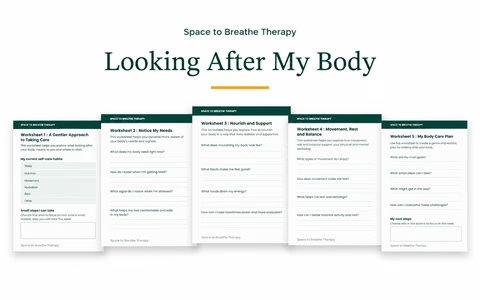
Looking After My Body is a practical five-page guide and worksheet resource designed to help you recognise your body's signals, understand your individual needs and develop gentle, realistic ways of supporting your physical wellbeing.
Rather than focusing on appearance, weight, productivity or strict health goals, this resource encourages a compassionate approach to body care.
The aim is to recognise that your body deserves care, comfort and respect regardless of how you feel about it, what it can do or how much energy you have available.
Understanding Your Body's Needs
Our bodies communicate through physical sensations, energy levels, discomfort, emotions and changes in functioning.
You might notice:
- Hunger or thirst.
- Tiredness or exhaustion.
- Muscle tension.
- Physical discomfort or pain.
- Restlessness.
- Changes in concentration.
- Sensory sensitivity.
- A need for movement.
- A need for quiet or rest.
- Feeling physically overwhelmed.
Sometimes these signals are easy to recognise.
At other times, they may be confusing, delayed or difficult to interpret.
Stress, illness, neurodivergence, medication, sensory differences and emotional distress can all influence how we experience bodily sensations.
The resource encourages you to become curious about your body's needs without expecting yourself to understand every signal immediately.
Five Ways to Support Your Body
The guide introduces five connected areas of physical self-care:
1. Notice – Recognise physical signals and changing needs.
2. Nourish – Support your body through accessible food and hydration.
3. Comfort – Respond to pain, sensory needs and physical discomfort.
4. Move – Explore movement that feels appropriate for your body.
5. Rest – Allow time for recovery, sleep and reduced demands.
These areas are not intended to become rigid rules or another set of expectations.
They are starting points for exploring what supports your individual wellbeing.
You can adapt them according to your health, circumstances, preferences and available capacity.
1. Notice – Recognising Your Body's Signals
Looking after your body begins with recognising what it may be communicating.
You might notice that you become irritable when exhausted, struggle to concentrate when thirsty or experience increased tension during stressful situations.
Some people find it easy to identify these patterns.
Others may experience difficulties recognising internal bodily signals, sometimes referred to as interoceptive awareness.
For example, you may not notice hunger until you feel physically unwell, or you may struggle to distinguish between tiredness, anxiety and sensory overload.
The resource encourages gentle questions such as:
- How does my body feel right now?
- Am I comfortable?
- Have I had an opportunity to rest?
- Is there anything causing pain or discomfort?
- Do I need food, a drink, movement or quiet?
- Are my current demands greater than my available energy?
The aim is not to monitor every sensation constantly.
Instead, it is to develop a greater understanding of your body's needs over time.
Worksheet 1 – Notice My Needs
The first practical worksheet encourages you to explore your individual physical signals and identify what they may mean.
You can reflect on:
- How your body feels during an ordinary day.
- Signs that you are becoming tired.
- Changes in concentration or energy.
- Physical responses to stress.
- Sensory experiences that affect comfort.
- Signs that you may need nourishment or hydration.
- What helps you recognise your needs earlier.
For example:
Physical signal: I become tense and find it difficult to concentrate.
Possible need: A break, a quieter environment or reduced demands.
Supportive response: Pause the activity and consider what would help me feel more comfortable.
The worksheet helps you develop a personalised understanding of body care rather than relying on general expectations.
2. Nourish – Supporting Your Body With Food and Hydration
Food and hydration support everyday physical functioning.
However, eating and drinking can be affected by many factors, including sensory preferences, appetite, digestive difficulties, health conditions, medication, emotional distress and access to suitable foods.
For some people, eating regularly feels straightforward.
For others, it can involve considerable planning, discomfort or anxiety.
The resource encourages a flexible and non-judgemental approach to nourishment.
Helpful considerations may include:
- Recognising foods that feel manageable.
- Keeping accessible food and drink options available.
- Using reminders if internal hunger signals are difficult to recognise.
- Considering sensory preferences.
- Allowing flexibility around routines.
- Seeking appropriate professional support for persistent eating or hydration difficulties.
The aim is not to create strict food rules or promote a particular diet.
It is to recognise that nourishment should be supportive, accessible and appropriate to individual needs.
3. Comfort – Responding to Physical and Sensory Needs
Physical comfort can influence emotional wellbeing, concentration and everyday functioning.
Discomfort may arise from pain, posture, temperature, clothing, lighting, noise, fatigue or environmental demands.
Sometimes small adjustments can make a meaningful difference.
These might include:
- Changing position.
- Adjusting lighting.
- Wearing comfortable clothing.
- Reducing background noise.
- Using supportive seating.
- Taking a break from a demanding environment.
- Adjusting room temperature.
- Accessing appropriate pain-management support.
For people with chronic health conditions or sensory differences, comfort may require more individualised strategies.
The resource encourages you to recognise that comfort is a legitimate need rather than an unnecessary luxury.
Worksheet 2 – Nourish & Comfort
The second worksheet brings together nourishment and physical comfort.
You can explore:
- Foods and drinks that feel accessible.
- Barriers to eating or drinking.
- Sensory preferences.
- Physical discomfort that affects daily life.
- Environments that feel supportive.
- Adjustments that may improve comfort.
- Practical support you may need.
For example:
Difficulty: I forget to drink when concentrating.
Possible support: Keep a drink nearby and use a gentle reminder.
Or:
Difficulty: Noise and uncomfortable seating increase physical tension.
Possible support: Adjust the environment, use appropriate equipment or take regular breaks.
The worksheet encourages realistic solutions that reflect your circumstances.
4. Move – Finding Movement That Works for You
Movement can support physical comfort, mobility, emotional wellbeing and everyday functioning.
However, movement does not need to involve formal exercise, intense activity or measurable fitness goals.
It may include:
- Gentle stretching.
- Walking.
- Changing position.
- Moving around the home.
- Seated movement.
- Everyday physical activities.
- Activities that feel enjoyable or comfortable.
For some people, movement helps reduce tension or restlessness.
For others, pain, fatigue, disability or health conditions may limit what is comfortable or appropriate.
The resource encourages you to recognise that movement should be adapted to your body rather than forcing your body to meet unrealistic expectations.
Rest may be the more appropriate response on some days.
If you have a medical condition affecting safe movement, professional guidance may be needed.
5. Rest – Recognising the Importance of Recovery
Rest is an essential part of physical and emotional wellbeing.
However, many people feel guilty when they are not being productive.
You may believe that you should keep going, finish every task or earn the right to rest.
This can become particularly difficult when you are experiencing fatigue, illness or emotional exhaustion.
The resource encourages you to recognise that rest is not a reward for completing responsibilities.
It is a legitimate physical need.
Rest may involve:
- Taking short breaks.
- Reducing sensory input.
- Sitting or lying somewhere comfortable.
- Allowing quiet time.
- Adjusting your schedule.
- Prioritising sleep.
- Reducing unnecessary commitments.
- Accepting support with demanding tasks.
Different types of rest may be helpful at different times.
For example, physical rest may not fully address mental exhaustion, and sensory recovery may require a quieter environment rather than sleep.
The aim is to recognise what kind of recovery your body needs.
Worksheet 3 – Movement, Rest & Support
The third worksheet encourages you to explore your relationship with movement, rest and physical capacity.
You can reflect on:
- Movement that feels comfortable.
- Activities that increase pain or fatigue.
- Signs that you need to stop or slow down.
- What helps your body recover.
- Whether you feel guilty when resting.
- Practical adjustments that may reduce strain.
- Support you may need with everyday activities.
For example:
Current difficulty: I continue working even when physically exhausted.
Possible need: More regular breaks and realistic expectations.
Supportive action: Plan opportunities for rest before exhaustion becomes overwhelming.
The worksheet encourages a compassionate balance between activity and recovery.
Worksheet 4 – My Body Care Plan
The final worksheet brings together your reflections into a personalised body-care plan.
You can identify:
- Physical signals you want to recognise.
- Ways to support nourishment and hydration.
- Comfort needs.
- Appropriate movement.
- Rest and recovery strategies.
- Environmental adjustments.
- People who can offer practical support.
- One manageable change to try.
For example:
Need: I often notice exhaustion too late.
Supportive strategy: Build short breaks into demanding activities.
Adjustment: Reduce unnecessary tasks on days when energy is limited.
Your plan can change as your circumstances change.
The aim is not to follow a perfect routine.
It is to develop a flexible approach that supports your wellbeing.
Body Care, Disability and Chronic Health Conditions
For people living with disabilities or chronic health conditions, looking after the body may involve additional challenges.
Pain, fatigue, mobility difficulties, medication effects, sensory sensitivities and fluctuating symptoms can influence everyday needs.
General wellbeing advice may not always be appropriate or accessible.
For example, someone experiencing chronic fatigue may need to manage activity carefully rather than increase exercise.
A person living with persistent pain may require adjustments to movement, seating or daily routines.
Someone with a fluctuating condition may need different levels of support from one day to another.
The resource encourages you to recognise that body care is individual.
Your needs do not have to look like anyone else's to be valid.
Appropriate support, medical guidance, accessible environments and reasonable adjustments may be important parts of caring for your body.
Body Care, Autism and ADHD
Autistic people and individuals with ADHD may experience differences in sensory processing, executive functioning and awareness of internal bodily signals.
These differences can affect everyday self-care.
For example:
- Hunger or thirst may be difficult to recognise.
- Sensory preferences may influence food choices.
- Task initiation difficulties may affect routines.
- Hyperfocus may lead to missed breaks.
- Clothing or environmental sensations may cause discomfort.
- Transitions between activities may be demanding.
- Emotional overload may affect awareness of physical needs.
The resource encourages practical approaches such as visual reminders, accessible routines, preferred foods, sensory adjustments and support with everyday tasks.
The aim is not to force conventional routines but to develop strategies that work with individual needs.
Body Respect Without Appearance-Based Expectations
Looking after your body does not require you to feel positive about your appearance every day.
You may experience complicated feelings about your body, particularly if you live with pain, disability, illness or body-image difficulties.
Body care can begin with respect rather than appearance.
For example:
- Providing comfort when you are in pain.
- Allowing rest when exhausted.
- Recognising hunger or thirst.
- Seeking medical support when needed.
- Wearing clothing that feels comfortable.
- Respecting your physical limits.
You do not have to love every part of your body to recognise that it deserves care.
What Is Included?
This downloadable five-page PDF contains:
Page 1 – Understanding Looking After My Body
An introduction to physical self-care, including a visual guide exploring five supportive areas: noticing needs, nourishment, comfort, movement and rest.
Page 2 – Notice My Needs
A reflective worksheet for recognising physical signals, changing energy levels, discomfort and individual support needs.
Page 3 – Nourish & Comfort
A practical worksheet exploring accessible nourishment, hydration, sensory preferences and ways to improve physical comfort.
Page 4 – Movement, Rest & Support
A guided exercise for identifying appropriate movement, recovery needs, physical limits and practical adjustments.
Page 5 – My Body Care Plan
A personalised plan for developing gentle, flexible routines that support physical wellbeing and respect individual circumstances.
The worksheets provide space for personal reflection and can be completed independently or alongside therapy and coaching.
Who Is This Resource For?
Looking After My Body may be helpful for adults who:
- Want to develop a more compassionate approach to physical self-care.
- Find it difficult to recognise bodily needs.
- Experience stress-related physical tension.
- Struggle with rest or recovery.
- Experience fluctuating energy or fatigue.
- Have sensory needs that affect everyday comfort.
- Are autistic or have ADHD.
- Live with a disability or chronic health condition.
- Want to build manageable wellbeing routines.
- Would benefit from a personalised body-care plan.
The resource may also support therapeutic conversations about self-care, body awareness, disability, sensory needs, fatigue, boundaries and emotional wellbeing.
A Gentle Reminder
Your body does not need to meet particular standards of appearance, fitness or productivity to deserve care.
Some days, caring for yourself may involve movement, nourishment and completing everyday activities.
Other days, it may involve resting, reducing expectations or asking for help.
Your needs may change.
Your capacity may fluctuate.
And the strategies that support you today may need adjusting tomorrow.
Looking after your body is not about doing everything perfectly. It is about recognising your needs and responding with care, flexibility and respect.
You deserve comfort, nourishment, rest and appropriate support regardless of what your body can achieve.
Space to Breathe Therapy
This resource is intended for education, personal reflection and emotional wellbeing support. It does not replace individual medical, nutritional, psychological or professional advice. If you experience persistent pain, significant fatigue, eating or hydration difficulties, or other concerning physical symptoms, seek guidance from an appropriately qualified healthcare professional.




