





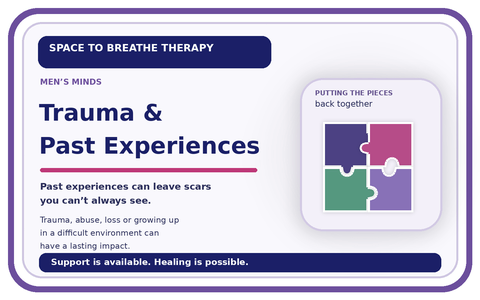
Men’s Minds: Trauma & Past Experiences
When the Past Is Still Affecting the Present
Trauma is not one single kind of event, and people respond in different ways. Abuse, violence, sudden loss, neglect, frightening experiences or growing up without enough safety and care can affect how someone feels in the present. The impact may be visible as anxiety or distress, or hidden behind numbness, irritability, poor sleep, withdrawal or a strong need to stay in control. These reactions can be ways of surviving; they are not a sign of weakness.
For some people, alcohol or drugs may seem to block painful memories, ease flashbacks or anxiety, help with sleep, or offer a feeling of control when life feels chaotic. Relief may be short-lived, and substance use can also bring new risks or become difficult to manage. This guide considers these links without assuming that everyone experiences trauma in the same way or uses substances for the same reasons. It does not ask readers to disclose details or relive what happened.
What the four pages cover
Page 1 – Understanding how the past can affect the present
Explains that trauma can take many forms and that people respond differently. It describes survival responses that may continue after danger has passed, such as feeling watchful, numb, withdrawn or quick to react. It also looks at less visible effects and includes reassurance around blame, safety and the possibility of healing.
Page 2 – When the past still feels present
Explores reminders, flashbacks and body or emotional reactions, and how alcohol or drugs may seem to block memories, ease anxiety or restore a sense of control. A reflection table helps readers notice a possible reminder, what they felt, what they needed and one safer next step. It also explains that grounding may help some people but can feel uncomfortable for others.
Page 3 – Finding steadier ground
Offers a gentle plan for difficult moments: check immediate safety, orient to the present in a way that feels comfortable, reduce demands, reach a trusted person and choose one manageable next step. It covers pacing, boundaries and support when substances are part of the coping pattern, with a small space to write a personal next step.
Page 4 – Support and healing
Introduces possible therapy options for PTSD, including trauma-focused CBT and EMDR, and prompts readers to ask about a practitioner’s approach, confidentiality and how to pause. It describes routes to alcohol and drug support, gives urgent safety guidance, and lists UK information and support services.
The guide is compassionate and practical. It does not diagnose PTSD, assume that trauma affects everyone alike, or pressure anyone to share details before they are ready. Its central message is that support is available and healing is possible at a pace that respects each person’s safety and choices.
Maggie Learoyd MNCPs
Safety note
This educational guide is not a diagnosis or a substitute for individual medical advice. If someone needs urgent medical help after taking drugs or alcohol, call 999. If you drink heavily or regularly and may be physically dependent, seek medical advice before stopping suddenly because withdrawal may require supervised treatment.