





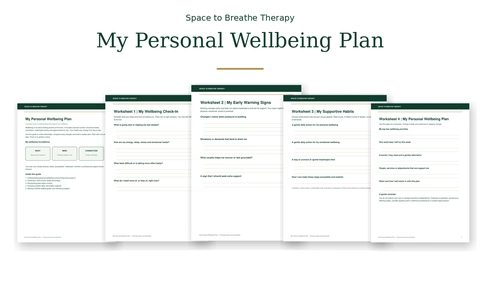
My Personal Wellbeing Plan
Understanding Your Needs, Recognising Warning Signs and Creating a Healthier Balance
Looking after your wellbeing is not always straightforward.
Life can involve competing responsibilities, emotional challenges, changes in health, relationships, work pressures and everyday demands that affect how you feel and function.
Sometimes you may recognise that things are becoming difficult. At other times, stress and exhaustion can build gradually, making it harder to notice when your wellbeing needs additional attention.
You may know that certain activities help you feel better but struggle to make time for them, particularly when responsibilities or expectations take priority.
My Personal Wellbeing Plan is a supportive five-page guide and worksheet resource designed to help you understand your individual wellbeing needs, recognise early warning signs, identify helpful routines and develop a practical plan for maintaining and supporting your emotional, physical and mental health.
Rather than encouraging perfection or expecting you to feel positive all the time, this resource focuses on creating a realistic and flexible approach to wellbeing that reflects your individual circumstances.
Understanding Personal Wellbeing
Wellbeing is not simply the absence of stress, anxiety or difficult emotions.
It involves different aspects of life that influence how supported, balanced and able to manage everyday experiences you feel.
These may include:
- Emotional wellbeing and understanding your feelings.
- Physical health, rest and energy.
- Relationships and meaningful connection.
- Personal boundaries and responsibilities.
- Daily routines and activities.
- Opportunities for enjoyment and relaxation.
- A sense of purpose, safety and belonging.
- Access to appropriate support.
These areas are interconnected.
For example, poor sleep may affect emotional regulation, while prolonged stress can influence concentration, energy and physical wellbeing.
Difficulties in relationships or work may reduce opportunities for rest, and feeling isolated can make challenges harder to manage.
The guide includes a visual wellbeing diagram to help you recognise that wellbeing involves several connected areas rather than one single measure.
Your wellbeing does not have to look like anyone else's. What supports one person may not be appropriate or helpful for another.
Worksheet 1 – My Wellbeing Check-In
The first practical worksheet encourages you to reflect on how you are currently feeling and functioning.
It provides an opportunity to consider different aspects of your wellbeing without judging yourself or expecting every area to be going well.
You may explore:
- How you have been feeling emotionally.
- Your current energy levels.
- Whether you are getting enough rest.
- How manageable everyday responsibilities feel.
- Whether you have opportunities for enjoyment.
- How connected and supported you feel.
- Areas of life that are currently demanding.
- What is already helping you.
A wellbeing check-in is not a test or a measurement of personal success.
It is an opportunity to notice what is happening and identify areas that may benefit from additional attention.
Some aspects of your wellbeing may be positive while others feel difficult, and this is a normal part of human experience.
Worksheet 2 – My Early Warning Signs
Changes in wellbeing can sometimes develop gradually.
You may begin feeling more tired, irritable or overwhelmed without immediately recognising that your emotional or physical needs have changed.
The second worksheet, My Early Warning Signs, encourages you to identify personal indicators that your wellbeing may need additional support.
These might include:
- Feeling increasingly exhausted.
- Becoming more easily frustrated or overwhelmed.
- Difficulty concentrating or making decisions.
- Changes in sleep or everyday routines.
- Withdrawing from relationships or activities.
- Feeling emotionally disconnected.
- Finding ordinary responsibilities more difficult.
- Experiencing increased anxiety or stress.
- Losing interest in activities you usually enjoy.
Recognising these patterns can help you respond earlier rather than waiting until difficulties become more significant.
The worksheet also encourages you to consider what you might need when these signs appear.
For some people, this may involve rest, reduced demands or practical assistance.
For others, it may involve talking to someone, reviewing responsibilities or seeking professional guidance.
Worksheet 3 – My Supportive Habits
Wellbeing is often influenced by the small, repeated experiences and routines that form part of everyday life.
However, supportive habits do not need to be complicated, expensive or time-consuming.
The third worksheet, My Supportive Habits, encourages you to explore practical activities that may help support your wellbeing.
These could include:
- Establishing manageable rest periods.
- Spending time outdoors or in natural environments.
- Engaging in enjoyable or meaningful activities.
- Maintaining supportive social connections.
- Creating opportunities for quiet time.
- Using grounding or relaxation techniques.
- Building flexibility into daily routines.
- Communicating personal needs and boundaries.
- Seeking practical assistance when necessary.
- Making time for activities that provide comfort or enjoyment.
The focus is on identifying habits that are realistic for your circumstances.
You are encouraged to consider what already works, what may need adjusting and which small changes could make a positive difference.
A supportive routine should make life more manageable rather than become another source of pressure.
Worksheet 4 – My Personal Wellbeing Plan
The final worksheet brings together your reflections and helps you create a practical, individual wellbeing plan.
Your plan may include:
- Your most important wellbeing needs.
- Activities or routines that help you feel supported.
- Early warning signs that indicate additional support may be needed.
- Personal boundaries or adjustments that could reduce pressure.
- People or services you can contact.
- One manageable action you would like to introduce.
- Ways to review your plan as circumstances change.
The aim is not to create a rigid schedule that must be followed perfectly.
Instead, your wellbeing plan can act as a flexible reference that helps you recognise your needs and make supportive decisions.
You may find it helpful to revisit your plan after a stressful period, a significant life change or whenever your needs begin to shift.
Understanding That Wellbeing Can Fluctuate
Wellbeing is not something that remains constant.
You may have periods when you feel motivated, connected and able to manage responsibilities, followed by times when your energy or emotional capacity is reduced.
These changes do not automatically mean that you are moving backwards or failing to look after yourself.
Your wellbeing can be influenced by health, sleep, sensory demands, relationships, responsibilities, life events and many other factors.
A personal wellbeing plan should allow for this variation.
On days when your capacity is lower, the most supportive action may be to reduce expectations, rest or ask for assistance.
On other days, you may feel able to engage in activities, connect with others or take steps towards personal goals.
A sustainable wellbeing plan makes room for both kinds of days.
Wellbeing, Disability and Neurodivergence
For disabled and neurodivergent individuals, personal wellbeing may involve additional considerations.
Autistic people, individuals with ADHD and those living with chronic health conditions may experience fluctuating energy, sensory overload, executive-function difficulties or additional recovery needs.
Some individuals may find that traditional wellbeing advice does not reflect their circumstances.
For example, highly structured routines may be helpful for one person but overwhelming for another.
Social activities may provide connection while also creating sensory or emotional exhaustion.
Exercise, relaxation techniques or certain environments may not be accessible or appropriate for everyone.
The resource encourages you to consider your individual needs rather than comparing your wellbeing with other people's expectations.
Your personal plan might include:
- Sensory regulation and recovery time.
- Predictable routines with flexibility.
- Accessible forms of movement or relaxation.
- Support with everyday responsibilities.
- Clear communication and personal boundaries.
- Adjustments that reduce unnecessary demands.
- Opportunities for meaningful connection.
- Rest without guilt or pressure.
Wellbeing support should be adapted to the individual, not the other way around.
What Is Included?
This downloadable five-page PDF contains:
Page 1 – Understanding Personal Wellbeing
An introduction to the different areas that influence wellbeing, including a visual diagram exploring emotional, physical and everyday needs.
Page 2 – My Wellbeing Check-In
A reflective worksheet for exploring current feelings, energy, responsibilities, relationships and areas where additional support may be helpful.
Page 3 – My Early Warning Signs
A practical worksheet for recognising personal indicators of stress, emotional exhaustion or changes in wellbeing.
Page 4 – My Supportive Habits
Guided reflection on helpful activities, manageable routines, personal boundaries and everyday strategies that may support wellbeing.
Page 5 – My Personal Wellbeing Plan
A personalised action plan bringing together individual needs, warning signs, supportive strategies and realistic next steps.
The worksheets provide space for personal reflection and can be completed independently or alongside therapy and coaching.
Who Is This Resource For?
My Personal Wellbeing Plan may be helpful for adults who:
- Want to understand their wellbeing needs more clearly.
- Experience stress or emotional overwhelm.
- Find it difficult to prioritise themselves.
- Notice changes in mood, energy or motivation.
- Are recovering from a demanding or difficult period.
- Want to develop healthier everyday routines.
- Experience disability-related or neurodivergent support needs.
- Need a flexible approach to managing responsibilities.
- Would benefit from recognising early warning signs.
- Want a practical, personalised plan for supporting their wellbeing.
The resource may also support therapeutic conversations about self-awareness, emotional regulation, personal needs, stress management and sustainable self-care.
A Gentle Reminder
Looking after your wellbeing does not mean that every day will feel easy.
It does not require constant motivation, perfect routines or the ability to manage everything independently.
Some days, wellbeing may involve taking part in something meaningful.
Other days, it may involve resting, reducing demands or reaching out for support.
You are allowed to recognise that your needs change.
You are allowed to adjust your expectations when your energy or circumstances are different.
And you are allowed to create a wellbeing plan that reflects your life rather than trying to meet an unrealistic ideal.
Your wellbeing matters, even on the days when you have very little energy to give. Small, compassionate steps can still be meaningful.
Space to Breathe Therapy
This resource is intended for education, personal reflection and emotional wellbeing support. It does not replace individual psychological, medical or professional advice. If you are experiencing persistent or significant changes in your mental or physical health, consider seeking support from an appropriately qualified professional.




