





My Wellbeing Check-In
A Gentle Pause to Notice How You Feel, Understand Your Needs and Support Your Wellbeing
Life can become so busy, demanding or overwhelming that we sometimes lose track of how we are actually feeling.
We may continue working, caring for others, managing responsibilities or trying to meet expectations without recognising the impact these demands are having on our emotional and physical wellbeing.
Sometimes we notice that something does not feel quite right, but struggle to explain what has changed.
We might feel more tired than usual, become easily frustrated, withdraw from others or find everyday tasks increasingly difficult.
At other times, we may simply feel disconnected from ourselves.
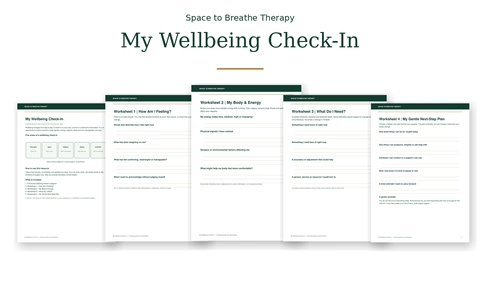
My Wellbeing Check-In is a practical five-page guide and worksheet resource designed to help you pause, reflect and develop a clearer understanding of your current wellbeing.
Through guided reflection, the resource encourages you to notice your emotions, recognise physical and energy-related needs, identify what may be affecting you and consider manageable ways of supporting yourself.
The aim is not to judge how well you are coping or create another list of things you should be doing.
Instead, it offers an opportunity to ask:
How am I feeling, what might be contributing to this, and what do I need right now?
Why Checking In With Yourself Matters
Our emotional and physical wellbeing can change throughout the day, across different environments and during different stages of life.
You may feel calm and capable one morning but overwhelmed and exhausted later that afternoon.
You might manage a demanding week and only recognise the impact when you finally have an opportunity to rest.
Sometimes the early signs of stress, emotional overload or burnout are subtle.
These may include:
- Feeling more irritable than usual.
- Difficulty concentrating.
- Increased tiredness.
- Changes in sleep.
- Feeling emotionally sensitive.
- Withdrawing from conversations.
- Becoming overwhelmed by ordinary demands.
- Experiencing physical tension.
- Losing interest in activities.
- Finding decisions more difficult.
- Feeling disconnected or emotionally flat.
A wellbeing check-in provides an opportunity to notice these changes before they become more difficult to manage.
It can also help you recognise positive experiences, supportive relationships and things that are working well.
The purpose is to build awareness, not to monitor yourself constantly.
Five Areas of Wellbeing
The guide introduces five connected areas to consider during a personal wellbeing check-in.
1. Feelings – What emotions am I experiencing?
2. Body – What physical sensations or needs am I noticing?
3. Energy – How much capacity do I have available?
4. Needs – What might help me feel supported?
5. Next Steps – What is one manageable action I can take?
These areas are not separate from one another.
Emotional distress may affect sleep and energy.
Physical discomfort may influence mood and concentration.
Ongoing demands may reduce your capacity to manage situations that would normally feel manageable.
Exploring these connections can help you develop a fuller picture of your wellbeing.
1. Recognising How You Feel
Emotions are an important part of our everyday experiences.
However, identifying feelings is not always straightforward.
You may experience several emotions at once or find that your feelings change throughout the day.
For example, you might feel:
- Anxious about an upcoming appointment.
- Frustrated by an unexpected change.
- Sad about a difficult experience.
- Relieved after completing a demanding task.
- Lonely despite being around other people.
- Overwhelmed by responsibilities.
- Calm when you finally have some quiet time.
- Unsure how to describe your emotional state.
Sometimes you may not recognise a particular emotion at all.
You might simply know that something feels different.
The resource encourages you to begin wherever you are, without needing to find the perfect word.
You can describe your experience in your own language.
For example:
- “I feel unsettled.”
- “Everything feels too much.”
- “I'm not sure what I'm feeling.”
- “I feel exhausted but cannot switch off.”
- “I feel more settled than I did yesterday.”
There is no correct emotional response to a wellbeing check-in.
Worksheet 1 – How Am I Feeling?
The first practical worksheet encourages you to explore your current emotional wellbeing.
You can reflect on:
- How you are feeling today.
- Emotions you have noticed recently.
- Situations that may be influencing your mood.
- Whether your feelings have changed.
- What has been difficult.
- What has felt supportive.
- What you would like someone else to understand.
For example:
How am I feeling? Anxious and overwhelmed.
What might be contributing? Several appointments and unfinished responsibilities.
What have I noticed? Difficulty concentrating and feeling more irritable.
What might help? Reducing unnecessary demands and having time to prepare.
The worksheet provides space to explore your experience without requiring you to resolve everything immediately.
Sometimes recognising how you feel is a useful first step.
2. Understanding Your Body and Energy
Our bodies can provide important information about our wellbeing.
Stress, emotional distress, illness, sensory demands and everyday responsibilities may all affect how we feel physically.
You might notice:
- Muscle tension.
- Headaches.
- Changes in appetite.
- Tiredness.
- Restlessness.
- Difficulty sleeping.
- Physical discomfort.
- Reduced concentration.
- Sensory sensitivity.
- Changes in energy.
Energy levels can also fluctuate considerably.
You may have enough energy for some activities but find others exhausting.
For example, you might manage a short conversation but struggle with a busy social environment.
You may be able to complete a practical task but need additional recovery time afterwards.
Recognising these differences can help you develop more realistic expectations.
Your capacity does not have to remain consistent every day.
Worksheet 2 – My Body & Energy
The second worksheet encourages you to explore your physical wellbeing and available capacity.
You can consider:
- How your body feels today.
- Whether you are experiencing discomfort or tension.
- Your current energy levels.
- Activities that increase exhaustion.
- Situations that help you feel more comfortable.
- Whether you have had enough opportunities to rest.
- What your body may need.
For example:
Physical experience: Tired, tense and finding it difficult to concentrate.
Possible contributing factors: Poor sleep and a demanding morning.
Current capacity: Lower than usual.
Supportive response: Allow a break, reduce unnecessary tasks and adjust expectations.
The worksheet encourages you to recognise that physical and emotional wellbeing are connected.
It also acknowledges that some people experience chronic symptoms or fluctuating health conditions that require ongoing support and adjustments.
3. Recognising What You Need
Sometimes we become so focused on responsibilities that we overlook our own needs.
You may recognise that you are struggling but feel uncertain about what would help.
Needs can be emotional, physical, practical, sensory or social.
For example, you might need:
- Rest.
- Reassurance.
- Clear information.
- Quiet time.
- Connection with someone you trust.
- Help with a practical task.
- Reduced demands.
- Additional processing time.
- Food or hydration.
- Physical comfort.
- Predictability.
- Personal space.
- An opportunity to express your feelings.
Identifying a need does not mean you must meet it immediately or independently.
Sometimes recognising that you need support is the most important part of the process.
Worksheet 3 – What Do I Need?
The third worksheet encourages you to move from recognising how you feel towards understanding what may support you.
You can reflect on:
- What feels most difficult right now.
- What you may need emotionally.
- What your body may need.
- Whether your environment is supportive.
- Whether your current expectations are realistic.
- What practical help might be available.
- Who you could approach for support.
- What you can change and what may require help from others.
For example:
What is difficult? I feel overwhelmed by several responsibilities.
What do I need? More time and clearer priorities.
What could help? Breaking tasks into smaller stages and asking for clarification.
Who might support me? A colleague, family member, support worker or trusted professional.
The aim is to develop greater awareness of your needs rather than assuming that you should manage everything alone.
4. Recognising Changing Capacity
One important part of emotional wellbeing is recognising that capacity can fluctuate.
You may find that activities which feel manageable on one day become difficult on another.
This can happen for many reasons, including:
- Poor sleep.
- Emotional distress.
- Physical illness.
- Sensory overload.
- Ongoing stress.
- Changes in routine.
- Medication effects.
- Social demands.
- Pain or fatigue.
- Significant life events.
A wellbeing check-in can help you recognise when expectations need adjusting.
For example:
Usual expectation: Complete several demanding tasks in one afternoon.
Current experience: Feeling exhausted and struggling to concentrate.
More realistic approach: Identify the most important task, allow breaks and consider what can wait.
Adjusting expectations is not the same as giving up.
It can be a practical way of respecting your current needs.
5. Taking Gentle Next Steps
Once you have explored your feelings, physical wellbeing and personal needs, you may be ready to consider what could help next.
However, it is important that your wellbeing check-in does not become another source of pressure.
You do not need to create an extensive plan or make several changes at once.
Sometimes one small action is enough.
For example:
- Take a short break.
- Drink something.
- Move to a quieter environment.
- Contact someone supportive.
- Rearrange a non-urgent task.
- Write down an important concern.
- Ask for practical assistance.
- Allow time to recover.
- Prepare for an upcoming appointment.
- Recognise something that has gone well.
The aim is to choose an action that feels manageable and appropriate to your circumstances.
Worksheet 4 – My Gentle Next-Step Plan
The final worksheet brings together your reflections into a personalised wellbeing plan.
You can identify:
- How you are feeling.
- What your body is communicating.
- Your current energy and capacity.
- What you need most.
- One manageable next step.
- Support that may be available.
- Something you want to remember.
- When you might check in with yourself again.
For example:
How am I feeling? Emotionally drained.
What do I need? Rest and reduced demands.
One manageable step: Postpone a non-essential activity and allow some quiet time.
Support available: Ask someone to help with a practical responsibility.
Reminder: “I can adjust my plans when my capacity changes.”
The plan is designed to be flexible.
You can return to it whenever you need to reassess your wellbeing.
Wellbeing Check-Ins and Neurodivergence
For autistic people and individuals with ADHD, recognising emotional and physical needs can sometimes involve additional challenges.
Differences in interoception, sensory processing, executive functioning and emotional awareness may influence how wellbeing is experienced.
For example:
- You may struggle to identify hunger, thirst or tiredness.
- Emotional experiences may be difficult to describe.
- Sensory overload may affect concentration and communication.
- Hyperfocus may make it difficult to notice the need for breaks.
- Unexpected changes may increase anxiety.
- Masking may make it harder to recognise exhaustion.
- Task initiation difficulties may affect self-care routines.
The resource encourages a flexible approach to wellbeing check-ins.
You do not need to complete every section in one sitting.
You may prefer to use brief phrases, visual reminders, simple ratings or support from someone you trust.
The purpose is to make emotional reflection more accessible rather than introducing another demanding routine.
Wellbeing Check-Ins, Disability and Chronic Health Conditions
For people living with disabilities or chronic health conditions, wellbeing can be influenced by symptoms, pain, fatigue, accessibility barriers and fluctuating capacity.
Some days may involve significant physical or emotional demands.
A wellbeing check-in can provide an opportunity to recognise these experiences without comparing yourself with other people.
For example, you may notice that your energy is limited following medical appointments or that sensory demands increase fatigue.
You may identify a need for reasonable adjustments, additional rest or practical support.
The resource encourages you to recognise that your needs are valid even when they are not visible to others.
It also acknowledges that wellbeing is not solely an individual responsibility.
Accessible environments, appropriate healthcare, supportive relationships and reasonable adjustments can all play an important role.
Using a Wellbeing Check-In Regularly
Some people find it helpful to complete a wellbeing check-in at a particular time of day.
Others prefer to use one when they notice a change in mood, energy or capacity.
There is no requirement to complete it daily.
You might use the resource:
- At the beginning of the week.
- After a demanding experience.
- During a period of stress.
- Before or after a therapy session.
- When recovering from burnout.
- During a change in circumstances.
- When you feel disconnected from your needs.
- As part of a personal wellbeing routine.
Over time, you may begin to recognise patterns.
For example, you might notice that particular environments increase exhaustion or that certain types of support make difficult days more manageable.
These observations can help inform future decisions and conversations about your wellbeing.
What Is Included?
This downloadable five-page PDF contains:
Page 1 – Understanding My Wellbeing Check-In
An introduction to personal wellbeing reflection, including a visual guide exploring feelings, physical needs, energy, support and manageable next steps.
Page 2 – How Am I Feeling?
A reflective worksheet for identifying emotions, recent experiences and factors that may be influencing your wellbeing.
Page 3 – My Body & Energy
A practical worksheet for recognising physical sensations, energy levels, fatigue and changing capacity.
Page 4 – What Do I Need?
A guided exercise for exploring emotional, physical, practical and environmental needs, including sources of support.
Page 5 – My Gentle Next-Step Plan
A personalised planning worksheet for identifying one manageable action, recognising available support and developing a compassionate response to your current circumstances.
The worksheets provide space for personal reflection and can be completed independently or alongside therapy and coaching.
Who Is This Resource For?
My Wellbeing Check-In may be helpful for adults who:
- Want to understand their emotional wellbeing.
- Find it difficult to recognise or describe feelings.
- Experience stress or emotional overwhelm.
- Have fluctuating energy or capacity.
- Struggle to recognise personal needs.
- Are experiencing burnout or exhaustion.
- Live with a disability or chronic health condition.
- Are autistic or have ADHD.
- Want to develop gentle self-care routines.
- Would benefit from a structured reflection tool.
The resource may also support therapeutic conversations about emotional awareness, physical wellbeing, personal boundaries, self-care, capacity and support needs.
A Gentle Reminder
You do not need to wait until everything feels overwhelming before checking in with yourself.
You do not have to explain every emotion perfectly.
You do not need to have all the answers.
And you do not have to turn every difficult feeling into a task that needs completing.
Sometimes recognising how you feel is enough for the moment.
Sometimes the most supportive next step is to rest.
Sometimes it is to ask for help.
And sometimes it is simply to acknowledge that you are having a difficult day.
Your wellbeing deserves attention even when you are busy, even when other people need you, and even when you are unsure what would help.
Checking in with yourself is not about achieving perfect emotional balance.
It is about developing awareness, understanding your needs and responding with greater compassion.
Space to Breathe Therapy
This resource is intended for education, personal reflection and emotional wellbeing support. It does not replace individual psychological, medical or professional advice. If you experience persistent emotional distress, significant changes in your physical health or difficulties managing everyday life, consider seeking support from an appropriately qualified professional.




