





Pressure & Expectations
Understanding Demands, Challenging Unrealistic Standards and Finding a Healthier Balance
Pressure can come from many different areas of life. Sometimes it comes from responsibilities, deadlines, relationships or the expectations other people place upon us. At other times, the greatest pressure comes from the standards we set for ourselves.
You may feel that you should always be productive, meet everyone's needs, achieve more, avoid mistakes or manage everything without asking for help.
Over time, these expectations can become exhausting, particularly when the demands placed upon you exceed the time, energy, resources or emotional capacity you have available.
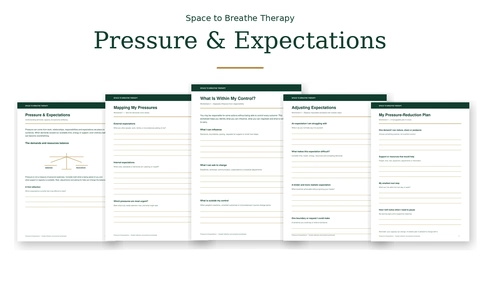
Pressure & Expectations is a practical five-page guide and worksheet resource designed to help you understand where pressure comes from, recognise unrealistic expectations and develop more manageable ways of responding to everyday demands.
Rather than encouraging you to work harder or push through exhaustion, this resource focuses on understanding your limits, reducing unnecessary pressure and creating realistic expectations that support your wellbeing.
Understanding Where Pressure Comes From
Pressure is not always negative. Some expectations can provide motivation, structure and a sense of purpose.
However, when demands become excessive, unclear or difficult to manage, pressure can begin to affect emotional, mental and physical wellbeing.
You may experience pressure through:
- Workplace responsibilities and deadlines.
- Family expectations or caring responsibilities.
- Financial concerns and everyday commitments.
- Academic or professional achievement.
- Social comparisons and expectations.
- Fear of disappointing others.
- Perfectionism or unrealistic personal standards.
- Feeling responsible for everyone else's needs.
- Difficulty saying no or asking for support.
The guide explores the relationship between demands and available resources, helping you recognise when expectations may be exceeding your capacity.
Feeling overwhelmed does not necessarily mean you are incapable. It may mean that too much is being expected of you.
Mapping Your Expectations
When pressure builds, it can be difficult to recognise which expectations are contributing most to your stress.
Some demands may be unavoidable, while others may be based on assumptions, habits or standards that no longer serve you.
The first practical worksheet encourages you to identify the expectations you are currently managing.
You can explore where these expectations come from, how important they are and whether they are realistic for your present circumstances.
This process can help you distinguish between responsibilities that genuinely require your attention and pressures that may be reduced, shared or reconsidered.
Recognising What Is Within Your Control
Not every expectation can be changed immediately.
There may be workplace demands, family responsibilities or external circumstances that you cannot fully control.
However, understanding the difference between what you can influence and what lies outside your control can help you decide where to direct your energy.
The second worksheet encourages you to explore:
- Situations you can directly change.
- Responsibilities you may be able to negotiate.
- Expectations that could be adjusted.
- Areas where additional support may help.
- Circumstances that require acceptance or a different response.
Recognising your level of control is not about giving up.
It is about identifying where practical action may be possible and reducing the pressure to manage things beyond your influence.
Challenging Unrealistic Standards
Sometimes the expectations we place upon ourselves are far more demanding than those we would place upon another person.
You may believe that you must always get things right, remain productive, avoid disappointing others or cope without showing difficulty.
These beliefs can contribute to guilt, self-criticism, anxiety and emotional exhaustion.
The third worksheet encourages you to examine the standards you are holding yourself to.
You can consider whether an expectation is achievable, whether it allows for changing circumstances and whether you would consider it reasonable for someone else.
For example, an expectation such as:
“I should be able to manage everything without help.”
might be reconsidered as:
“I have responsibilities, but I am also allowed to need support and recognise my limits.”
The aim is not to abandon ambition or responsibility, but to develop standards that are realistic, flexible and compassionate.
Understanding Personal Limits and Capacity
Your ability to manage demands can change depending on your health, emotional wellbeing, available support, sleep, sensory environment and other responsibilities.
What feels manageable on one day may be much more difficult on another.
The resource encourages you to recognise that personal capacity is not fixed.
You may need more rest during stressful periods, additional support when responsibilities increase or adjustments when your circumstances change.
This can be particularly important for people experiencing chronic stress, disability, neurodivergence, health conditions or caring responsibilities.
Recognising your limits is not a weakness. It is an important part of protecting your wellbeing.
Creating a Personal Pressure-Reduction Plan
The fourth worksheet brings together your reflections and helps you develop a realistic plan for managing pressure.
Rather than attempting to change everything at once, you are encouraged to identify small, achievable adjustments.
These might include:
- Reducing unnecessary commitments.
- Setting clearer boundaries.
- Asking for help or sharing responsibilities.
- Breaking larger tasks into manageable steps.
- Allowing additional time for recovery.
- Adjusting unrealistic deadlines or standards.
- Prioritising essential responsibilities.
- Recognising when something is good enough rather than perfect.
Your plan can be adapted as your circumstances change.
The focus is on creating a more sustainable balance between what is expected of you and what you have the capacity to manage.
What Is Included?
This downloadable five-page PDF contains:
- Page 1 – Understanding Pressure & Expectations: An introduction to how demands and expectations influence wellbeing, including a visual demands-and-resources diagram.
- Page 2 – Mapping My Expectations: A practical worksheet for identifying the pressures and standards affecting your everyday life.
- Page 3 – What Is Within My Control?: A guided exercise exploring what you can change, influence or approach differently.
- Page 4 – Adjusting Unrealistic Standards: A reflective worksheet for challenging excessive expectations and developing more compassionate alternatives.
- Page 5 – My Pressure-Reduction Plan: A personalised action plan for reducing unnecessary demands, recognising limits and identifying supportive next steps.
The worksheets provide space for personal reflection and can be completed independently or alongside therapy and coaching.
Who Is This Resource For?
Pressure & Expectations may be helpful for adults who experience stress, overwhelm, perfectionism, self-criticism or difficulty balancing responsibilities.
It may be particularly useful for people who:
- Feel responsible for meeting everyone's expectations.
- Struggle to say no or establish boundaries.
- Experience guilt when resting.
- Set excessively high personal standards.
- Feel overwhelmed by competing demands.
- Experience workplace or family pressure.
- Find it difficult to recognise their own needs.
- Are managing disability, neurodivergence or changing health-related capacity.
The resource may also support individuals who are experiencing early signs of burnout or who want to develop a healthier relationship with achievement, responsibility and self-worth.
A Gentle Reminder
You do not have to meet every expectation to be worthy of respect, care or understanding.
There may be times when responsibilities need to be reconsidered, plans need to change or additional support becomes necessary.
Reducing pressure does not mean that you are giving up.
It may mean recognising what matters most, accepting your current capacity and allowing yourself to approach life in a more sustainable way.
You are allowed to rest, ask for help, adjust expectations and acknowledge when something has become too much.
Your worth is not measured by how much pressure you can withstand or how much you manage to achieve.
Space to Breathe Therapy
This resource is intended for education, personal reflection and emotional wellbeing support. It does not replace individual psychological or medical advice.




