





Relationships & Communication
Understanding Communication Patterns, Expressing Your Needs and Building Healthier Connections
Relationships are an important part of everyday life, but communicating with other people is not always straightforward.
We all have different ways of expressing ourselves, interpreting information, responding to emotions and managing disagreements.
Sometimes we may struggle to explain what we need, worry about being misunderstood or find it difficult to communicate during emotionally challenging situations.
At other times, we may feel unheard, become frustrated when conversations do not go as expected or find ourselves avoiding difficult discussions altogether.
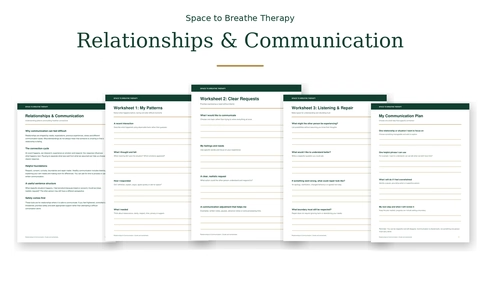
Relationships & Communication is a practical five-page guide and worksheet resource designed to help you understand your communication patterns, recognise emotional needs, express yourself more clearly and develop healthier, more supportive connections.
The resource encourages reflection, understanding and self-compassion rather than expecting perfect communication.
Understanding Your Communication Patterns
Everyone develops different ways of communicating based on their experiences, relationships, personality, environment and individual needs.
Some people communicate directly, while others prefer time to process information before responding.
You may find it easy to express your thoughts in certain situations but struggle when conversations become emotionally demanding.
The first worksheet encourages you to explore your personal communication patterns.
You can reflect on:
- How you usually express your thoughts and feelings.
- Situations where communication feels comfortable or difficult.
- Whether you tend to withdraw, become defensive or avoid disagreements.
- How stress or emotional overwhelm affects your communication.
- What helps you feel listened to and understood.
Recognising these patterns can help you understand your responses and identify changes that may support more positive interactions.
Recognising Emotional Needs in Relationships
Healthy communication involves more than finding the right words.
It also involves recognising our emotional needs and understanding what helps us feel respected, supported and connected.
You may need reassurance, clarity, personal space, patience, consistency or opportunities to express yourself without interruption.
The second worksheet encourages you to explore the emotional needs that influence your relationships.
It provides space to consider what helps you feel safe in conversations, what makes communication more difficult and how you might explain your needs to another person.
Understanding your needs is not selfish. It is an important part of developing relationships where everyone has opportunities to feel heard and respected.
Expressing Yourself Clearly and Respectfully
Sometimes we know that something is bothering us but struggle to communicate it.
We may worry about upsetting someone, being rejected, creating conflict or having our needs dismissed.
The third worksheet focuses on developing clear, respectful communication.
It encourages you to practise expressing feelings, explaining needs and making manageable requests.
For example, instead of allowing frustration to build, you might practise saying:
“I find it difficult to concentrate when several things are being discussed at once. Could we talk about one thing at a time?”
Or:
“I need some time to process what we have discussed before I can respond.”
These approaches can help create opportunities for understanding without blaming yourself or the other person.
The aim is not to control how someone responds, but to communicate your experience as clearly and respectfully as possible.
Listening and Understanding Different Perspectives
Communication involves both expressing ourselves and making space to understand others.
However, listening can become difficult when we feel criticised, overwhelmed, misunderstood or emotionally activated.
We may focus on preparing our response rather than hearing what the other person is trying to communicate.
The resource explores how listening, clarification and curiosity can support healthier conversations.
This may involve:
- Allowing someone time to explain their perspective.
- Checking that you have understood their meaning.
- Asking questions rather than making assumptions.
- Recognising when a conversation needs a break.
- Respecting different communication styles and processing needs.
- Understanding that disagreement does not always mean rejection.
Listening does not mean agreeing with everything another person says.
It means creating opportunities for clearer understanding while maintaining your own boundaries and needs.
Managing Misunderstandings and Difficult Conversations
Misunderstandings are a normal part of relationships.
Two people may experience the same conversation differently, interpret tone or body language in different ways or have different expectations about what should happen next.
When emotions become heightened, communication can become more difficult.
The fourth worksheet encourages you to reflect on misunderstandings and consider ways to repair communication when appropriate.
You can explore what happened, how you felt, what you needed and what might help a future conversation feel more manageable.
Repairing a misunderstanding might involve clarifying intentions, acknowledging someone's experience, apologising where appropriate or agreeing on a different way to communicate.
However, not every relationship difficulty can be resolved through better communication alone.
Healthy relationships also require mutual respect, emotional safety and a willingness to listen.
Developing Your Personal Communication Plan
The final worksheet brings together what you have learned throughout the resource.
It encourages you to identify communication strategies that feel realistic and supportive for your individual circumstances.
You might decide to:
- Ask for more time to process information.
- Practise expressing a need more directly.
- Use written communication when speaking feels difficult.
- Recognise when you need a break from a conversation.
- Set clearer personal boundaries.
- Ask questions when something is unclear.
- Develop a calmer approach to discussing disagreements.
Your plan does not need to involve major changes.
Small adjustments can help you feel more confident in expressing yourself and understanding others.
Communication Differences and Neurodivergence
Communication is not experienced in the same way by everyone.
Autistic people, individuals with ADHD and people with other communication or processing differences may experience additional challenges in conversations, particularly when there are sensory demands, emotional pressures or expectations around social communication.
Some people may prefer direct language, written information, additional processing time or reduced eye contact.
Others may experience difficulty recognising emotional signals, managing interruptions or finding words when overwhelmed.
These differences do not mean someone is communicating incorrectly.
The resource encourages you to recognise your own communication needs and consider adjustments that make relationships more accessible and supportive.
What Is Included?
This downloadable five-page PDF contains:
- Page 1 – Understanding Communication: An introduction to communication patterns and their influence on relationships.
- Page 2 – Recognising Emotional Needs: A practical worksheet exploring what helps you feel understood, respected and supported.
- Page 3 – Expressing Clear Requests: Guided reflection on communicating feelings, needs and boundaries.
- Page 4 – Listening and Repairing Misunderstandings: Exploring different perspectives and approaches to difficult conversations.
- Page 5 – My Communication Plan: Developing personalised strategies and realistic next steps for healthier communication.
The worksheets provide space for personal reflection and can be completed independently or during therapy and coaching sessions.
Who Is This Resource For?
Relationships & Communication may be helpful for adults who experience difficulties expressing their feelings, communicating needs, managing disagreements or understanding communication patterns.
It may be particularly useful for people who:
- Frequently feel misunderstood or unheard.
- Find difficult conversations overwhelming.
- Struggle to express boundaries or ask for support.
- Experience anxiety around relationships.
- Want to develop greater confidence in communicating.
- Experience neurodivergent communication differences.
- Wish to improve communication with partners, family members, friends or colleagues.
The resource can also support therapeutic discussions about relationships, emotional awareness and interpersonal wellbeing.
A Gentle Reminder
You do not have to communicate perfectly to deserve understanding.
There may be times when you struggle to find the right words, need additional processing time or find conversations emotionally exhausting.
Healthy communication is not about always agreeing, avoiding conflict or meeting everyone else's expectations.
It is about developing ways to express yourself, recognise your needs and build relationships where respect and understanding can grow.
You are allowed to ask for clarity, take time to respond, establish boundaries and communicate in ways that work for you.
Your voice matters, your needs deserve consideration, and healthy relationships make space for both.
Space to Breathe Therapy
This resource is intended for education, personal reflection and emotional wellbeing support. It does not replace individual psychological advice or specialist relationship support. Where a relationship involves coercion, intimidation or abuse, prioritising safety and accessing appropriate specialist support is more important than attempting communication exercises together.




