





Stress Management: Five Ways to Support Your Brain
Understanding Stress, Reducing Overload and Developing Practical Strategies for Everyday Wellbeing
Stress is a natural response to situations that feel demanding, uncertain or overwhelming.
In manageable amounts, stress can help us respond to challenges, concentrate on important tasks and take action when something requires our attention.
However, when stress becomes persistent or demands exceed our available resources, it can begin to affect how we think, feel and function.
You may notice difficulties concentrating, remembering information, making decisions or managing emotions. Everyday tasks that would normally feel straightforward may become exhausting.
You might also experience physical tension, disrupted sleep, irritability or a sense that your mind is constantly working.
Stress Management: Five Ways to Support Your Brain is a practical five-page guide and worksheet resource designed to help you understand how stress affects the brain and nervous system, recognise personal warning signs and develop manageable strategies for reducing overload.
Rather than encouraging you to simply become more resilient or push through difficulties, this resource focuses on understanding your needs, adjusting demands and creating opportunities for regulation and recovery.
Understanding How Stress Affects the Brain
When we encounter a stressful situation, the body activates systems that help us respond to potential challenges or threats.
These responses involve communication between the brain, nervous system and stress-related hormones.
During periods of heightened stress, you may notice changes in attention, memory, emotional regulation and decision-making.
For example, you might:
- Find it difficult to concentrate.
- Forget information you would normally remember.
- Become more sensitive to noise or interruptions.
- Struggle to organise your thoughts.
- React more strongly to minor frustrations.
- Feel mentally exhausted after ordinary tasks.
- Experience racing thoughts or persistent worry.
- Find it difficult to switch off or relax.
These experiences can be frustrating, particularly when you expect yourself to function at your usual level.
However, stress-related changes in concentration and emotional regulation are understandable responses to increased demands.
Recognising these effects can help you respond with greater self-compassion and identify practical ways to reduce unnecessary pressure.
Five Ways to Support Your Brain
The guide introduces five connected approaches to managing stress:
1. Pause – Create a moment to notice what is happening.
2. Regulate – Support your nervous system and sensory needs.
3. Simplify – Reduce unnecessary demands and cognitive overload.
4. Connect – Access appropriate support and meaningful connection.
5. Recover – Allow time for rest, restoration and replenishing energy.
These approaches are not intended to be followed as a rigid programme.
You can choose the strategies that are most appropriate for your circumstances and adapt them as your needs change.
1. Pause – Notice Before Responding
When stress increases, it can become difficult to recognise how much pressure you are carrying.
You may continue moving from one responsibility to another without noticing changes in your emotions, physical sensations or concentration.
Pausing creates an opportunity to check in with yourself.
This does not need to involve a lengthy relaxation exercise.
It might mean taking a brief moment to ask:
- What am I feeling right now?
- What is making this situation difficult?
- Is my body showing signs of tension?
- Am I trying to manage too many things at once?
- What do I need before continuing?
The first practical worksheet, Pause & Notice, encourages you to recognise personal stress signals and identify situations that contribute to overload.
By becoming more aware of these patterns, you may be able to respond earlier rather than waiting until stress becomes overwhelming.
2. Regulate – Support Your Nervous System
Stress can affect the body's level of alertness.
You may feel restless, tense, agitated or unable to settle.
At other times, prolonged stress may leave you feeling exhausted, disconnected or emotionally shut down.
Regulation involves finding ways to support your nervous system and respond to what your body needs.
Helpful approaches may include:
- Slowing your breathing in a comfortable, natural way.
- Moving to a quieter environment.
- Reducing unnecessary sensory input.
- Using familiar grounding techniques.
- Stretching or moving gently.
- Listening to calming or familiar sounds.
- Spending time in a comfortable environment.
- Taking a break from demanding activities.
Not every regulation technique will suit everyone.
For example, some people find breathing exercises helpful, while others experience discomfort when focusing on their breathing.
The aim is to identify strategies that feel accessible and supportive rather than forcing yourself to use a particular technique.
3. Simplify – Reduce Cognitive Overload
Stress can make everyday thinking tasks more demanding.
When you are managing multiple responsibilities, your working memory and attention may become overloaded.
You may find yourself repeatedly checking information, forgetting tasks or struggling to decide what to do first.
Simplifying demands can reduce unnecessary mental effort.
This might involve:
- Breaking larger tasks into smaller steps.
- Writing down important information.
- Prioritising one task at a time.
- Reducing unnecessary decisions.
- Using reminders or visual prompts.
- Allowing additional time for complex tasks.
- Limiting interruptions where possible.
- Reviewing responsibilities that could be shared or postponed.
Simplifying is not about lowering your worth or ability.
It is about recognising that your available capacity may change under stress and adjusting your environment or expectations accordingly.
4. Connect – Recognise the Value of Support
Stress can sometimes lead people to withdraw, particularly when they feel overwhelmed or believe they should manage independently.
However, supportive relationships and practical assistance can help reduce the pressure of carrying difficulties alone.
Connection does not necessarily mean discussing every emotion or attending social activities.
It may involve:
- Talking to someone you trust.
- Asking for help with a practical responsibility.
- Spending time with someone who makes you feel comfortable.
- Requesting support from a manager or colleague.
- Contacting a professional when difficulties become persistent.
- Participating in a familiar community or shared interest.
- Letting someone know that you are having a difficult day.
The resource encourages you to consider what kind of connection feels helpful.
For some people, a conversation may provide reassurance.
For others, practical support, quiet companionship or simply knowing someone is available may be more beneficial.
5. Recover – Make Space for Rest and Restoration
Recovery is an important part of managing stress.
When demands continue without sufficient opportunities to rest, you may notice increasing exhaustion, reduced concentration or difficulty regulating emotions.
Recovery does not always mean sleeping or doing nothing.
It can involve activities that allow your mind and body to move away from sustained demands.
These might include:
- Taking regular breaks.
- Spending time outdoors.
- Engaging in enjoyable activities.
- Allowing quiet time after demanding situations.
- Reducing unnecessary commitments.
- Establishing manageable boundaries.
- Creating opportunities for sleep and rest.
- Choosing activities that feel restorative rather than demanding.
The amount and type of recovery needed will vary between individuals.
Some people may need short, frequent breaks, while others benefit from longer periods away from demanding environments.
The key is recognising that recovery is a legitimate need rather than something that must be earned through productivity.
Worksheet 1 – Pause & Notice
This worksheet encourages you to explore how stress affects you personally.
You can reflect on:
- Situations that increase pressure.
- Early physical signs of stress.
- Changes in thoughts or concentration.
- Emotional responses.
- What you usually do when stress increases.
- What might help you recognise overload sooner.
The aim is to develop greater awareness of your individual stress patterns.
Worksheet 2 – Regulate & Recover
The second worksheet focuses on identifying practical strategies that support nervous-system regulation and recovery.
You can consider:
- Environments that help you feel more settled.
- Sensory experiences that are calming or overwhelming.
- Grounding or movement strategies that feel helpful.
- Signs that you need rest.
- Activities that support recovery.
- Adjustments that may reduce stress.
The worksheet encourages you to build a personalised collection of strategies rather than relying on a single technique.
Worksheet 3 – Simplify & Connect
The third worksheet explores how reducing demands and accessing support can make stressful situations more manageable.
You can identify:
- Responsibilities that currently feel overwhelming.
- Tasks that could be broken into smaller steps.
- Unnecessary demands that might be reduced.
- Practical adjustments that could help.
- People who may be able to provide support.
- Ways to communicate what you need.
This exercise recognises that stress management is not only about changing your internal response.
Sometimes the most helpful action involves changing the situation, reducing demands or accessing appropriate assistance.
Worksheet 4 – My Brain Support Plan
The final worksheet brings together the five approaches and encourages you to create a realistic personal plan.
Your plan may include:
- Your most common stress warning signs.
- One way to pause and check in with yourself.
- A regulation strategy that feels comfortable.
- A task or demand you could simplify.
- Someone you can contact for support.
- An opportunity for rest or recovery.
- One manageable action to try.
- Ways to review and adjust your plan.
The aim is not to create another demanding routine.
Instead, the plan provides a flexible reference that can help you respond to stress in ways that reflect your circumstances.
Stress, Disability and Neurodivergence
For disabled and neurodivergent individuals, stress may involve additional factors that are not always recognised in general wellbeing advice.
Autistic people, individuals with ADHD and those living with chronic health conditions may experience:
- Sensory overload.
- Executive-function demands.
- Difficulties switching between tasks.
- Increased processing demands.
- Communication-related stress.
- Masking and social exhaustion.
- Fluctuating physical or emotional energy.
- Additional recovery needs.
For some people, stress management may require environmental adjustments rather than relaxation techniques alone.
This could involve quieter working spaces, clearer instructions, predictable routines, flexible breaks or support with managing responsibilities.
The resource encourages you to recognise that your individual needs matter.
Supporting your brain does not mean forcing it to function in environments or circumstances that are unnecessarily overwhelming.
What Is Included?
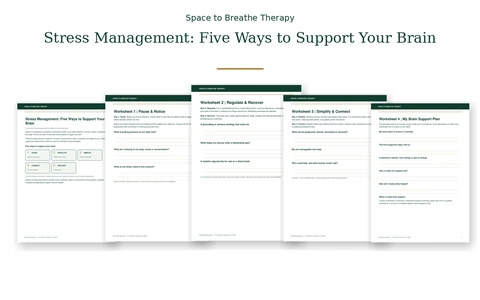
This downloadable five-page PDF contains:
Page 1 – Understanding Stress and Five Ways to Support Your Brain
An introduction to how stress can affect thinking, emotions and everyday functioning, including a visual diagram of the five supportive approaches.
Page 2 – Pause & Notice
A reflective worksheet for recognising personal stress triggers, physical signals, emotional responses and early warning signs.
Page 3 – Regulate & Recover
A practical worksheet for identifying sensory, grounding, calming and recovery strategies that support individual wellbeing.
Page 4 – Simplify & Connect
Guided reflection on reducing cognitive demands, identifying practical adjustments and accessing appropriate support.
Page 5 – My Brain Support Plan
A personalised action plan bringing together the five approaches and encouraging manageable, sustainable strategies for everyday stress management.
The worksheets provide space for personal reflection and can be completed independently or alongside therapy and coaching.
Who Is This Resource For?
Stress Management: Five Ways to Support Your Brain may be helpful for adults who:
- Experience ongoing stress or emotional overwhelm.
- Struggle with concentration or memory under pressure.
- Feel mentally exhausted by everyday responsibilities.
- Experience sensory or cognitive overload.
- Find it difficult to recognise early stress signals.
- Want practical alternatives to simply pushing through.
- Need support with balancing demands and recovery.
- Experience disability-related or neurodivergent needs.
- Are developing healthier routines and personal boundaries.
- Would benefit from a personalised stress-management plan.
The resource may also support therapeutic conversations about stress, emotional regulation, cognitive overload, burnout prevention and sustainable wellbeing.
A Gentle Reminder
Your brain is not designed to manage unlimited demands without rest, support or opportunities to recover.
Experiencing stress does not mean that you are weak, incapable or failing to cope.
Sometimes the most helpful response is to pause.
Sometimes it is to simplify a task, reduce sensory demands, ask for assistance or give yourself permission to rest.
You do not have to use every strategy perfectly.
You do not have to wait until you are completely exhausted before recognising that something needs to change.
Supporting your brain begins with understanding what it needs, respecting your limits and creating space for recovery alongside everyday responsibilities.
Space to Breathe Therapy
This resource is intended for education, personal reflection and emotional wellbeing support. It does not replace individual psychological, medical or professional advice. If stress is persistent, significantly affecting daily functioning or accompanied by concerning physical or psychological symptoms, consider seeking support from an appropriately qualified professional.




