





Stress & Overload
Understanding Pressure, Recognising Warning Signs and Finding Your Balance
Stress can affect anyone, but when the demands of everyday life begin to outweigh the time, energy and resources available to manage them, stress can develop into a feeling of overload.
You may find yourself struggling to concentrate, feeling emotionally exhausted, becoming more easily irritated or finding that even small responsibilities seem overwhelming.
Sometimes overload builds gradually. At other times, several demands arrive together, leaving little opportunity to rest, recover or process what is happening.
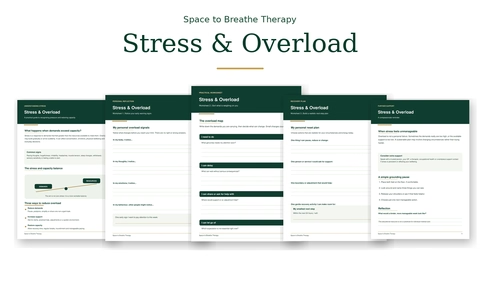
Stress & Overload is a practical five-page guide and worksheet resource designed to help you understand your experiences, recognise early warning signs and identify realistic ways to reduce pressure.
Understanding Stress and Overload
The guide explores how stress develops and why prolonged demands can affect emotional, mental and physical wellbeing.
It encourages you to consider the pressures you may be experiencing, including responsibilities, expectations, uncertainty and limited opportunities for recovery.
Rather than viewing stress as a personal failure, the resource helps you recognise when the demands placed upon you may be exceeding your available capacity.
Recognising Your Early Warning Signs
Stress does not look or feel the same for everyone.
You may experience changes in your thoughts, emotions, physical wellbeing or everyday behaviour.
The first practical worksheet helps you identify your personal warning signs, including:
- Emotional changes, such as anxiety, frustration or feeling overwhelmed.
- Physical experiences, including tension, tiredness and disrupted sleep.
- Cognitive difficulties, such as reduced concentration, forgetfulness or racing thoughts.
- Behavioural changes, including withdrawal, avoidance or difficulty completing everyday tasks.
Recognising these signs earlier can help you respond before pressure becomes more difficult to manage.
Identifying What Is Weighing on You
When you are overwhelmed, different responsibilities can begin to feel like one enormous problem.
The second worksheet provides space to separate these pressures and consider which demands are contributing most to your current stress.
You can explore what needs immediate attention, what could be simplified, what may be postponed and where additional support could make a difference.
The aim is not to eliminate every responsibility, but to create a clearer understanding of what is affecting your capacity.
Creating Your Personal Recovery Plan
The third worksheet supports you in developing a realistic plan for reducing overload.
It encourages you to identify manageable next steps, consider available support and recognise the importance of rest and recovery.
Your plan might involve reducing unnecessary demands, establishing boundaries, adjusting expectations, asking for help or creating more opportunities to recharge.
The focus is on small, achievable changes rather than adding further pressure to an already demanding situation.
A Compassionate Approach to Recovery
The final section offers a reminder that experiencing stress or overload does not mean you are failing.
Your capacity can change depending on your circumstances, health, emotional demands and available support.
You do not have to wait until you reach exhaustion before recognising that something needs to change.
What Is Included?
This downloadable five-page PDF contains:
- An accessible introduction to understanding stress and overload.
- A practical worksheet for recognising personal warning signs.
- An overload-sorting worksheet to identify and organise pressures.
- A personal recovery-planning worksheet.
- Supportive guidance encouraging reflection, realistic expectations and self-compassion.
Who Is This Resource For?
This guide may be helpful for adults experiencing ongoing stress, emotional exhaustion, competing responsibilities, workplace pressure, caring demands or difficulties balancing everyday life.
It may also be useful for neurodivergent individuals, people managing additional health-related demands, and professionals supporting others through stressful periods.
The worksheets can be completed independently, during therapy or coaching sessions, or as part of a wider wellbeing plan.
You do not have to manage everything at once. Understanding what is overwhelming you can be the first step towards creating space for recovery.
Space to Breathe Therapy
This resource is intended for education, reflection and wellbeing support. It does not replace individual medical or mental health advice.




