





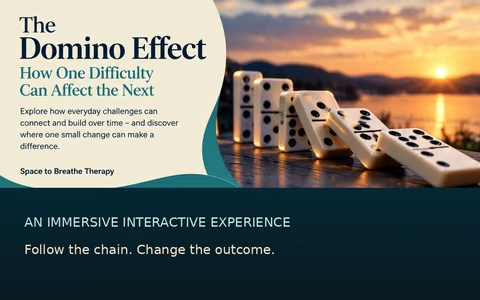
The Domino Effect
One difficult moment can affect what happens next. Here, you can watch six dominoes fall, discover the pressure behind each one, and change the outcome.
Tap any numbered stage to explore it. The dominoes already fallen will stay down.
Each domino represents something that can affect the next part of your day. This is about understanding connections, not blaming yourself.
Change what happens next
You've stopped the next domino. Choose something that might help here. Notice that support can change the chain without undoing everything that came before.
Make this story your own
Choose a story, then use these questions to connect each domino with your own experience.
There is no correct answer. You can leave any question blank.
Explore what changes the chain
These controls let you experiment with how the same situation might feel when demands and support change. They are reflection tools, not clinical scores.
What does the domino effect teach us?
Sometimes the problem we notice last began much earlier. Irritability, avoidance or withdrawal may follow several hidden pressures. Exploring the chain helps us ask what support is needed, rather than judging the final reaction.
Why this matters for men's mental health
Men can feel pressure to appear capable, independent or unaffected. Stress may show up as exhaustion, reduced patience, sleep difficulties or pulling away. A domino chain helps make the earlier experiences visible and can create a gentler starting point for conversation.
Neurodivergence and accumulating demands
For people with ADHD, planning, working memory and task initiation may require additional support. For autistic people, sensory demands, unpredictable changes and masking may increase fatigue. These are not character flaws. Useful changes might include quieter environments, clear expectations, reminders and recovery time.
Why interrupting a chain isn't about blame
Some dominoes reflect workloads, financial pressures, discrimination, inaccessible systems or other factors beyond someone's control. The right intervention may involve a manager, colleague, family member or professional changing the environment or sharing responsibility.
Positive dominoes can happen too
Support can have a ripple effect. A reasonable boundary may create recovery time. Better recovery may improve concentration. Reduced pressure can create space for relationships and enjoyment. Progress need not be perfect or immediate.
What is happening in the brain and body?
When demands build, the nervous system can become more alert. Stress can affect sleep, concentration, memory, decision-making and emotional regulation. A small setback may feel much bigger when someone has already been managing several demands. This does not mean everyone will react in the same way.
Try asking: What was using up my capacity before this happened? Which pressures could be reduced? Is recovery, practical assistance or a change in expectations needed?
How to have a conversation about a difficult chain
Start with observation rather than accusation: “I've noticed things have felt harder recently. Is there something making the day more demanding?” Listen without rushing to fix everything. Ask what kind of support would be welcome, and agree one realistic next step together.
If someone needs space, check whether they would prefer a later conversation. Support should respect autonomy, privacy and communication preferences.
Five places where the chain can change
Before it begins: improve predictability, access and realistic expectations. At the first sign: notice tiredness, overload or worry. During the chain: reduce competing demands or seek help. At the visible reaction: respond with curiosity and boundaries rather than shame. Afterwards: reflect on what might prevent a similar pattern.
When one small change is not enough
Some difficulties require more than a coping strategy. Persistent low mood, burnout, unsafe workplaces, relationship harm or financial pressures may call for professional support, advocacy, workplace changes or wider practical help. The aim is to understand and share responsibility, not to suggest that people should simply manage everything themselves.
Build your own chain
Think of something that happened recently. Start with the outcome you noticed and trace it backwards.




