





Understanding My Emotions
Recognising Feelings, Exploring Emotional Triggers and Building Self-Awareness
Emotions are part of everyday life, but understanding what we are feeling and why we feel it is not always straightforward.
Sometimes emotions are easy to recognise. At other times, you may feel overwhelmed, unsettled, frustrated or uncomfortable without being able to explain exactly what is happening.
You might experience several emotions at once, struggle to find the right words to describe them or notice physical sensations before recognising the feeling behind them.
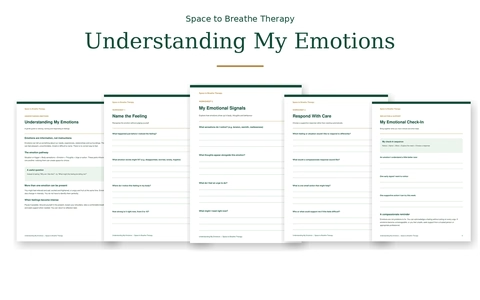
Understanding My Emotions is a gentle, practical five-page guide and worksheet resource designed to help you explore your emotional experiences, recognise patterns and develop a greater understanding of your feelings.
Rather than judging emotions as good or bad, this resource encourages curiosity, self-compassion and emotional awareness.
Understanding What Emotions Are
Emotions can provide important information about our experiences, relationships, needs and surroundings.
They may influence how we think, behave, communicate and respond to situations.
For example, anxiety might signal uncertainty or a perceived threat, sadness may accompany loss or disappointment, and frustration may arise when something feels unfair or difficult to manage.
However, emotions do not always have one clear explanation. A feeling may be influenced by several factors, including stress, tiredness, sensory experiences, previous events and current circumstances.
The guide encourages you to recognise that every emotion is valid, even when it feels confusing or difficult to understand.
Recognising and Naming Your Feelings
Being able to identify an emotion can be an important part of understanding your experiences.
You may recognise familiar feelings such as happiness, sadness, anger or fear, but emotional experiences are often more complex.
You might feel disappointed and relieved at the same time, anxious about something exciting, or frustrated when you are actually exhausted.
The first practical worksheet provides space to explore the emotions you experience and begin identifying the words that best describe them.
There is no expectation that you will always know exactly how you feel.
The purpose is to develop awareness gradually, without placing additional pressure on yourself.
Understanding How Emotions Feel in the Body
Emotions are not experienced only through thoughts.
They can also involve physical sensations and changes in energy, concentration, movement or comfort.
For example, you might notice:
- Tightness in your chest or stomach.
- Changes in breathing.
- Muscle tension or restlessness.
- Feeling hot, shaky or physically unsettled.
- Tiredness or reduced energy.
- Difficulty concentrating or organising thoughts.
- A desire to withdraw, move around or seek reassurance.
The second worksheet encourages you to explore how different emotions may appear in your body.
Recognising these signals can help you notice emotional changes earlier, particularly when finding words for your feelings is difficult.
Exploring Emotional Triggers and Patterns
Sometimes emotions arise in response to an obvious event, such as a disagreement, unexpected change or difficult conversation.
At other times, emotional responses may seem to appear without a clear cause.
The third worksheet helps you explore situations, experiences and circumstances that may influence how you feel.
These might include:
- Changes to plans or routines.
- Feeling misunderstood or unheard.
- Sensory overload or demanding environments.
- Pressure from responsibilities or expectations.
- Difficult relationships or social interactions.
- Physical tiredness, stress or limited opportunities for rest.
- Uncertainty, disappointment or unexpected events.
Understanding these patterns can help you recognise what contributes to emotional discomfort and what may support your wellbeing.
The aim is not to avoid every difficult feeling, but to better understand what your emotions may be communicating.
Developing Supportive Emotional Responses
Once you begin recognising your emotions, you can explore ways of responding that feel appropriate for your individual needs.
Different emotions may require different forms of support.
Sometimes you may need quiet time, movement, reassurance or an opportunity to talk.
At other times, you may benefit from setting a boundary, asking for help, addressing a problem or allowing yourself to experience a feeling without immediately trying to change it.
The resource encourages you to consider what helps you feel supported, understood and emotionally safe.
It also recognises that emotional regulation does not always mean becoming calm immediately.
Sometimes it means reducing pressure, allowing recovery time or finding a manageable way through a difficult experience.
Creating a Personal Emotional Check-In
The final page encourages you to bring together what you have discovered.
You can reflect on your current emotional state, recognise what may be influencing your feelings and identify one supportive action you could take.
This creates an opportunity to develop a simple emotional check-in that can be revisited whenever needed.
Over time, regular reflection may help you notice patterns, recognise changing needs and become more confident in understanding your emotional experiences.
What Is Included?
This downloadable five-page PDF contains:
- An accessible introduction to understanding emotions.
- Guidance on recognising emotional and physical signals.
- A worksheet for identifying and naming feelings.
- A worksheet for exploring how emotions are experienced in the body.
- A worksheet for recognising emotional triggers and patterns.
- A personal emotional check-in and supportive reflection page.
The worksheets can be completed independently, revisited over time or used during therapy and coaching sessions.
Who Is This Resource For?
Understanding My Emotions may be helpful for adults who find it difficult to recognise, describe or communicate their feelings.
It may be particularly useful for people experiencing emotional overwhelm, stress, anxiety, difficulties with emotional regulation or challenges identifying what they need.
The resource may also support neurodivergent individuals, including autistic people and people with ADHD, who experience differences in emotional awareness, sensory processing or communication.
There is no single correct way to experience, identify or express an emotion.
The guide encourages you to explore what emotional understanding looks like for you.
A Gentle Reminder
You do not have to understand every feeling immediately.
Some emotions take time to recognise, and others may change before you have found the words to describe them.
Your feelings do not need to make sense to someone else before they deserve attention and understanding.
Developing emotional awareness is not about controlling every reaction or avoiding uncomfortable experiences.
It is about learning to recognise what is happening within you and responding with greater understanding, patience and compassion.
Every emotion tells part of your story, and you deserve the space to understand it.
Space to Breathe Therapy
This resource is intended for education, personal reflection and emotional wellbeing support. It does not replace individual psychological or medical advice.




