





Work, Life & Boundaries
Finding Balance, Protecting Your Energy and Creating Healthier Boundaries
Balancing work, personal responsibilities, relationships and your own wellbeing can sometimes feel like an impossible task.
You may find yourself constantly responding to other people's needs, working beyond your usual hours, struggling to switch off or feeling guilty when you take time for yourself.
Sometimes the boundaries between work and personal life become blurred so gradually that you do not notice how much pressure you are carrying until you begin to feel exhausted, overwhelmed or disconnected from the things that matter to you.
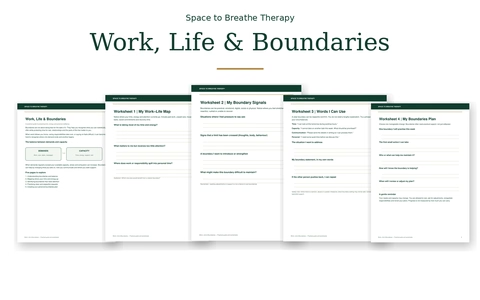
Work, Life & Boundaries is a practical five-page guide and worksheet resource designed to help you recognise competing demands, understand your personal limits, communicate your needs and develop healthier boundaries that support your wellbeing.
Rather than suggesting that every responsibility can be perfectly balanced, this resource encourages you to explore what is realistic, sustainable and appropriate for your individual circumstances.
Understanding Work-Life Boundaries
Boundaries help us recognise where our responsibilities, needs and limits begin and end.
They can influence how we manage our time, communicate with others, respond to expectations and protect opportunities for rest and recovery.
Healthy boundaries are not about being unhelpful, selfish or refusing responsibility.
They are about recognising that your time, energy and emotional capacity are valuable and cannot be stretched indefinitely.
The guide explores how work and personal responsibilities can overlap, particularly when there are competing demands, unclear expectations or limited opportunities to recover.
It also includes a visual demands-and-capacity diagram to help you consider how responsibilities can affect your available energy and wellbeing.
A healthy balance does not mean giving equal time to everything. It means creating a way of living and working that is manageable for you.
Mapping Your Responsibilities
When several responsibilities compete for attention, it can be difficult to recognise where your time and energy are going.
You may feel that everything is equally urgent or that there is little opportunity to prioritise your own needs.
The first practical worksheet encourages you to explore the different demands in your life.
These might include:
- Employment or self-employment.
- Family and caring responsibilities.
- Household tasks and everyday administration.
- Relationships and social commitments.
- Health appointments or disability-related needs.
- Emotional responsibilities and expectations.
- Personal interests, rest and recovery.
By identifying these demands, you can begin to recognise which areas require the most energy and where additional support or adjustments may be helpful.
Recognising When Your Boundaries Are Being Stretched
Boundaries are not always crossed through obvious demands.
Sometimes they become blurred through repeated small expectations, difficulty saying no or feeling responsible for keeping everyone else happy.
You may notice that you regularly agree to things you do not have the capacity for, continue working when exhausted or struggle to take breaks without feeling guilty.
The second worksheet encourages you to recognise personal warning signs that your boundaries may need attention.
These might include:
- Feeling resentful or frustrated about commitments.
- Constantly thinking about work during personal time.
- Finding it difficult to relax or switch off.
- Feeling guilty when saying no.
- Becoming emotionally or physically exhausted.
- Having little time for personal interests.
- Feeling that other people's needs always come first.
- Struggling to recognise when you need rest.
Recognising these patterns can help you identify where changes may support your wellbeing.
Communicating Your Boundaries Clearly
Knowing that you need a boundary and communicating that boundary can be two very different experiences.
You may worry about disappointing someone, being perceived as difficult or creating conflict.
The third worksheet encourages you to practise expressing boundaries in ways that are clear, respectful and realistic.
For example:
“I am unable to take on another task today, but I can review my priorities with you.”
“I need some time to rest this evening, so I will respond tomorrow.”
“I can help with this, but I need to agree on a manageable timeframe.”
“I find last-minute changes difficult. Having more notice would help me prepare.”
The aim is not to control how other people respond, but to communicate your needs and limits more confidently.
Healthy boundaries can also involve negotiating responsibilities, requesting adjustments or recognising when additional support is necessary.
Understanding Guilt and Expectations
Setting boundaries can sometimes create uncomfortable feelings, particularly if you are accustomed to prioritising other people.
You may feel guilty for declining a request, taking a break or choosing not to meet an expectation.
However, feeling guilty does not automatically mean you have done something wrong.
The resource encourages you to reflect on the beliefs and expectations that may make boundary-setting difficult.
You might ask yourself:
- Am I expecting myself to manage more than is realistic?
- Would I expect someone else to continue without rest?
- Am I agreeing because I genuinely have capacity, or because I feel unable to say no?
- What might happen if I communicated my needs more clearly?
- Could this responsibility be shared, postponed or approached differently?
These reflections can help you develop a more compassionate understanding of your own limits.
Creating Your Personal Boundaries Plan
The fourth worksheet brings together your reflections and encourages you to create a practical plan for improving your work-life boundaries.
Your plan may involve:
- Establishing clearer working hours.
- Reducing unnecessary commitments.
- Creating time for rest and recovery.
- Communicating availability more clearly.
- Asking for help with responsibilities.
- Setting limits around messages and emails.
- Recognising when additional adjustments are needed.
- Protecting time for relationships and personal interests.
You are encouraged to identify small, manageable changes rather than attempting to transform every area of your life at once.
Your boundaries can also be reviewed and adjusted as your circumstances change.
Boundaries, Disability and Neurodivergence
For disabled and neurodivergent individuals, work-life boundaries may involve additional considerations.
Autistic people, individuals with ADHD and people managing chronic health conditions may experience fluctuating energy, sensory demands, executive-function difficulties or additional recovery needs.
Some people may need clearer communication, predictable routines, flexible working arrangements or additional time between demanding activities.
Others may find that masking, social expectations or repeated interruptions contribute to exhaustion.
Recognising these needs is an important part of creating realistic boundaries.
A sustainable balance should reflect your individual circumstances rather than expecting you to meet standards that do not account for your needs.
What Is Included?
This downloadable five-page PDF contains:
- Page 1 – Understanding Work, Life & Boundaries: An introduction to healthy boundaries and the relationship between demands and available capacity, including a visual diagram.
- Page 2 – Mapping My Responsibilities: A practical worksheet for identifying work, personal and emotional demands.
- Page 3 – Recognising Boundary Warning Signs: Guided reflection on situations where your limits may be stretched.
- Page 4 – Communicating My Boundaries: Exercises for practising clear, respectful communication and expressing personal needs.
- Page 5 – My Personal Boundaries Plan: A practical action plan for identifying realistic adjustments and protecting time for recovery.
The worksheets provide space for personal reflection and can be completed independently or alongside therapy and coaching.
Who Is This Resource For?
Work, Life & Boundaries may be helpful for adults who experience difficulties balancing responsibilities, setting limits or protecting their personal wellbeing.
It may be particularly useful for people who:
- Feel overwhelmed by competing demands.
- Struggle to switch off from work.
- Experience guilt when resting.
- Find it difficult to say no.
- Frequently prioritise other people's needs.
- Experience stress or early signs of burnout.
- Manage caring responsibilities alongside employment.
- Are self-employed or work from home.
- Experience disability-related or neurodivergent support needs.
- Want to create healthier routines and more sustainable expectations.
The resource may also support therapeutic conversations about boundaries, emotional wellbeing, self-worth and managing responsibilities.
A Gentle Reminder
You do not have to be available to everyone all the time.
You are allowed to recognise when your energy is limited, when responsibilities have become too much or when something needs to change.
Creating boundaries does not mean that you care less about your work, relationships or responsibilities.
It means recognising that your wellbeing matters too.
Some boundaries may feel uncomfortable at first, particularly when you are used to meeting other people's expectations.
However, small changes can help create more space for rest, connection and the things that are important to you.
Your time matters. Your energy matters. Your needs deserve consideration, and you are allowed to create a life that includes space for yourself.
Space to Breathe Therapy
This resource is intended for education, personal reflection and emotional wellbeing support. It does not replace individual psychological, medical or employment advice.




