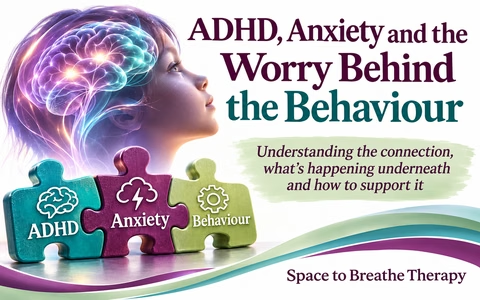
Explore the connection between ADHD, anxiety and the worry behind behaviour. This interactive guide helps parents and carers understand hidden emotions, recognise triggers and discover compassionate support strategies. Includes practical activities, personalised planning and helpful information to support children.
ADHD, Anxiety and the Worry Behind the Behaviour | Space to Breathe Therapy
An interactive understanding and support guide
ADHD, Anxiety and the Worry Behind the Behaviour
Explore what may be happening beneath a child's behaviour, notice patterns and build compassionate, practical support.
START HERE
Welcome
Sometimes what we see is only a small part of what a child is experiencing. This guide invites curiosity about the feelings, sensory experiences and demands that might be underneath.
01What we see
02What may be happening
03What could help
Keep in mind: Behaviour can communicate distress, unmet needs, frustration, excitement or difficulty coping. There is no single explanation for every child or every moment.
Use this guide with curiosity, not as a checklist for diagnosing a child. You can skip any activity.
Understanding ADHD
ADHD can affect attention regulation, impulse control, activity levels, emotional regulation and executive functions. These differences can make ordinary situations unexpectedly demanding.
Starting and switchingExecutive functionGetting started, remembering steps, stopping one task and beginning another may take extra support.
Emotions and energyRegulationStrong feelings, tiredness or accumulated demands can make it harder to pause and respond.
AttentionNot simply a lack of focusAttention may be difficult to direct or shift, even when a child wants to cooperate.
Working memoryHolding instructionsSeveral spoken instructions at once may be hard to retain, especially when stressed.
Try a different interpretation
“They ignored me when I asked them to get ready.”
What else might be going on?
A helpful question is: “What is making this difficult right now?” rather than “Why won't you just do it?”
Understanding anxiety
Anxiety is not always visible as fear. A child may look angry, controlling, restless, avoidant, tearful or unusually quiet when their body feels under threat.
?Uncertainty
!Body on alert
→Protective response
What might anxiety feel like?
Select any experiences that may be relevant. These are possibilities, not proof of anxiety.
What helps: Predictability, gentle information, genuine choices, co-regulation, a calmer environment and time to recover. Reassurance works best alongside practical changes that make the situation feel safer.
What's behind the behaviour?
Use this interactive reflection to look beyond the visible behaviour. More than one factor may be present, and the child may not be able to explain it in the moment.
What have you noticed?
What might be underneath?
Choose as many possibilities as seem worth exploring.
What could a supportive response look like?
These are hypotheses to explore with the child when they are ready, not conclusions about their motives. Safety, dignity and connection come first.
Real-life situations
Explore a situation, choose a response and see why it may help. There is no score and no single perfect answer.
1. The morning routine suddenly changes
A child becomes upset and refuses to leave the house.
2. Homework leads to an angry outburst
The child says they cannot do it and pushes the book away.
3. A child goes quiet after a busy day
They do not want to talk about what happened.
Helpful strategies
Small changes in the environment and adult response can make a meaningful difference. Choose strategies to add to your support plan.
During distress: Prioritise safety, reduce demands, use calm and simple language, and avoid lengthy explanations. Reflection and problem-solving can wait until the child is regulated.
A gentle conversation starter
Instead of: “Why did you behave like that?”
Try: “I noticed that felt really difficult. Was there something worrying you, or something I missed?”
A child can answer later, communicate another way or choose not to answer.
My support plan
Build a practical, flexible plan with the child where possible. This can be saved on this device, copied or printed.
My personalised plan
Choose or write what feels useful, then select “Update my plan”.
Key reminders
Understanding a child is an ongoing conversation. These reminders can help keep support compassionate and realistic.
1
Behaviour is information, not a full explanation.
Look for patterns, context and what the child communicates about their experience.
2
ADHD and anxiety can overlap.
Executive-function demands and worry can make each other harder to manage.
3
Connection before correction.
When a child is overwhelmed, help them feel safe before discussing what happened.
4
Support should fit the child.
Predictability, sensory adjustments and communication options are often more useful than rewards or pressure.
5
Notice strengths as well as difficulties.
Curiosity, creativity, deep interests and persistence can be valuable starting points.
6
Ask for additional help when needed.
If anxiety or distress is persistent, escalating or affecting everyday life, speak with an appropriate qualified professional.
This educational guide does not diagnose ADHD or anxiety, replace individual clinical advice, or mean that all behaviour has anxiety beneath it.