



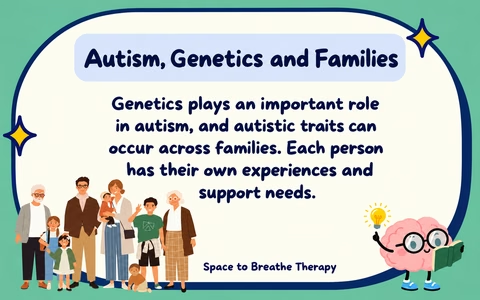

Autism, Genetics and Families

Understand autism, genetics and shared family traits through clear information and gentle reflection. Recognise individual differences, consider respectful conversations and identify support that fits your needs. Create downloadable notes to organise questions, communicate preferences and build understanding without assigning labels.

Download
Autism, Genetics and Families

FAMILY • INDIVIDUALITY • UNDERSTANDING

Autism, Genetics and Families

Shared traits can open a conversation. Every person still has their own story.

Genetics plays an important role in autism, and autism can occur in more than one family member. Its genetics are complex. Recognising similarities does not establish a diagnosis or predict another person’s needs.

What would you like to understand?

Choose a topic for more information.

A thoughtful family conversation

You can talk about your own experiences without diagnosing relatives. Respect each person’s choice about labels, assessment and disclosure.

Go at a pace that feels comfortable.

Understanding without blame

Autism is not caused by parenting. A genetic contribution is not anyone’s fault. Family similarities can be meaningful, but support should be based on each person’s experiences rather than comparisons.

This resource cannot estimate inheritance chances or interpret genetic tests. If you have personal questions about genetic testing or family planning, a healthcare professional or genetics service can discuss your circumstances.

My understanding and support notes

Use your own words and leave out other people’s identifying details. Writing stays on this page while it is open and is not saved automatically. Download a copy to keep it.

Further information

This is an educational reflection, not an assessment or genetic counselling tool.

MedlinePlus Genetics: autism spectrum disorder

NHS: What is autism?

Space to Breathe Therapy



