
Boredom and ADHD

Understand boredom and ADHD through interactive choices and guided reflection. Notice restlessness, identify what makes engagement difficult and consider changes in movement, stimulation or task structure. Download a personalised plan with practical adjustments that respect your needs, comfort and circumstances.

Download
Boredom and ADHD

INTEREST • COMFORT • ENGAGEMENT

Boredom and ADHD

Notice what you need and choose a helpful adjustment.

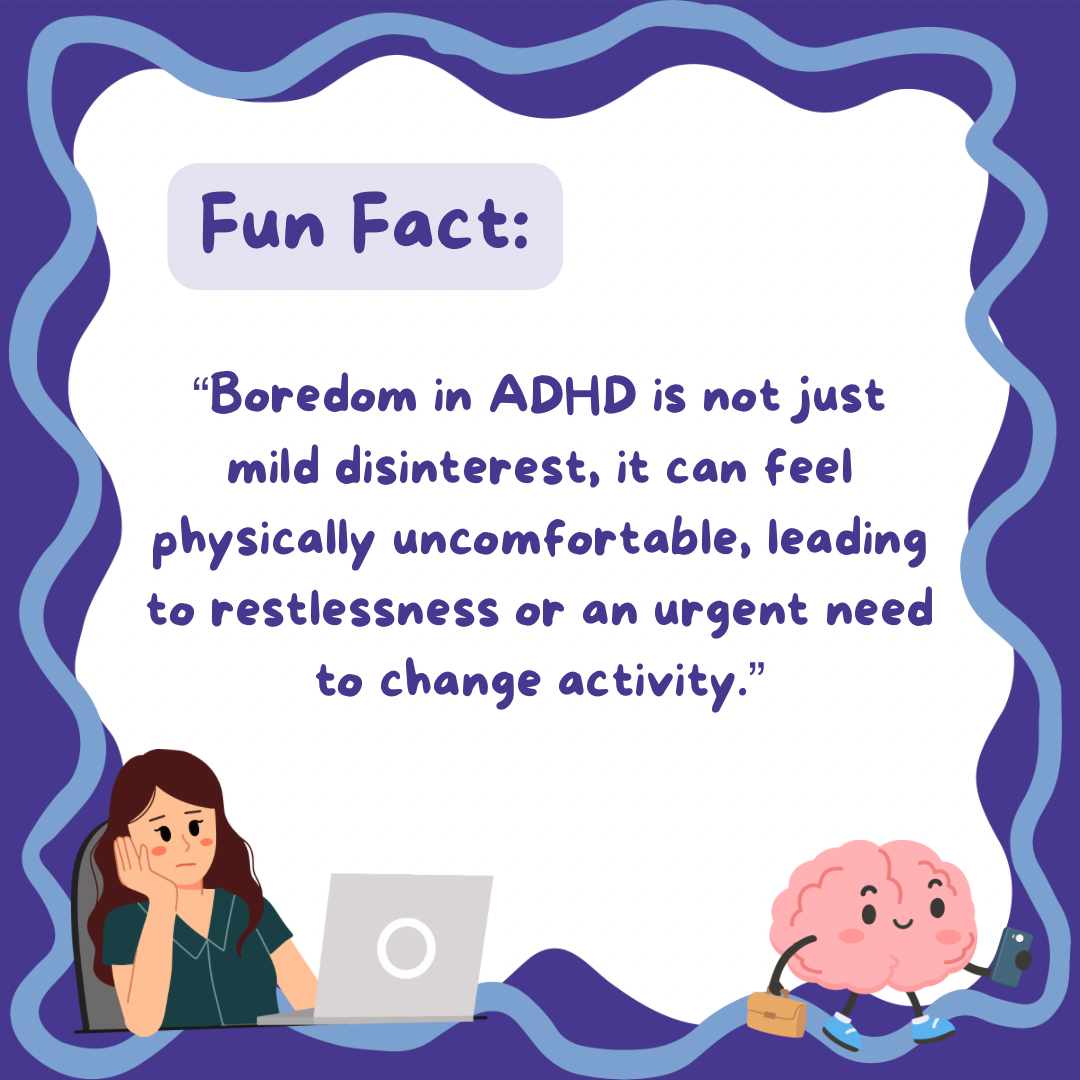
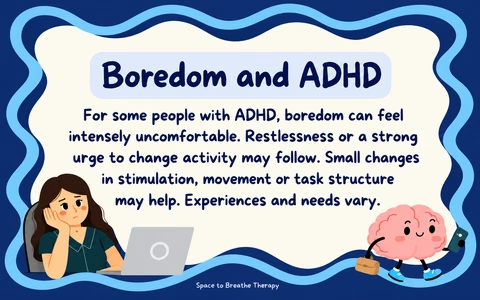
For some people with ADHD, boredom can feel intensely uncomfortable. Restlessness or a strong urge to switch activity may follow. Experiences vary, and feeling bored does not by itself tell us whether someone has ADHD.

What might help right now?

Choose an idea that fits your situation.

Start with one small change.

Try a gentle experiment

Comfort matters alongside getting things done.

Find the right amount of input

A task may become easier to engage with when it has a clear purpose, variety or a manageable endpoint. Some people find movement or working alongside another person helpful. Others need fewer distractions.

Check whether the task is unclear, too demanding, repetitive or happening when you are tired or overloaded. You do not have to assume that every uncomfortable feeling is boredom.

Choose adjustments that are safe for the activity. Avoid adding distractions while driving, using machinery or doing anything that needs full attention. If difficulties regularly affect daily life, individual ADHD support may help.

These prompts support reflection and are not an assessment.

My boredom and engagement plan

Your writing is not saved automatically. Download a copy before closing or refreshing this page.

Further information

NHS inform: managing ADHD in work and education

Research: boredom and ADHD traits

Space to Breathe Therapy