
Communication and Autism

Understand communication and autism through interactive choices and personal reflection. Consider direct language, literal meanings, processing time and different ways to respond. Identify helpful adjustments, clarify misunderstandings and download your communication preferences to support clearer, more respectful conversations with others.

Download
Communication and Autism

CLARITY • TIME • UNDERSTANDING

Communication and Autism

Make space for different ways of communicating.

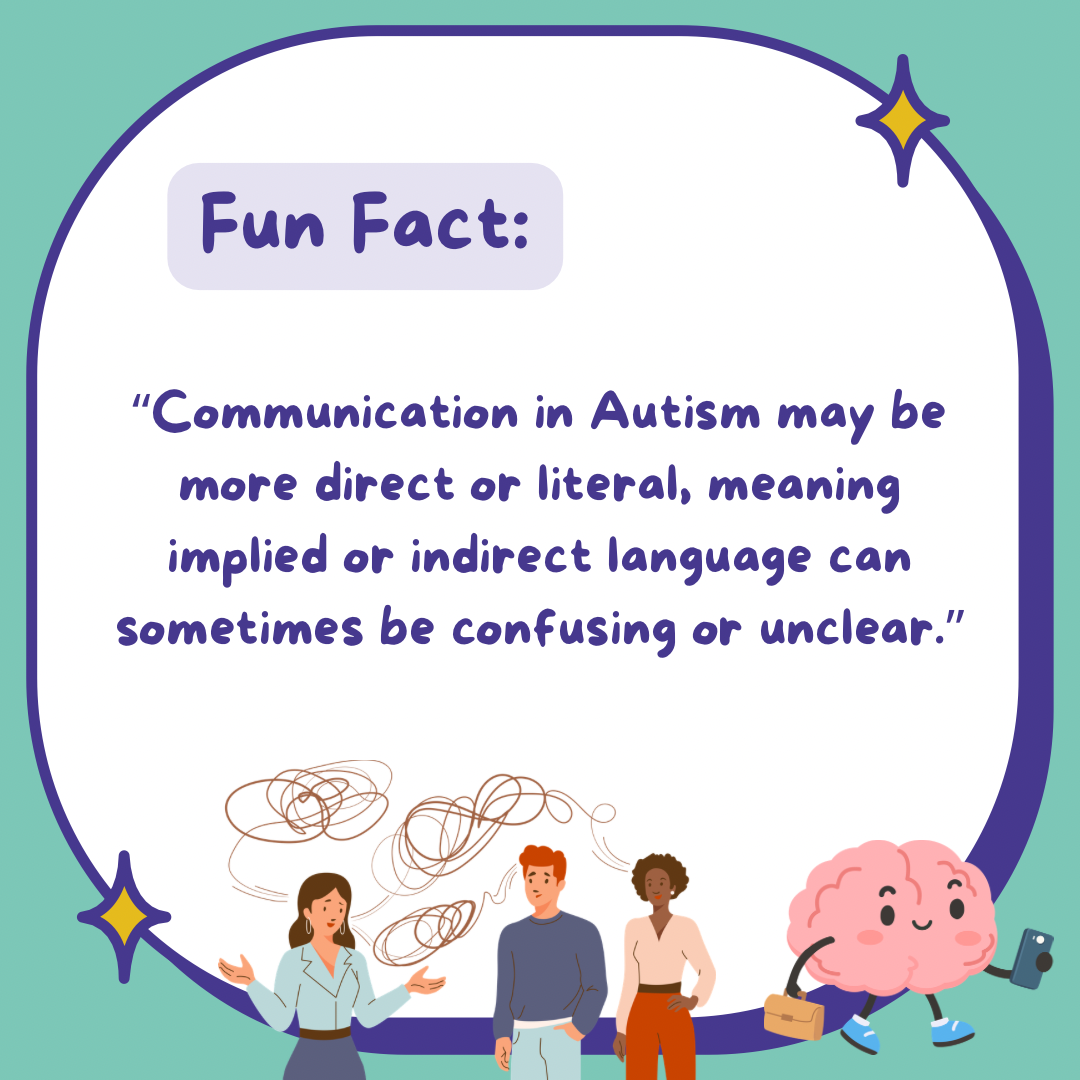
Some Autistic people prefer direct or literal language. Implied meanings, hints or figures of speech can sometimes be unclear. Preferences vary: ask the person what works for them.

What could help?

Choose a communication adjustment to consider.

Choose what fits your situation.

Make one conversation clearer

Understanding can be built together.

A shared responsibility

Different communication styles can lead to misunderstandings in either direction. Directness does not automatically mean rudeness, and difficulty interpreting a hint does not mean a lack of care.

Use specific requests, explain unfamiliar expressions and allow processing time. Check understanding respectfully. Do not require eye contact or spoken replies as proof that someone is listening.

These prompts support reflection and are not an assessment. Each person’s communication needs and preferred supports are individual.

My communication preferences

Your writing is not saved automatically. Download a copy before closing or refreshing this page.

Further information

National Autistic Society: communication

Space to Breathe Therapy