





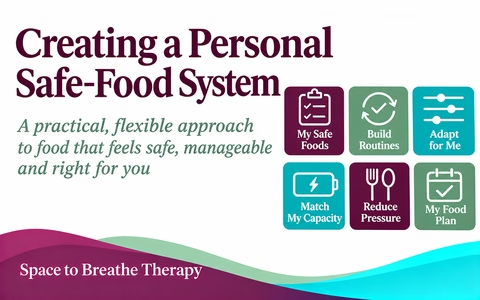
Creating a Personal Safe-Food System
Understanding safe foods
Safe foods are foods that feel manageable or reliably tolerable. This may be especially important for autistic people, people with ADHD, ARFID, anxiety, sensory differences or periods of burnout. The same food can feel manageable one day and difficult another.
Predictability matters
Consistent brands, packaging, textures and serving temperatures can reduce uncertainty. Changes that seem small to someone else may feel significant.
Capacity matters
Choosing, shopping, preparing, eating and cleaning up are separate tasks. A meal that is easy to eat may still be hard to organise.
Access matters
Cost, transport, storage, equipment, help from others and availability all influence which foods are realistically accessible.
Nourishment matters
Eating enough and eating regularly can be a more useful starting point than chasing an ideal meal. Variety can be explored gently, where appropriate.
Three useful questions
What can I usually eat? What makes that food feel manageable? What would make it easier to access when I have less capacity?
My safe-food list
Add foods that are genuinely manageable for you. Include brands or specific versions if these make a difference. You can record a food even if you only tolerate it sometimes.
Recognising my sensory needs
Noticing patterns can help you make food more accessible without forcing yourself to tolerate distress. Preferences can vary by day, stress level and environment.
Texture
Crunchy, smooth, dry, soft, mixed textures, lumps or foods touching.
Flavour and smell
Strong smells, spice, acidity, blandness, aftertaste or unexpected changes.
Temperature and appearance
Hot versus cold, colour, consistency, shape or packaging.
Eating environment
Noise, lighting, people watching, time pressure, utensils or seating.
My capacity chart
Capacity is not a measure of worth. Choose the level that best reflects what you can manage today, not what you think you should be able to do.
Capacity support chart
Low: choose a ready-to-eat safe food or an option that needs minimal handling.
Some: assemble familiar foods or use a simple heating step if safe.
More: check supplies, prepare portions, update your list or arrange backups for later.
These are examples, not rules. If you cannot eat or drink adequately, experience dizziness, fainting, dehydration or significant weight loss, seek medical advice promptly.
Build routines without adding pressure
A supportive routine should reduce decisions, not become another standard you have to meet. Choose only the ideas that genuinely help.
My optional support checklist
If a safe food changes
Notice what changed: brand, recipe, packaging, texture, temperature or your own capacity. It is reasonable to stop using an option that no longer feels manageable.
If someone supports me
Ask them to listen rather than pressure, avoid hiding ingredients or making unexpected swaps, and help keep reliable foods available.
My personal safe-food plan
This is a flexible reference for you or someone supporting you. Complete only what feels useful.