
Direct Communication and Autism

Understand direct communication and autism through interactive examples and practical reflection. Consider how clear language, honest feedback and individual preferences can support shared understanding. Create a downloadable reflection to clarify messages, communicate needs, reduce misunderstandings and build respectful conversations together.

Download
Direct Communication and Autism

CLARITY • RESPECT • SHARED UNDERSTANDING

Direct Communication and Autism

Clear words can make room for better understanding.

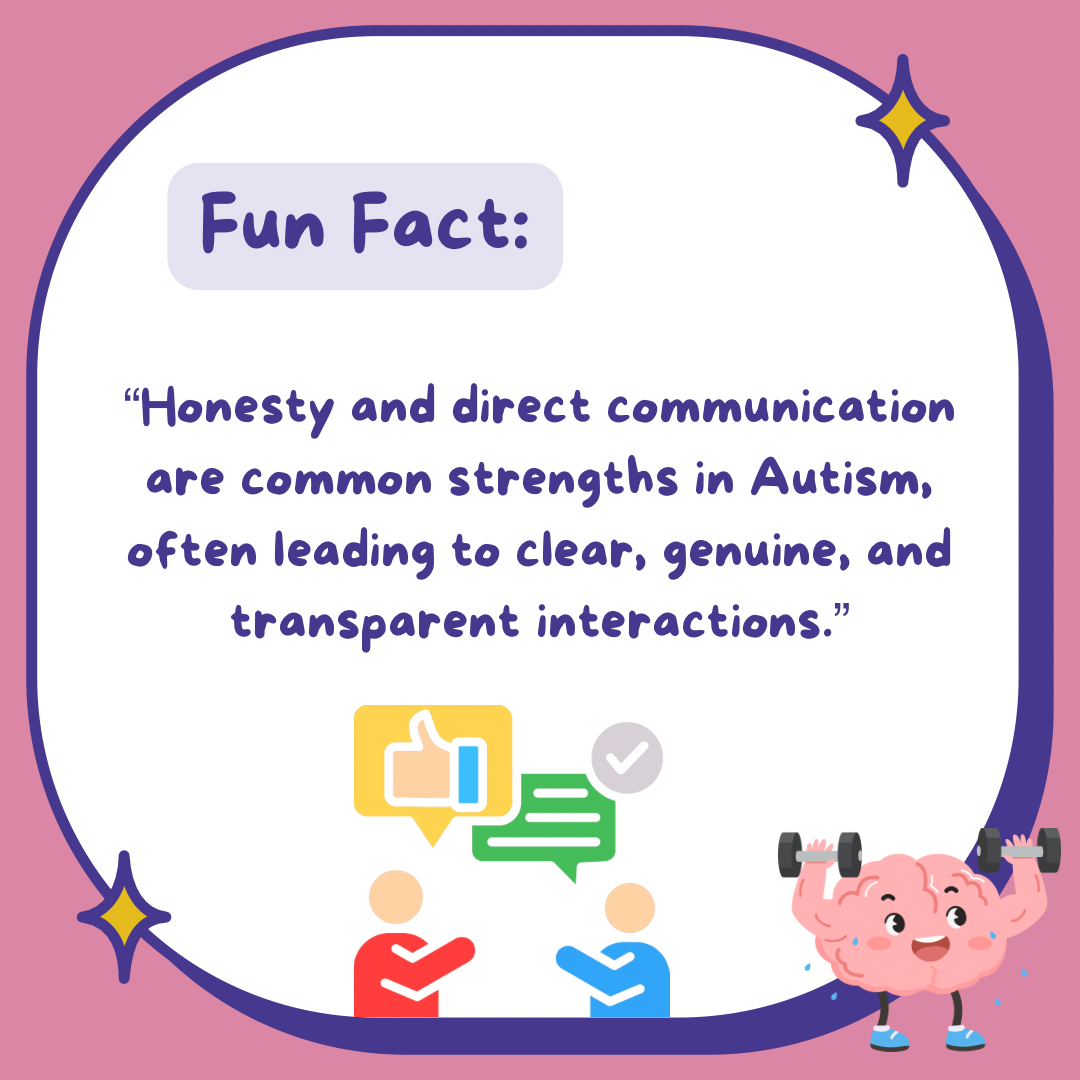
Some autistic people prefer direct, specific language and may value saying what they mean. This can be a strength in communication. Preferences vary, and no communication style tells you everything about a person’s intentions, honesty or care.

Choose a communication moment

Tap for an example of clearer, shared communication.

Where would more clarity help?

Build a clearer message

Understanding is something we build together.

Directness and consideration can work together

Being specific does not require criticism or harshness. “I need the room quieter so I can concentrate” names a need clearly without judging another person.

Autistic people can communicate in many ways. Do not assume everyone is literal, always honest or comfortable speaking. Respect individual preferences and accept writing, AAC, gesture and other forms of communication.

If a message lands differently than intended, both people can pause, explain its impact and clarify what was meant.

My clear communication reflection

This reflection does not diagnose or score communication skills. Write only what is useful. Your writing is not saved automatically. Download a copy before closing or refreshing the page.

Further information

National Autistic Society: autism and communication

Space to Breathe Therapy