



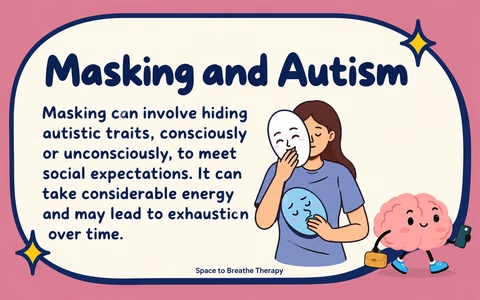

Masking and Autism

Understand masking and autism through interactive examples and gentle reflection. Notice the effort involved in hiding traits, recognise your need for recovery and consider supportive adjustments. Create a downloadable reflection that respects your choices, personal boundaries, safety and individual pace

Download
Masking and Autism

UNDERSTANDING • CHOICE • RECOVERY

Masking and Autism

The effort behind appearing to cope can be hard to see.

Masking can involve hiding autistic traits or changing how you communicate and behave to meet social expectations. It may be conscious or happen without awareness. Experiences differ, but sustained masking can be exhausting and may make support needs less visible.

What might masking look like?

Tap an example for a reflection. These experiences do not diagnose autism and are not exclusive to autistic people.

Choose an experience that feels relevant.

Notice what you need

Your choices, circumstances and pace matter.

You decide what feels safe

Masking can be a way to seek acceptance or protect yourself from judgement. You do not have to disclose a diagnosis, stop masking suddenly or change how you act in every setting.

A small step could be asking for instructions in writing, taking a sensory break or allowing yourself to look away while listening. Supportive environments should share the work of reducing pressure.

If exhaustion, anxiety or low mood is persistent or affecting daily life, consider speaking with a healthcare professional who understands autism.

My masking and energy reflection

Write only what feels useful. Skip any question. Your writing is not saved automatically. Download a copy before closing or refreshing this page.

Further information

National Autistic Society: masking

NHS Autism Space: masking when you are autistic

Space to Breathe Therapy



