





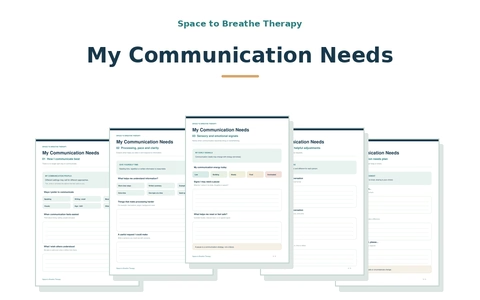
My Communication Needs
Five Reflective Worksheets for Understanding and Expressing Your Communication Preferences
About This Resource
Communication is about much more than the words we use. It involves how we process information, express ourselves, interpret other people, respond to our surroundings and communicate what we need.
Everyone communicates differently. Some people find spoken conversations easier, while others prefer written information, visual explanations or additional time to process what has been said.
For autistic people, individuals with ADHD, those experiencing anxiety, sensory processing differences, hearing difficulties or other communication barriers, everyday interactions can sometimes feel particularly demanding.
My Communication Needs is a collection of five thoughtfully designed, printable worksheets that help you explore your individual communication preferences, recognise potential barriers and identify adjustments that could make communication more comfortable and accessible.
The aim is not to change the way you naturally communicate. It is to help you understand your needs, recognise your strengths and feel more confident explaining what works best for you.
What's Included in the Five Worksheets?
Worksheet 1 – Understanding My Communication Preferences
The first worksheet encourages you to explore how you prefer to receive and share information.
You can reflect on whether you find spoken conversations, written messages, visual information or face-to-face communication most comfortable.
It also provides an opportunity to consider situations where communication feels natural and those where it requires additional effort.
What you will explore:
- Your preferred ways of communicating
- Situations where communication feels easier
- Communication methods you find challenging
- What helps you feel heard and understood
- Your individual communication strengths
This worksheet helps establish a clearer understanding of how you communicate best.
Worksheet 2 – Processing Information and Understanding Clarity
Communication difficulties are not always about finding the right words. Sometimes the challenge involves processing information quickly enough, remembering instructions or understanding what another person expects.
This worksheet explores how you receive, interpret and respond to information.
You may discover that you benefit from additional processing time, clear instructions, written summaries or opportunities to ask questions.
What you will explore:
- How much processing time you need
- Whether verbal instructions feel overwhelming
- The importance of clear and direct language
- How you manage multiple pieces of information
- What helps you understand and remember conversations
The purpose is to recognise that needing information presented differently is a valid communication need.
Worksheet 3 – Sensory and Emotional Communication Signals
Our surroundings and emotional state can influence how comfortably we communicate.
Noise, lighting, interruptions, unfamiliar environments, anxiety or emotional overwhelm may make it harder to listen, concentrate, find words or express ourselves clearly.
This worksheet helps you recognise the signals that communication is becoming difficult.
What you will explore:
- Sensory environments that affect communication
- How stress or anxiety influences your responses
- Signs that you are becoming overwhelmed
- What happens when you need time or space
- Ways to communicate when speaking feels difficult
Recognising these signals can help you identify supportive strategies before communication becomes exhausting or overwhelming.
Worksheet 4 – Adjustments That Help Me Communicate
Small changes can make a significant difference to how accessible communication feels.
This worksheet encourages you to consider practical adjustments that may help you participate more comfortably in conversations, appointments, education, employment and everyday relationships.
What you will explore:
- Receiving information in writing
- Having additional time to respond
- Reducing background noise and distractions
- Using clear, direct instructions
- Asking for information to be repeated or clarified
- Agreeing on alternative communication methods
You can identify which adjustments are most helpful and consider how to explain them to others.
The focus is on removing unnecessary barriers rather than expecting you to manage every communication difficulty independently.
Worksheet 5 – My Personal Communication Needs Plan
The final worksheet brings together everything you have discovered.
You can use your reflections to create a personalised communication plan explaining how you communicate best, what you find difficult and what other people can do to support you.
Your plan may include:
- My preferred communication methods
- What helps me understand information
- Situations I find challenging
- Signs that I am becoming overwhelmed
- Adjustments that make communication easier
- How others can support me
- What I would like people to understand about my needs
This plan can become a useful reference when communicating with family members, friends, employers, educators, healthcare professionals or support workers.
You can choose what information to share, who to share it with and when.
Who Might Benefit From This Resource?
These worksheets may be particularly helpful for:
- Autistic people exploring their communication preferences
- Individuals with ADHD or processing differences
- People experiencing anxiety in social situations
- Those with hearing or sensory processing difficulties
- Individuals who find it difficult to express their needs
- People who experience shutdowns or communication overwhelm
- Anyone who wants to develop greater confidence in communicating
- Professionals supporting individuals with communication differences
The resource may also support conversations within counselling, psychotherapy, coaching, education and workplace support.
How to Use the Worksheets
All five worksheets are provided together in one downloadable PDF, allowing you to print the complete collection and work through the activities at your own pace.
You do not need to complete everything in one sitting.
Some questions may be easy to answer, while others may require time and reflection. Your communication needs may also change depending on the environment, the people involved, your energy levels or how you are feeling.
You can return to the worksheets whenever your circumstances change or when you discover something new about your communication preferences.
What You May Gain
Working through these five worksheets may help you:
- Develop a clearer understanding of your communication needs
- Recognise and value your individual communication style
- Identify barriers that make interactions more difficult
- Understand the relationship between sensory experiences, emotions and communication
- Discover practical adjustments that support accessibility
- Feel more confident expressing your preferences
- Reduce misunderstandings through clearer communication
- Create a personalised plan that can be shared with others
A Gentle Reminder
There is no single correct way to communicate.
You do not have to maintain eye contact, respond immediately, communicate verbally in every situation or process information at the same speed as someone else to deserve understanding and respect.
Communication is a shared responsibility.
Sometimes the most meaningful change happens when other people adapt how they communicate, rather than expecting you to continually adjust to meet their expectations.
Understanding your communication needs is not about identifying what is wrong with you. It is about recognising what helps you feel comfortable, included, respected and understood.
Your communication needs matter, and you deserve to have them recognised.
Space to Breathe Therapy




