





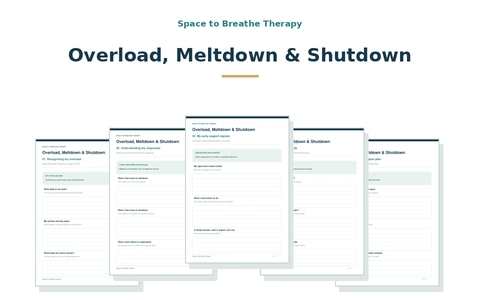
Overload, Meltdown & Shutdown
Five Reflective Worksheets for Understanding Overwhelm, Recognising Warning Signs and Supporting Recovery
About This Resource
Overload can develop when the demands placed on our minds, bodies and nervous systems become greater than our capacity to manage them.
For some people, this may happen gradually as sensory experiences, emotional pressures, social interactions and everyday responsibilities accumulate. For others, overwhelm can develop suddenly following an unexpected change, difficult experience or particularly demanding situation.
When overload becomes too much, it can sometimes lead to a meltdown or shutdown.
Although these experiences are often associated with autism, overwhelming responses can also occur in people with ADHD, sensory processing differences and other conditions affecting emotional or nervous system regulation.
Overload, Meltdown & Shutdown is a collection of five thoughtfully designed, printable worksheets created to help you understand your individual experiences of overwhelm, recognise early warning signs and identify what may support you before, during and after difficult moments.
The aim is not to prevent every emotional response or expect you to manage overwhelming situations independently. Instead, this resource encourages greater self-understanding, compassion and awareness of the environments, adjustments and support that may help.
What's Included in the Five Worksheets?
Worksheet 1 – Recognising My Overload
Overload does not always begin with an obvious trigger.
Sometimes it develops through an accumulation of smaller demands, such as background noise, social expectations, changes in routine, emotional stress, physical discomfort or the effort involved in concentrating and communicating.
This worksheet encourages you to explore the experiences that contribute to your own overload.
What you will explore:
- Sensory experiences that feel overwhelming
- Emotional and social demands
- Changes in routine or unexpected situations
- Physical signs of increasing stress
- Situations where demands begin to feel unmanageable
- Patterns you may have noticed over time
By identifying these experiences, you can begin to recognise when your capacity is becoming stretched and what adjustments may be helpful.
Worksheet 2 – Understanding My Meltdown and Shutdown Responses
Meltdowns and shutdowns can be different responses to overwhelming demands.
A meltdown may involve an outward expression of distress, such as crying, shouting, agitation or difficulty controlling physical responses.
A shutdown may involve becoming quiet, withdrawn, less responsive or finding it difficult to speak, move, process information or engage with others.
Not everyone experiences these responses in the same way, and some people experience both.
What you will explore:
- How overload affects your thoughts, emotions and body
- What a meltdown may feel like for you
- What a shutdown may feel like for you
- Changes in communication or responsiveness
- What other people may misunderstand about your experiences
- How you would like others to respond
This worksheet encourages you to understand these experiences without shame or judgement.
Meltdowns and shutdowns are not simply deliberate behaviours or choices. They can reflect a person reaching or exceeding their capacity to cope with overwhelming demands.
Worksheet 3 – My Early Warning Signs and Support Signals
Recognising early warning signs can create opportunities to reduce demands or access support before overload becomes more intense.
However, these signals are not always obvious. Some people notice physical discomfort first, while others experience changes in concentration, communication, emotional regulation or sensory tolerance.
This worksheet helps you explore your personal signals.
What you will explore:
- Early physical signs of overload
- Changes in concentration and processing
- Emotional warning signs
- Sensory experiences becoming harder to tolerate
- Changes in speech or communication
- How you might indicate that you need support
- Adjustments that may help reduce demands
You can also consider how to communicate your needs when finding words becomes difficult.
This might include a short written message, an agreed signal, a visual card or support from someone you trust.
Worksheet 4 – Understanding My Recovery Needs
Recovery from overload, meltdown or shutdown is different for everyone.
Some people need quiet, reduced sensory input and time alone. Others may benefit from familiar surroundings, gentle reassurance, predictable routines or practical support.
Recovery may take minutes, hours or longer depending on the individual, the circumstances and the demands they have experienced.
What you will explore:
- What helps you feel safe and comfortable
- Sensory adjustments that support recovery
- Whether you prefer company or time alone
- Communication approaches that feel supportive
- Activities that help you regulate
- What makes recovery more difficult
- How much time and space you may need
This worksheet also encourages you to recognise the importance of rest without feeling pressured to return immediately to your usual activities.
Recovery is not something that needs to be rushed.
Worksheet 5 – My Personal Overload Support Plan
The final worksheet brings together everything you have explored.
You can use your reflections to create a personalised support plan that identifies your triggers, warning signs, communication needs and helpful adjustments.
Your plan may include:
- My common overload triggers
- My early warning signs
- How I experience meltdown or shutdown
- What helps when I begin to feel overwhelmed
- What other people should avoid doing
- How I prefer to communicate during overload
- What supports my recovery
- Who I would like to involve in my support
This plan can be kept for personal reference or shared with trusted people, family members, employers, educators, healthcare professionals or support workers.
You remain in control of what information you choose to share.
Understanding the Difference Between Overload, Meltdown and Shutdown
Although these experiences are connected, they are not necessarily the same.
Overload occurs when sensory, emotional, cognitive or environmental demands exceed what someone can comfortably manage.
Meltdown may occur when overwhelming demands lead to an intense, often outwardly expressed response that becomes difficult to regulate.
Shutdown may occur when overwhelming demands lead to withdrawal, reduced responsiveness, difficulties communicating or an inability to continue engaging as usual.
A person may experience overload without a meltdown or shutdown. They may also experience different responses depending on the situation, their energy levels and the support available.
There is no single pattern that applies to everyone.
Who Might Benefit From This Resource?
These worksheets may be particularly helpful for:
- Autistic people exploring sensory and emotional overload
- Individuals with ADHD or sensory processing differences
- People who experience meltdowns or shutdowns
- Those who find it difficult to recognise early signs of overwhelm
- Individuals who experience communication difficulties during distress
- People who need support identifying helpful environmental adjustments
- Family members and carers seeking a better understanding of individual needs
- Professionals supporting neurodivergent individuals
The resource may also support conversations within counselling, psychotherapy, coaching, education and workplace adjustments.
How to Use the Worksheets
All five worksheets are provided together in one downloadable PDF, allowing you to print the complete collection and work through the activities at your own pace.
You may find it helpful to complete the worksheets when you are feeling relatively calm and have the energy to reflect.
There is no expectation to complete every activity in one sitting.
Some questions may bring up difficult memories or emotions. You can leave sections unanswered, take breaks or return to them when you feel ready.
You may also choose to work through the activities with someone you trust or a professional who understands your needs.
Your responses can change over time as you develop a greater understanding of your experiences.
What You May Gain
Working through these worksheets may help you:
- Develop a clearer understanding of sensory and emotional overload
- Recognise personal triggers and patterns
- Identify early warning signs
- Understand your individual meltdown and shutdown responses
- Discover adjustments that may reduce overwhelming demands
- Communicate your needs more confidently
- Recognise what supports recovery
- Develop a practical, personalised support plan
- Build greater self-compassion and understanding
A Gentle Reminder
Overload is not a personal failure.
Experiencing a meltdown or shutdown does not mean that you are weak, difficult, intentionally uncooperative or failing to manage your emotions.
Sometimes your nervous system is responding to demands that have become too intense or difficult to process.
You deserve environments that recognise your needs, communication that respects your differences and support that does not depend on you reaching a crisis before it becomes available.
The goal is not to teach you to tolerate increasingly overwhelming situations.
It is to help you understand your limits, recognise when support may be needed and identify ways to make everyday experiences more manageable.
You do not have to wait until you reach breaking point to deserve understanding, adjustments or rest.
Space to Breathe Therapy




