



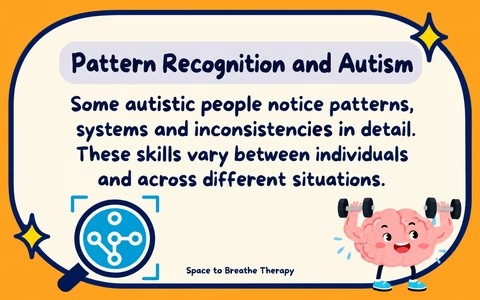

Pattern Recognition and Autism

Understand pattern recognition in autism through interactive choices and gentle reflection. Notice repeated features, consider alternative explanations and recognise individual strengths. Create a downloadable reflection map to organise observations, check assumptions and identify useful applications while respecting your support needs.

Download
Pattern Recognition and Autism

QUESTIONS • PATTERNS • POSSIBILITIES

Pattern Recognition and Autism

Notice connections at your own pace.

Some autistic people notice patterns, repeated features or inconsistencies in detail. These skills vary across individuals and situations. Not relating to this strength does not make someone less autistic; support needs remain valid.

Choose a pattern prompt

Tap for an observation prompt. This is not a test of autism or intelligence, and there are no scores.

What approach feels useful to you?

Look closer at an everyday pattern

You can pause, skip a step or ask for support.

Strengths do not remove support needs

Being skilled at analysing something does not mean every task is easy or that you should manage without help. Clear instructions, enough time and a comfortable setting may still matter.

Noticing patterns does not mean being correct every time. Context, chance and missing information matter. Respect other people’s accounts and check conclusions together when an observation affects them.

My pattern reflection map

Choose a manageable everyday example and write only what is useful. This reflection does not assess autism or thinking ability. Your writing is not saved automatically. Download a copy before closing or refreshing the page.

Further information

Autistica: autistic strengths

Research: strengths and abilities of autistic people in the workplace

Space to Breathe Therapy



