
Rejection Sensitivity and ADHD

Explore rejection sensitivity and ADHD through gentle interactive reflections, everyday examples and supportive prompts. Make space for painful feelings, separate events from interpretations, consider your needs and boundaries, and choose manageable next steps towards clearer communication and greater self understanding.

Download
Rejection Sensitivity and ADHD

FEELINGS • CLARITY • SUPPORT

Rejection Sensitivity and ADHD

Make space for painful feelings, and choose your next step at your own pace.

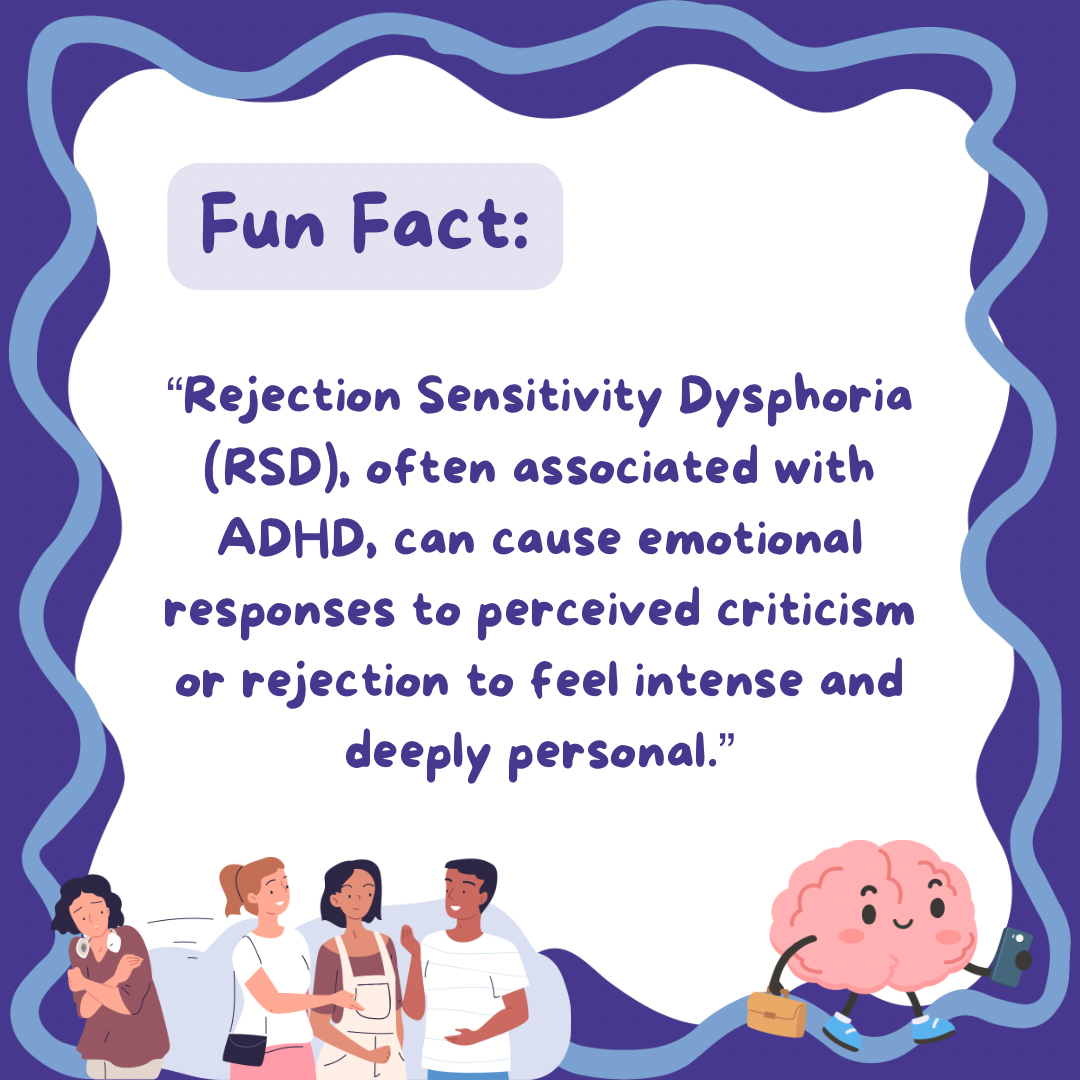
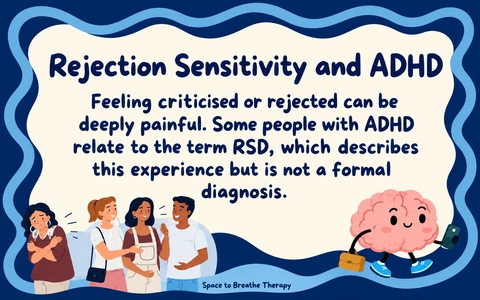
Some people with ADHD describe intense pain around perceived criticism or rejection. “Rejection sensitive dysphoria”, or RSD, is a descriptive term, not a formal diagnosis. Experiences vary, and rejection sensitivity is not exclusive to ADHD.

Separate the event from the uncertainty

Choose an example to explore. You do not have to assume a positive explanation, and real exclusion or mistreatment deserves attention.

Choose an example above.

A pause that suits you

Choose one possibility. There is no right way to feel, and no need to reply immediately.

What would make this moment a little more manageable?

Words you can borrow

“I want to understand. Could you explain what you meant?”

“That landed painfully. I need a little time before we continue.”

“I can discuss the feedback, but I need us to speak respectfully.”

My reflection

Your writing stays on this page while it is open. It is not saved automatically. Download it if you want a copy.

If these experiences repeatedly affect your wellbeing or relationships, a qualified professional can help you explore them and find support that fits.

About the terminology

RSD is not an officially recognised diagnosis, and research remains limited. This resource supports reflection; it does not assess or diagnose.

Read Cleveland Clinic’s overview of RSD

Space to Breathe Therapy